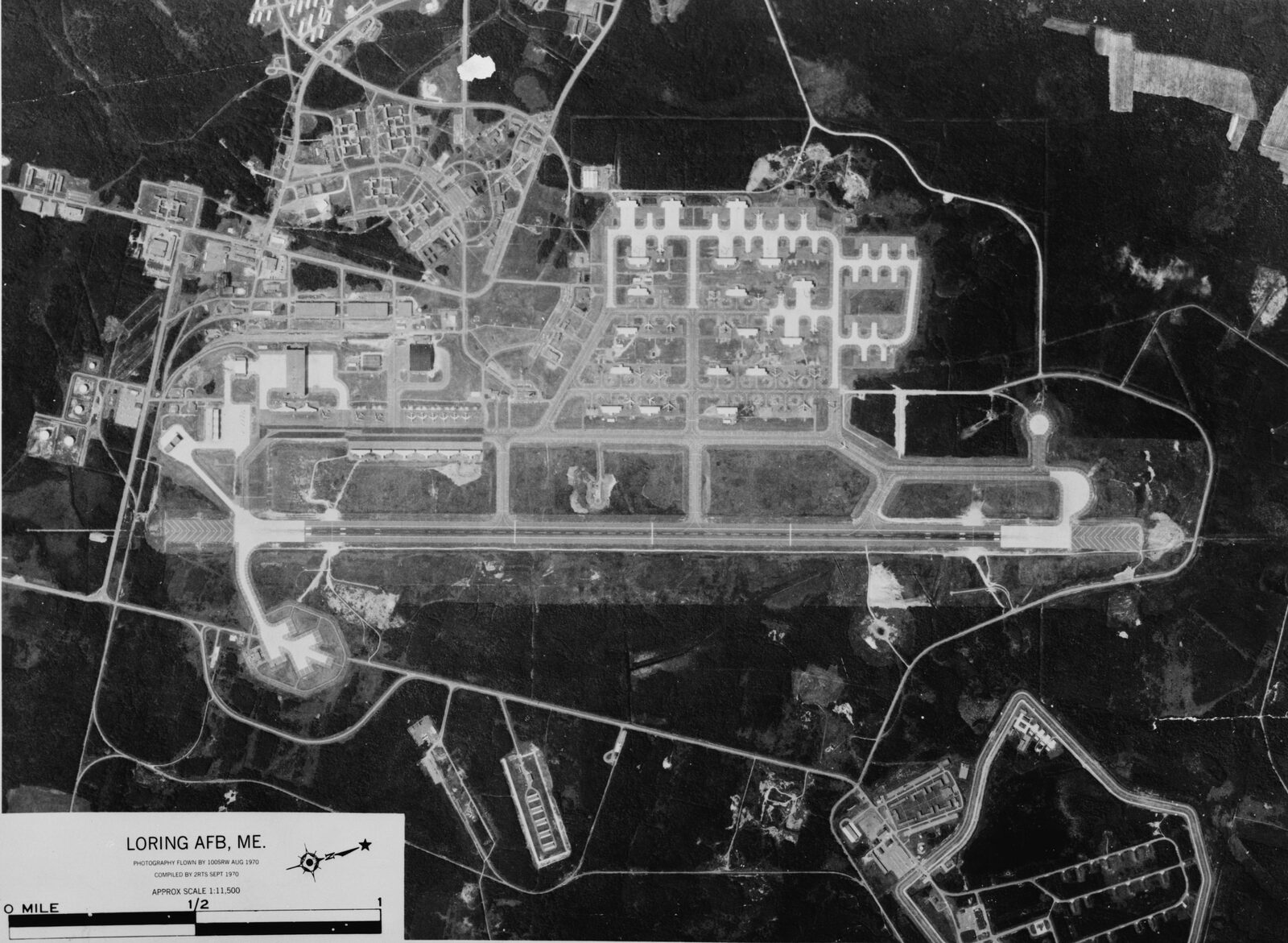
Loring Air Force Base
Loring Air Force Base was a Strategic Air Command installation in Limestone, Maine, located in Aroostook County near the Canadian border. Construction began in 1947, and the base became operational under Strategic Air Command in 1953 as home of the 42nd Bombardment Wing, which initially flew B-36 Peacemaker bombers before transitioning to B-52 Stratofortress bombers in 1956 and adding KC-135 Stratotanker aircraft in 1957. Covering roughly 9,000 acres, Loring served as one of the nation's northeastern strategic bomber bases throughout the Cold War. The base was closed in September 1994 under the Defense Base Realignment and Closure Act of 1991.
There are concerns about carcinogenic health hazards at Loring Air Force Base, due to potential exposure to various environmental contaminants identified during investigations of the former base:
- TCE (trichloroethylene): TCE is a chlorinated solvent that was commonly used by the military to degrease aircraft parts and equipment. At Loring, volatile organic compounds including TCE and PCE were found in groundwater, with a plume documented on site and extending southward beyond the base boundary, where drinking water supply wells near the site contained VOCs at concentrations exceeding health-based benchmarks. Exposure to TCE has been associated with kidney cancer and other serious health conditions.
- Spent solvents: Decades of aircraft and vehicle maintenance generated spent solvents that were disposed of on base, including in three on-site landfills, contaminating soil and groundwater. Long-term exposure to certain industrial solvents has been associated with various cancers and other illnesses.
- PCBs (polychlorinated biphenyls): PCBs were widely used in electrical equipment such as transformers before being banned in 1979. PCBs were among the hazardous substances identified at Loring's source areas and in contaminated sediments. The EPA classifies PCBs as probable human carcinogens, and exposure may potentially be linked to cancer and immune system effects.
- Jet fuel: Aviation fuels and waste oils from bomber and tanker operations contaminated soil and groundwater at several areas, including the former fire training area, where residual fuel-related contamination remains in fractured bedrock. Components of jet fuel, such as benzene, have been associated with leukemia and other blood disorders. Since 2014, the Air Force has been injecting air into the contaminated bedrock to accelerate the in-situ breakdown of this contamination.
The EPA added Loring Air Force Base to the National Priorities List in 1990 because of contamination from waste oils, fuels, spent solvents, PCBs, pesticides and the on-site landfills. Cleanup has proceeded under Air Force lead with oversight from the EPA and the Maine Department of Environmental Protection, and has included capping landfills in 1996 and 1999, excavating contaminated sediments from East Branch Greenlaw Brook, and establishing groundwater management zones with institutional controls. Remedial decisions have been finalized for dozens of identified sites, long-term groundwater monitoring continues, and an investigation of PFAS compounds (PFOS and PFOA) associated with historical firefighting foam use is underway.
It's important to note that while there are concerns about potential exposure to these contaminants among those who served or worked at Loring Air Force Base, establishing definitive links between specific exposures and individual health conditions can be complex. Research into the long-term effects of these substances is ongoing. Veterans who spent time at Loring are encouraged to stay informed about the cleanup, document their service history, and consult the VA about health monitoring and any benefits for which they may be eligible.
Were you stationed at a contaminated site?
The PACT Act of 2022 added more than 20 presumptive conditions for toxic exposure, including many cancers, and there is no deadline to file a VA claim.
This page is for informational purposes only and is not medical or legal advice. Consult a qualified professional about your health or benefits.
Discussion
No approved comments yet.