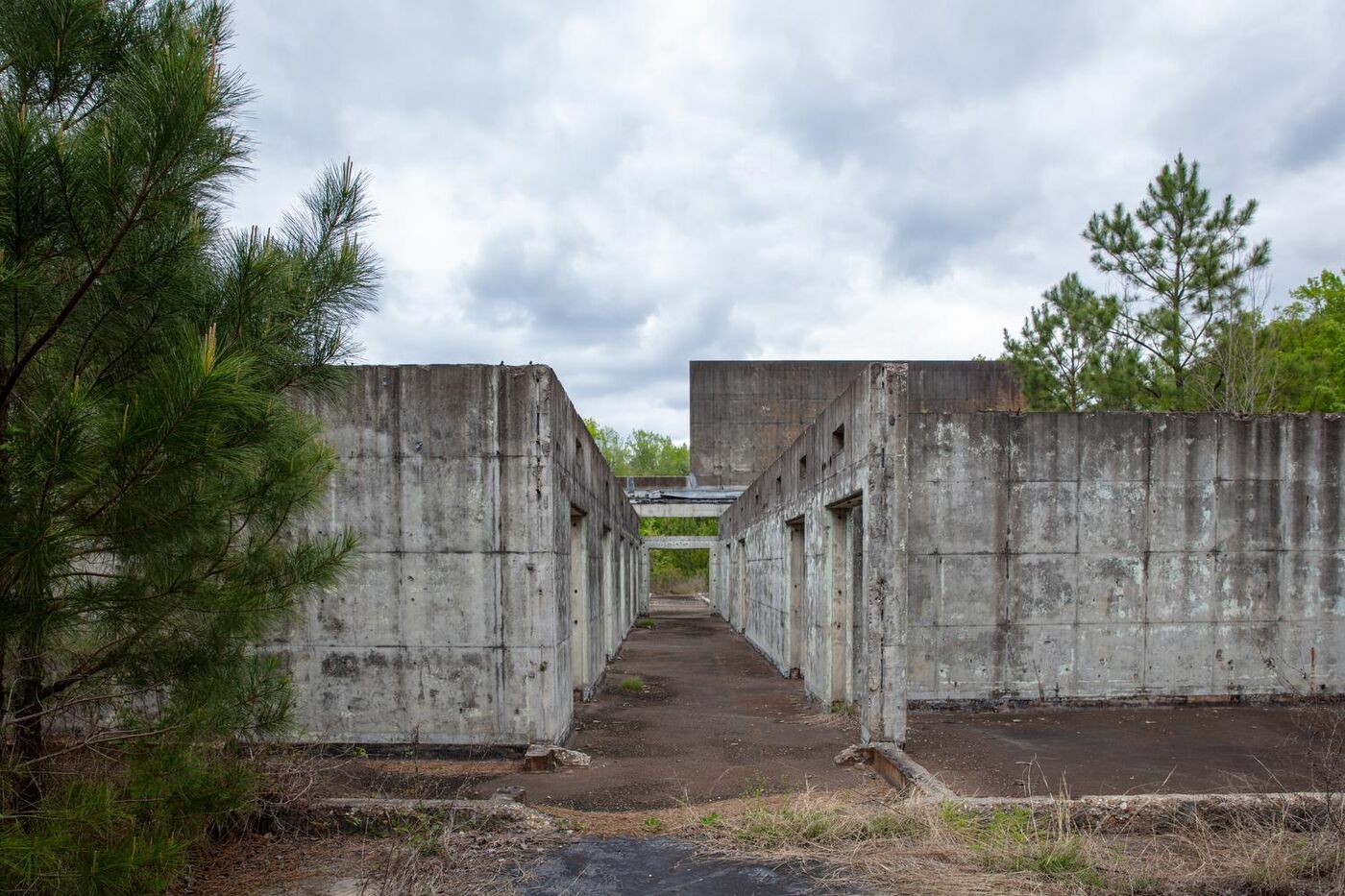
Longhorn Army Ammunition Plant
Longhorn Army Ammunition Plant was a government-owned munitions facility on roughly 8,490 acres near Caddo Lake in Karnack, Harrison County, Texas, about 14 miles northeast of Marshall. Established in 1942, the plant produced large quantities of TNT during World War II (reportedly some 393 million pounds) along with pyrotechnic munitions. From the early 1950s into 1971, Thiokol Chemical Corporation manufactured solid-fuel rocket motors at the site, and the plant was later used to destroy Pershing missiles following the 1987 Intermediate-Range Nuclear Forces Treaty, with operations continuing until 1997. The property was transferred to the U.S. Fish and Wildlife Service in 2000 and became the Caddo Lake National Wildlife Refuge.
Decades of explosives, pyrotechnics, and rocket-motor production left behind a range of contaminants in soil, groundwater, and surface water at the installation. The following substances have been documented in connection with site operations and are the subject of ongoing environmental study and cleanup.
- Trichloroethene (TCE) is an industrial solvent that was widely used for cleaning and degreasing metal parts and equipment. At Longhorn, TCE and related solvents such as methylene chloride were detected in groundwater at the plant and, in more limited amounts, in streams flowing toward Caddo Lake. Exposure to TCE has been associated in some studies with concerns about effects on the liver, immune system, and developing fetus.
- Perchlorate is a chemical associated with solid rocket propellants and pyrotechnics. Given the plant's rocket-motor and munitions work, perchlorate was found in groundwater, surface water, and soil across the site. Perchlorate has been associated with concerns about its potential to affect thyroid function by interfering with iodide uptake.
- Explosives, including RDX, were central to the plant's mission of producing and, later, demilitarizing munitions. Residues from explosives manufacturing and handling have been documented in environmental media at the site. Some explosive compounds have been associated with concerns about potential effects on the nervous system and other organs at sufficient levels of exposure.
- Heavy metals such as lead and mercury were linked to manufacturing processes and waste disposal at the installation. Sediment samples from streams near Caddo Lake found elevated levels of lead and mercury. Long-term exposure to such metals has been associated with a variety of health concerns, including effects on the nervous system and kidneys.
- Solvents and other volatile organic compounds, beyond TCE, were used in cleaning, maintenance, and production operations. These VOCs contributed to the groundwater contamination identified at the plant. Depending on the compound and the level of exposure, VOCs have been associated with concerns about effects on the respiratory and nervous systems.
Longhorn Army Ammunition Plant was placed on the EPA's National Priorities List (the federal Superfund program) on August 30, 1990. Cleanup activities began in the mid-1990s and have continued over the years, including engineered landfill caps and periodic five-year reviews conducted by the Army with EPA and the Texas Commission on Environmental Quality. Remediation and monitoring of soil, groundwater, and surface water remain ongoing.
Veterans and civilian workers who served at or near Longhorn Army Ammunition Plant may wish to stay informed about the site's environmental history and the status of its cleanup. Anyone with questions about possible exposures and related health matters is encouraged to speak with the U.S. Department of Veterans Affairs and a personal healthcare provider, who can offer guidance based on individual circumstances.
Were you stationed at a contaminated site?
The PACT Act of 2022 added more than 20 presumptive conditions for toxic exposure, including many cancers, and there is no deadline to file a VA claim.
This page is for informational purposes only and is not medical or legal advice. Consult a qualified professional about your health or benefits.
Discussion
No approved comments yet.