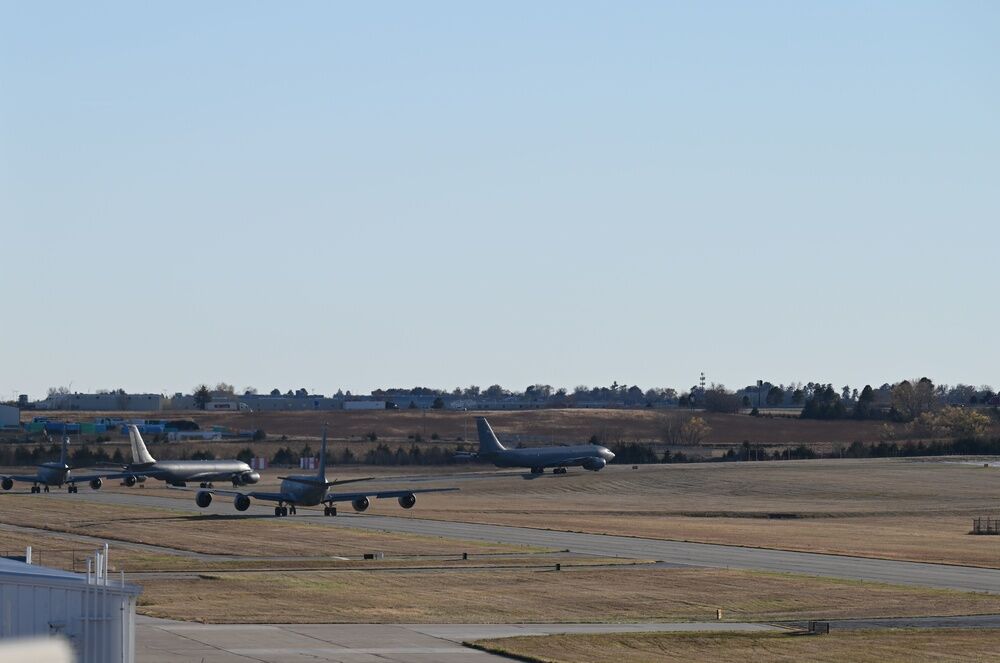
Lincoln Air National Guard Base
Lincoln Air National Guard Base is a Nebraska Air National Guard installation located at the Lincoln Airport in Lincoln, Nebraska. The base is home to the 155th Air Refueling Wing, which traces its lineage to a fighter group established by the Nebraska Air National Guard on June 1, 1960. The wing flew fighter and reconnaissance missions for several decades before transitioning to an air refueling role in 1992, and it now operates the KC-135R Stratotanker. When activated for federal service, the wing supports the United States Air Force Air Mobility Command and has contributed aircrews and aircraft to a range of overseas operations. An Army National Guard aviation support facility is also located in the Lincoln area near the airport.
As with many airfields and military aviation sites, environmental sampling at and around the Lincoln facilities has raised concerns about potential exposure to a group of compounds known as per- and polyfluoroalkyl substances. The Air National Guard sampled soil, groundwater, surface water, and sediment near the base, and the Army National Guard sampled soil and groundwater at its Lincoln support facility, with these substances reported in environmental samples. The findings have been associated primarily with the historic use of firefighting foam at the site.
- PFAS are a large family of synthetic chemicals valued for resisting heat, water, and oil, and they are notably persistent in the environment. At Lincoln, PFAS were reported in soil, groundwater, surface water, and sediment sampled near the airfield and support facilities. Research has associated some PFAS with concerns about potential effects on cholesterol levels, the immune system, and other health outcomes, though findings continue to be studied.
- PFOS is one specific PFAS compound that was a common ingredient in older firefighting foam formulations. It is among the substances that environmental programs look for when assessing sites such as Lincoln where such foam was historically used. PFOS has been associated in some studies with concerns about potential health effects, which is part of why it is closely monitored.
- PFOA is another individual PFAS compound that has been widely manufactured and is frequently included in PFAS testing. It is among the compounds of interest in assessments connected to historic foam use at facilities like Lincoln. PFOA has been associated with concerns about potential exposure, and it remains a focus of ongoing scientific review.
- AFFF, or aqueous film-forming foam, is a firefighting agent that was used repeatedly in training and response at military aviation sites and is the reported source of the PFAS detected in the Lincoln area. Because PFAS from AFFF can dissolve in water, these compounds may migrate with surface water and groundwater, which is part of why sampling around the Lincoln facilities has focused on those media. Concerns about AFFF stem largely from the PFAS compounds it contained.
Lincoln Air National Guard Base is not listed on the federal National Priorities List of Superfund sites. PFAS assessment in the Lincoln area has proceeded under Department of Defense investigation protocols, with oversight from the Nebraska Department of Environment and Energy. Officials have indicated that the Department of Defense will continue to investigate potential PFAS sources and conduct additional assessment as needed.
Veterans, current service members, and others who lived or worked at Lincoln Air National Guard Base and have questions about possible exposure are encouraged to stay informed as assessment and monitoring continue. Anyone with health concerns may wish to speak with the U.S. Department of Veterans Affairs or a personal health care provider, who can offer guidance based on individual circumstances and the most current information available.
Were you stationed at a contaminated site?
The PACT Act of 2022 added more than 20 presumptive conditions for toxic exposure, including many cancers, and there is no deadline to file a VA claim.
This page is for informational purposes only and is not medical or legal advice. Consult a qualified professional about your health or benefits.
Discussion
No approved comments yet.