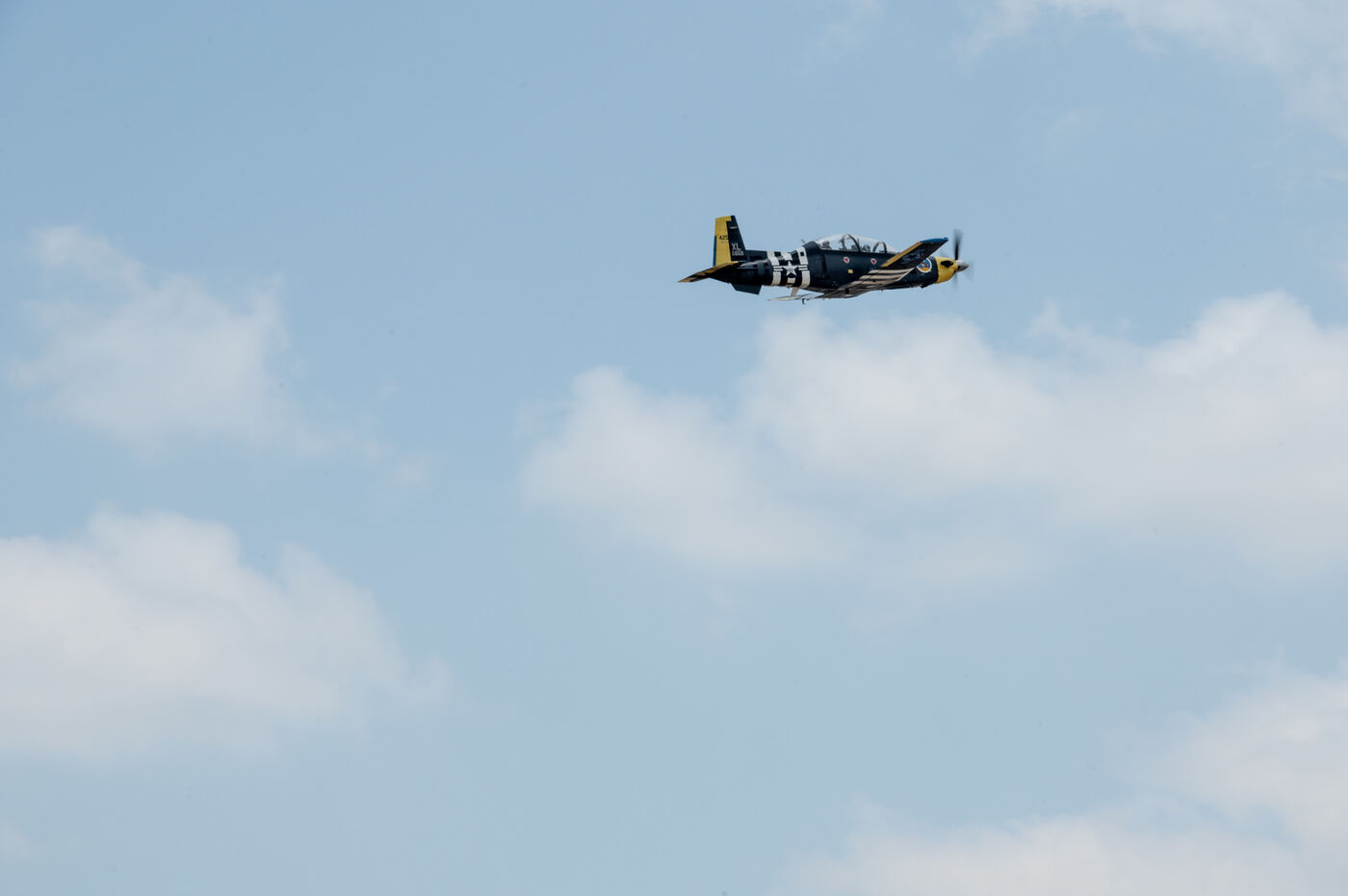
Laughlin Air Force Base
Laughlin Air Force Base is an active United States Air Force installation located about six miles east of Del Rio in southwestern Texas. It was first established in 1943 as Laughlin Army Air Field, where it trained B-26 Marauder pilots and crews during World War II before closing in 1945. The base reopened in 1952 and, during the Cold War, served the Strategic Air Command as a home for RB-57 and U-2 reconnaissance aircraft. Today Laughlin hosts the 47th Flying Training Wing and is one of the Air Force's largest undergraduate pilot training bases, supporting daily flight operations and the personnel who live and work there.
As with many long-operating military airfields, Laughlin has been associated with concerns about potential exposure to certain industrial chemicals, particularly those tied to decades of firefighting and aircraft operations. The Department of Defense has included Laughlin among the installations where it is assessing past PFAS use or potential release linked to firefighting foam. It is important to note that, based on available public records, this appears to reflect a screening or assessment status rather than a confirmed, documented release at the base, and reporting indicates that assessment work has been ongoing.
- PFAS are a large family of man-made per- and polyfluoroalkyl substances valued for their resistance to heat, water, and oil. At airfields they are commonly associated with firefighting foam used in training and emergency response, and they are known to persist in soil and groundwater. Research has associated certain PFAS with potential health concerns. Whether and to what extent PFAS are present at Laughlin specifically remains the subject of assessment rather than a settled finding.
- PFOS (perfluorooctane sulfonate) is one of the individual PFAS compounds historically found in firefighting foam formulations. It has been detected at a number of Air Force installations during environmental assessments, though public records do not appear to confirm specific detection figures for Laughlin. PFOS has been associated in some studies with potential effects on the immune system, liver, and other functions, which is why drinking water levels have drawn close attention.
- PFOA (perfluorooctanoic acid) is another PFAS compound commonly evaluated alongside PFOS at military sites. It can migrate into groundwater and tends to remain in the environment for long periods. PFOA has been the subject of research into possible health concerns, and it is among the compounds routinely tested for as part of base-wide PFAS assessments.
- AFFF, or aqueous film-forming foam, is the firefighting agent that historically served as the primary source of PFAS at many airfields. Foams of this type were widely used across Air Force installations for fire suppression and training exercises involving fuel fires. Because legacy AFFF formulations contained PFOS and PFOA, past use of such foam is generally regarded as a likely route by which these compounds can enter soil and groundwater, which is part of why installations like Laughlin are being assessed.
Laughlin Air Force Base is not listed as a National Priorities List Superfund site. Instead, any PFAS investigation and subsequent cleanup at the installation would fall under the Department of Defense and Air Force environmental restoration program, which follows the federal CERCLA process of preliminary assessment, site inspection, and remedial action. Reporting indicates that assessment work has been ongoing, with the Air Force evaluating potential exposure pathways and the extent of any contamination.
Veterans, family members, and civilian staff who served or worked at Laughlin Air Force Base may wish to stay informed as the assessment continues and new findings are released. Those with questions about possible exposure are encouraged to keep records of their service and to speak with the Department of Veterans Affairs about health resources, screening options, and any benefits for which they may be eligible.
Were you stationed at a contaminated site?
The PACT Act of 2022 added more than 20 presumptive conditions for toxic exposure, including many cancers, and there is no deadline to file a VA claim.
This page is for informational purposes only and is not medical or legal advice. Consult a qualified professional about your health or benefits.
Discussion
No approved comments yet.