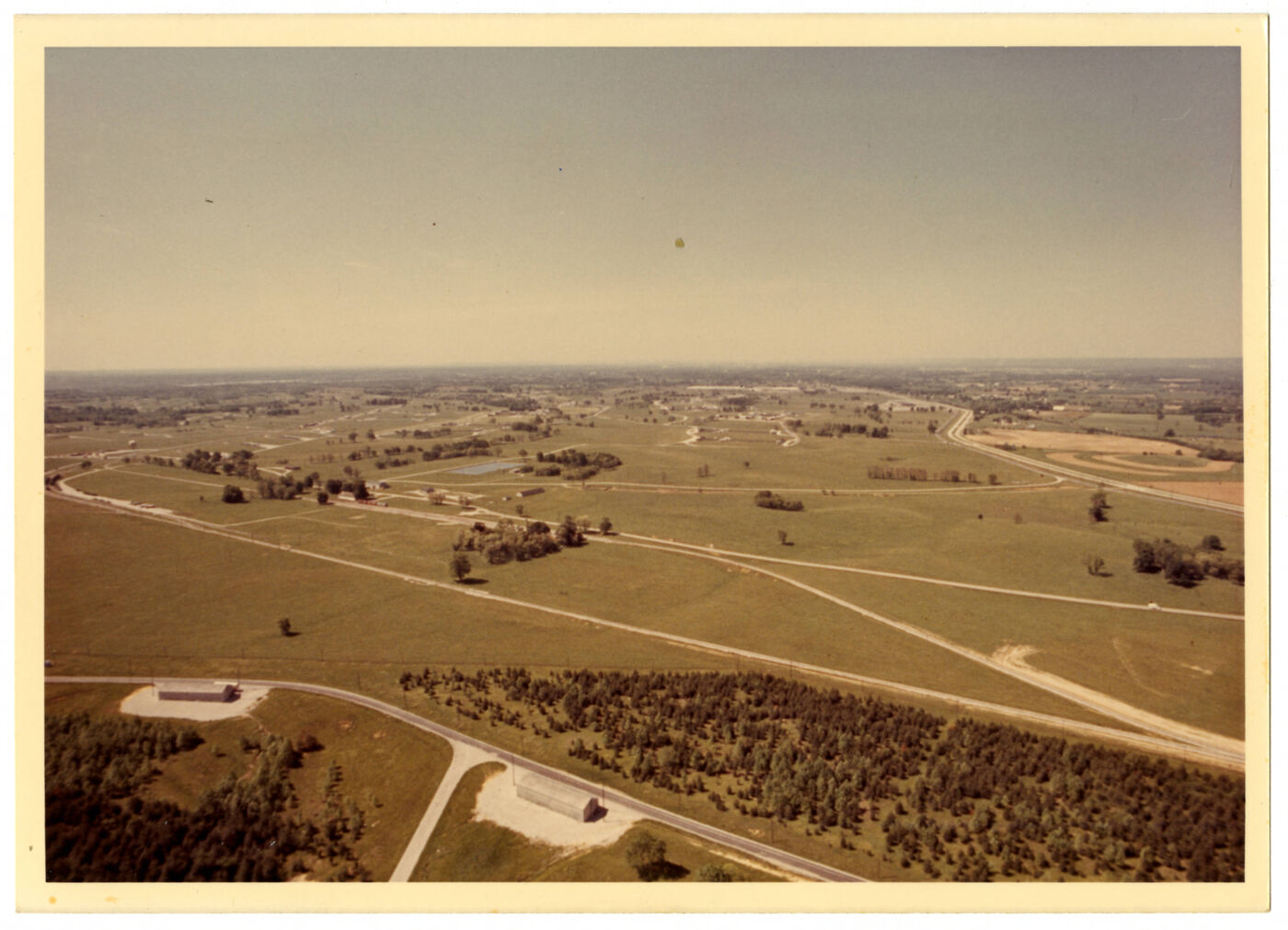
Indiana Army Ammunition Plant
Indiana Army Ammunition Plant (often abbreviated INAAP) was a United States Army industrial facility located near Charlestown in Clark County, Indiana. Established in 1941 to support World War II production, the installation combined three plants that manufactured smokeless powder, rocket propellant, and propellant charge bags. The site operated through the war years and intermittently afterward into the early 1990s, with manufacturing winding down by 1992. After decades of munitions production, the Army gradually transferred the property, deeding the final parcels to the River Ridge Development Authority in October 2016. Much of the former plant has since been redeveloped as the River Ridge Commerce Center, while other acreage was conveyed to the State of Indiana for Charlestown State Park.
Because the installation produced and handled propellants, explosives, and industrial chemicals for many years, environmental investigations have documented contamination across portions of the property. Several of the substances identified there have been associated with health concerns, and the descriptions below reflect what investigations have reported rather than any conclusion about individual exposure.
- Explosives and propellant residues: Explosive and propellant compounds, including dinitrotoluene (DNT) and nitrocellulose, were associated with the smokeless powder and propellant manufacturing carried out at the plant. Army investigations have reported elevated levels of explosives, along with metals, in soils at a number of source areas, and a 1994 preliminary assessment concluded that the potential for off site contamination did exist. Exposure to certain explosives residues has been associated in some studies with potential health concerns, which is part of why monitoring has continued.
- Heavy metals: Manufacturing and waste handling at the installation left heavy metals, such as lead, arsenic, and chromium, in soil at various locations. Metals do not break down over time, and concerns about potential exposure have focused on long term contact through soil or groundwater.
- Solvents and volatile organic compounds: Volatile organic compounds, a category that can include solvents such as TCE (trichloroethylene), are reported among the contaminants of concern at the site, and VOCs have been detected in groundwater at several locations. Such compounds can persist in groundwater, and exposure to certain solvents has been associated with a range of health concerns, prompting ongoing groundwater study.
- PFAS: Per- and polyfluoroalkyl substances, commonly known as PFAS, are being evaluated on the property. These compounds, sometimes linked to firefighting foams and other industrial uses, are highly persistent in the environment. The facility has been undergoing a preliminary assessment and site inspection phase to evaluate the presence and extent of PFAS resulting from historical operations.
Indiana Army Ammunition Plant is a Federal Facility that is not listed on the National Priorities List. Instead, cleanup has proceeded under corrective action through the Resource Conservation and Recovery Act (RCRA) program, with the Indiana Department of Environmental Management as lead regulatory agency and involvement from the Army and the U.S. Environmental Protection Agency. The Army has reported spending substantial sums over many years on environmental restoration and monitoring, and PFAS assessment remains in progress.
Veterans, civilian employees, and others who spent time at the installation may wish to stay informed as environmental investigations and corrective action continue. Those with questions about potential exposure are encouraged to keep records of their service and to consult the U.S. Department of Veterans Affairs, which can provide current guidance on health resources and any benefits for which they may be eligible.
Were you stationed at a contaminated site?
The PACT Act of 2022 added more than 20 presumptive conditions for toxic exposure, including many cancers, and there is no deadline to file a VA claim.
This page is for informational purposes only and is not medical or legal advice. Consult a qualified professional about your health or benefits.
Discussion
No approved comments yet.