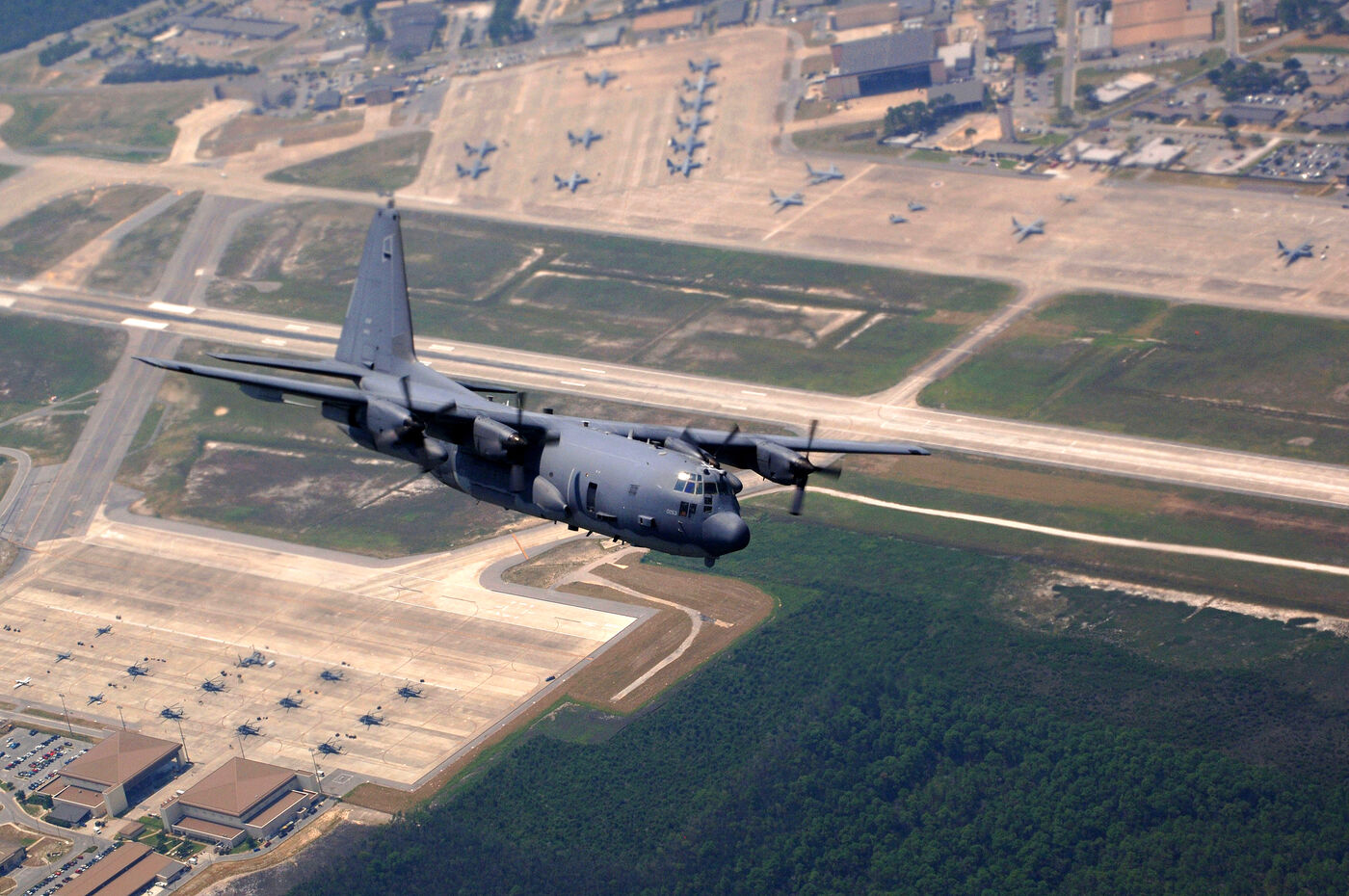
Hurlburt Field
Hurlburt Field is an active United States Air Force installation in Okaloosa County, Florida, just west of Mary Esther. It began during World War II as Eglin Auxiliary Field Number 9 and was later named in honor of First Lieutenant Donald Wilson Hurlburt, an aviator killed in an aircraft crash in 1943. The field is part of the greater Eglin Air Force Base reservation, although it was administratively separated from the rest of the Eglin complex in the 1950s. Today it serves as the headquarters of Air Force Special Operations Command (AFSOC), which was established there in 1990, and is home to the 1st Special Operations Wing and other special operations units.
Like many military airfields with a long history of flight operations and fire response training, Hurlburt Field has been associated with concerns about potential exposure to firefighting foam chemicals. The Department of Defense has listed the installation among those being assessed for the use or potential release of per- and polyfluoroalkyl substances, and environmental work tied to past firefighting foam use is part of that effort.
- AFFF (aqueous film forming foam) is a firefighting foam developed to suppress fuel fires. It was used at Hurlburt Field for decades during fire suppression and training exercises involving jet fuel fires, and repeated application on runways, training areas, and around hangars has been associated with the introduction of foam residues into soil and groundwater.
- PFAS are a large class of synthetic chemicals valued for their resistance to heat, water, and oil, and they are the active ingredients in AFFF. These compounds are known for their environmental persistence, and research has associated certain PFAS with a range of potential health effects, which has prompted ongoing study near sites where the foam was used.
- PFOS (perfluorooctane sulfonate) is one of the specific PFAS compounds historically found in older AFFF formulations. Because of its persistence and tendency to remain in the body over time, PFOS is among the substances tracked in groundwater investigations at firefighting foam sites such as Hurlburt Field.
- PFOA (perfluorooctanoic acid) is another long lasting PFAS compound associated with legacy firefighting foam and industrial uses. It is among the chemicals that federal investigators sample for when assessing whether a release has occurred, and concerns about potential exposure have contributed to its inclusion in environmental testing.
Hurlburt Field is not listed on the National Priorities List of Superfund sites. Instead, the response to PFAS is being carried out under the Department of Defense environmental program using the federal CERCLA process. This work has included preliminary assessment and site investigation activities followed by remedial investigation to characterize the extent of any release from past firefighting foam use, with findings made available to the public as the investigation proceeds.
Veterans, family members, and others who lived or worked at Hurlburt Field may wish to stay informed as the Air Force continues its environmental investigation and as federal guidance on these chemicals evolves. Anyone with questions about possible exposure or related health concerns is encouraged to keep records of their service history and to speak with the U.S. Department of Veterans Affairs about available health resources and current benefits guidance.
Were you stationed at a contaminated site?
The PACT Act of 2022 added more than 20 presumptive conditions for toxic exposure, including many cancers, and there is no deadline to file a VA claim.
This page is for informational purposes only and is not medical or legal advice. Consult a qualified professional about your health or benefits.
Discussion
No approved comments yet.