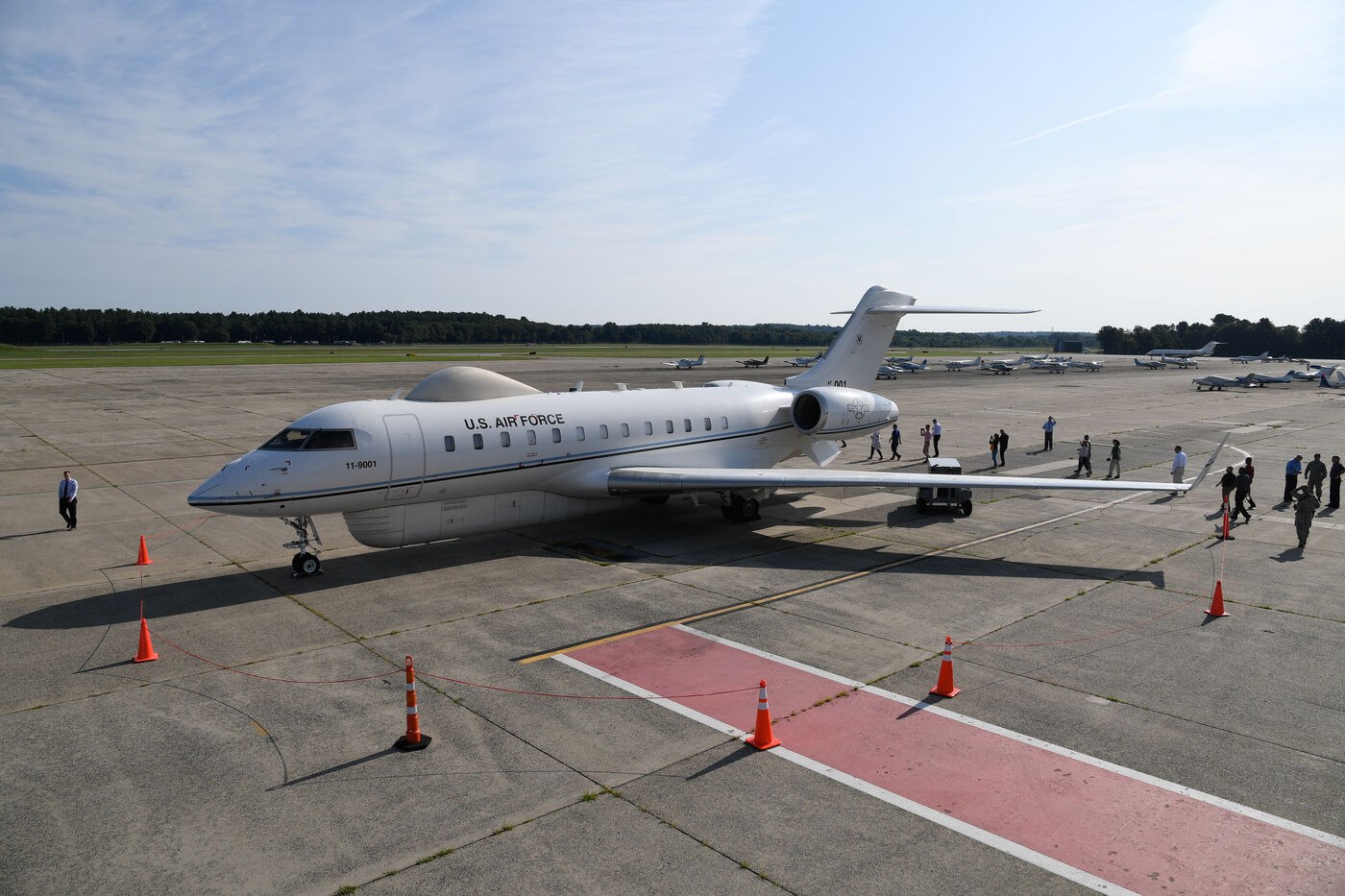
Hanscom Air Force Base
Hanscom Air Force Base is an Air Force installation located primarily in Bedford, Massachusetts, with portions extending into the neighboring towns of Lincoln, Concord, and Lexington in Middlesex County. The base was established in the early 1940s and was named in honor of Laurence G. Hanscom, an aviation enthusiast who died in a 1941 plane crash. During World War II it supported fighter training and the testing of radar systems developed by MIT, and through the Cold War it grew into a major center for electronics research. Today Hanscom operates as a non-flying installation and serves as the Air Force's center for electronic systems development and acquisition, hosting the Air Force Life Cycle Management Center and the 66th Air Base Group. Regular military flying operations at the field ceased in the early 1970s.
Decades of operations at the base, including fire training, fuel handling, and waste disposal, have been associated with the release of several substances into soil and groundwater. Environmental investigations identified numerous potential source areas across the property, and concerns about potential exposure have prompted ongoing study and monitoring. The contaminants below have been documented in connection with the base.
- Solvents: Industrial solvents, including waste oils, paint thinners, and degreasers, were used in maintenance and cleaning operations and were disposed of in several areas of the base. As a group of volatile organic compounds, solvents that reach groundwater have been associated with concerns about potential drinking water exposure.
- Trichloroethylene (TCE): TCE is a chlorinated solvent historically used for degreasing metal parts and equipment. Chlorinated solvent use at the base contributed to groundwater contamination that has been the subject of long-term remediation. Exposure to TCE has been associated in some studies with concerns about possible effects on the kidneys, liver, and immune system.
- Jet fuel: Petroleum releases and the dispensing of jet fuel and aviation gasoline occurred during the base's operational history, including spills and leaks from underground storage tanks. Petroleum compounds in soil and groundwater have been associated with concerns about potential exposure where they migrate toward water resources.
- PFAS: Per- and polyfluoroalkyl substances (PFAS) are a large family of long-lasting synthetic chemicals. At Hanscom, PFAS have been investigated in connection with firefighting activities, and state studies identified a PFAS signature consistent with legacy foam in nearby surface waters. Exposure to certain PFAS has been associated with concerns about potential health effects, which is why investigation and monitoring are ongoing.
- AFFF: Aqueous film forming foam (AFFF) is a firefighting foam used to suppress fuel fires and during fire training, and it is a recognized source of PFAS. Releases of AFFF at the base have been linked to PFAS detections, and the Air Force has proposed adding related sites to its cleanup program to determine the nature and extent of the contamination.
Hanscom Field and Hanscom Air Force Base were placed on the National Priorities List, the federal Superfund program, in 1994 because of groundwater and soil contamination from fuel, solvents, and waste disposal areas. The Air Force has carried out cleanup work, including soil excavation, removal of underground storage tanks, and groundwater extraction and treatment, with oversight from the U.S. Environmental Protection Agency and the Massachusetts Department of Environmental Protection. Cleanup decisions were finalized through a series of Records of Decision issued between 2000 and 2007, while remedial investigation and long-term monitoring, including for PFAS and 1,4-dioxane, have continued at several operable units.
Veterans, civilian employees, and family members who spent time at Hanscom Air Force Base and have questions about these exposures may find it helpful to stay informed as investigations continue and to keep records of their service. Anyone with health concerns is encouraged to speak with the U.S. Department of Veterans Affairs or a medical provider about available resources and any benefits for which they may be eligible.
Were you stationed at a contaminated site?
The PACT Act of 2022 added more than 20 presumptive conditions for toxic exposure, including many cancers, and there is no deadline to file a VA claim.
This page is for informational purposes only and is not medical or legal advice. Consult a qualified professional about your health or benefits.
Discussion
No approved comments yet.