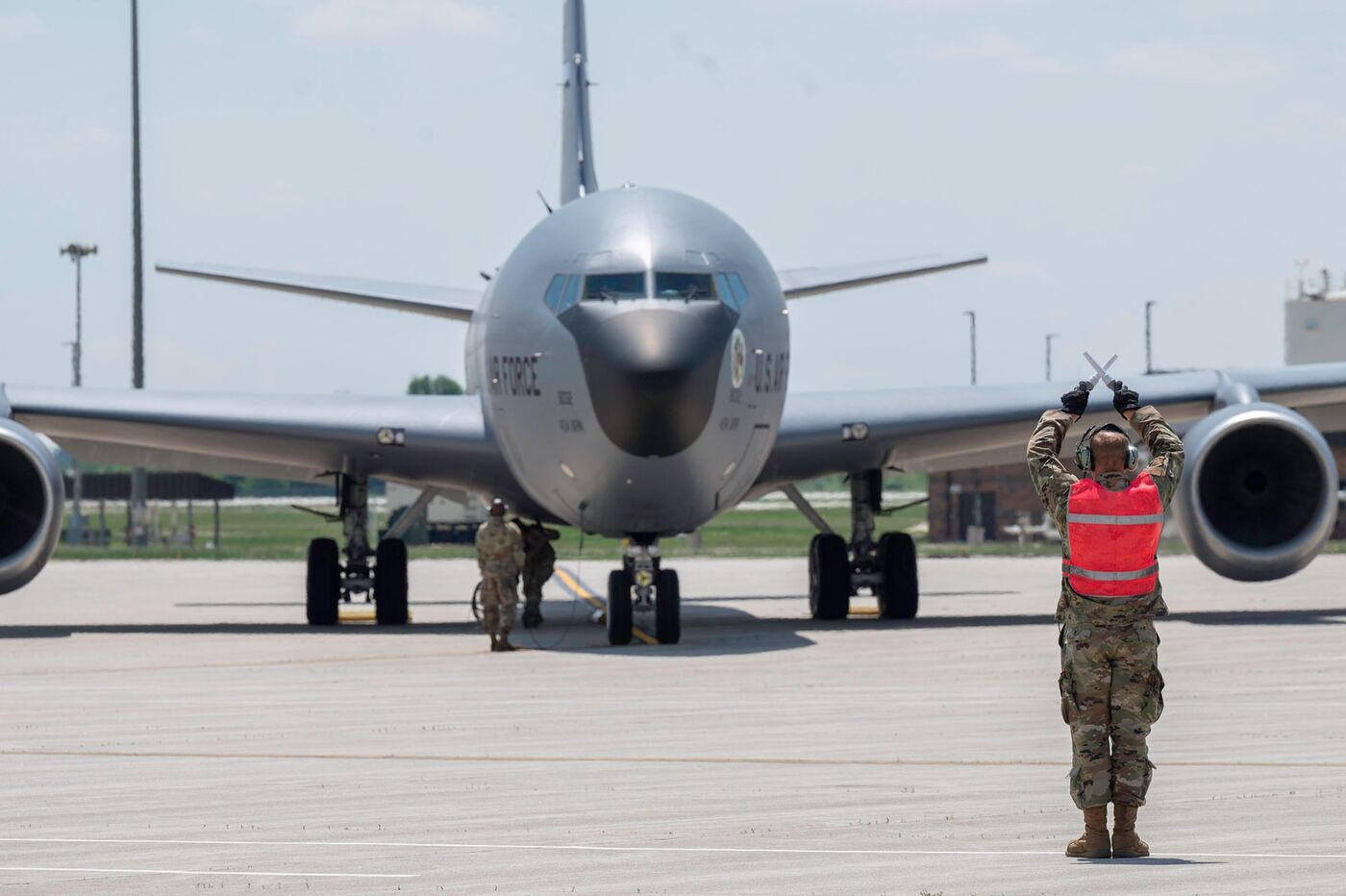
Grissom Air Reserve Base
Grissom Air Reserve Base is a United States Air Force Reserve installation located about 12 miles north of Kokomo, in Cass and Miami counties, Indiana. The site first opened on July 1, 1942 as a naval reserve air base and was designated Naval Air Station Bunker Hill in 1943, training Navy, Marine, and Coast Guard pilots during World War II. The Air Force reopened the field on June 22, 1954 as Bunker Hill Air Force Base, and it was renamed Grissom Air Force Base in 1968 in honor of Lieutenant Colonel Virgil I. Grissom. Following a 1991 Base Realignment and Closure decision, the installation was downsized and redesignated Grissom Air Reserve Base in 1994. Today the host 434th Air Refueling Wing operates KC-135 Stratotanker aircraft, supporting air refueling missions within Air Mobility Command.
As with many long active flying installations, environmental investigations at Grissom have raised concerns about potential exposure to certain chemicals used in routine base operations, particularly those associated with firefighting and aircraft fire protection. These concerns center on past use of firefighting foam and the contaminants it can leave behind in soil and water.
- AFFF (aqueous film forming foam) is a fire suppressant historically used at military airfields to extinguish fuel fires during training and emergency response. At Grissom, AFFF was used at former fire training areas, fire stations, and hangars, and it is regarded as the primary source of the chemical contamination identified on the installation. AFFF has been associated with the release of long lasting fluorinated compounds into the surrounding environment.
- PFAS (per- and polyfluoroalkyl substances) are a large family of synthetic chemicals valued for their resistance to heat, water, and oil, and they are a key ingredient in older firefighting foams. Investigations at Grissom have reported PFAS in soil, sediment, surface water, and groundwater connected to former foam use. Often described as forever chemicals because they break down very slowly, PFAS have been associated in some studies with a range of potential health effects, prompting ongoing federal review.
- PFOS (perfluorooctane sulfonate) is one specific PFAS compound that was common in legacy AFFF formulations. Testing at Grissom found PFOS among the perfluorinated compounds present in on base monitoring wells, with the Air Force reporting that 16 of 18 such wells, which are not used for drinking water, measured above the Environmental Protection Agency lifetime health advisory level. PFOS has been the subject of concerns about potential long term health effects from sustained exposure.
- PFOA (perfluorooctanoic acid) is a related fluorinated compound that has also been detected in connection with firefighting foam use. At Grissom, PFOA was among the substances evaluated during PFAS monitoring of base wells. Like other compounds in its class, PFOA has been associated with potential health concerns that remain under study by federal health agencies.
Grissom Air Reserve Base is not listed on the National Priorities List as a federal Superfund site. The Air Force is investigating and addressing PFAS at the installation through its environmental cleanup program under the federal CERCLA process, which includes sampling of soil, sediment, surface water, and groundwater to determine the extent of any release and what further action may be warranted. Reporting has indicated that, while several on base monitoring wells exceeded federal advisory levels, the drinking water wells serving the base met applicable standards for PFOA and PFOS at the time of testing.
Veterans, reservists, and civilian personnel who served or worked at Grissom and have questions about possible exposure are encouraged to stay informed as the Air Force investigation continues. Anyone with health concerns that they believe may be related to service at the base may wish to speak with the U.S. Department of Veterans Affairs about available resources, benefits, and guidance specific to their situation.
Were you stationed at a contaminated site?
The PACT Act of 2022 added more than 20 presumptive conditions for toxic exposure, including many cancers, and there is no deadline to file a VA claim.
This page is for informational purposes only and is not medical or legal advice. Consult a qualified professional about your health or benefits.
Discussion
No approved comments yet.