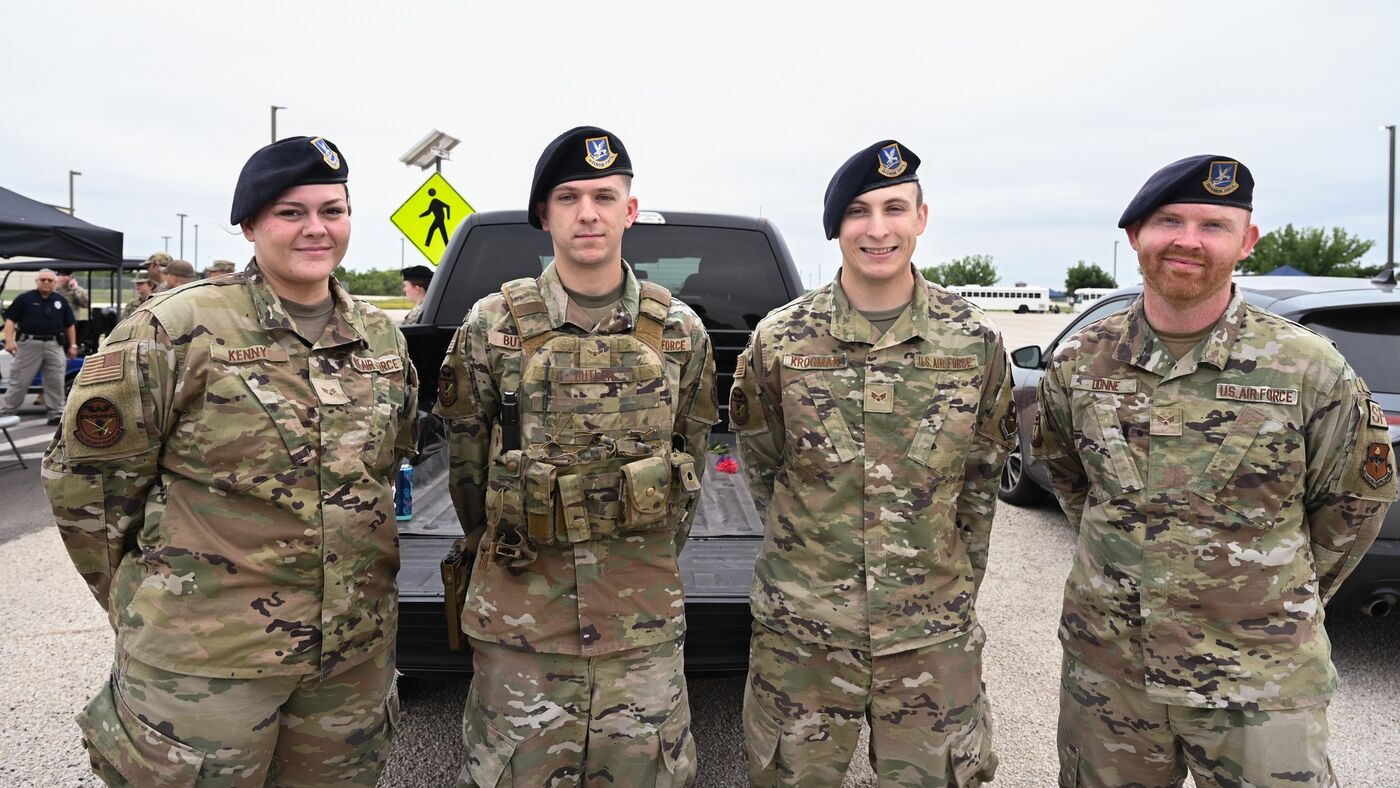
Goodfellow Air Force Base
Goodfellow Air Force Base sits in Tom Green County, just southwest of San Angelo, Texas. The installation opened in August 1940 as the San Angelo Air Corps Basic Flying Training School and was renamed Goodfellow Field in 1941 in honor of John J. Goodfellow Jr., a World War I aviator from the area. For its first decades the base served as a pilot and flight training center, a mission that continued until 1958. Since October 1958 the base has operated as a center for cryptologic and intelligence training, and today, under Air Education and Training Command, it provides intelligence, surveillance, reconnaissance, and cryptologic instruction to members of all the military services. Goodfellow is also home to Department of Defense firefighter training conducted by the 312th Training Squadron.
Like many installations where firefighting foam was used and where fire training has long been part of the mission, Goodfellow Air Force Base has been associated with concerns about potential exposure to a group of manufactured chemicals known as PFAS. Air Force sampling of groundwater, surface water, soil, and sediment indicated there were reasonable pathways for these compounds to migrate from past release areas toward off base drinking water supplies, which prompted testing of nearby private wells.
- PFAS (per- and polyfluoroalkyl substances) are a large family of synthetic chemicals once valued for their resistance to heat, water, and grease. At Goodfellow they are associated with the use of firefighting foam at fire training areas, emergency response sites, and aircraft crash locations. PFAS have been associated in some studies with a range of potential health effects, and federal agencies continue to study these concerns.
- PFOS (perfluorooctane sulfonate) was a primary component of legacy firefighting foam. Preliminary Air Force results indicated that PFOS may be present above the federal lifetime health advisory level in some wells sampled north to northeast of the installation. Exposure to PFOS has been associated with concerns about potential effects on health.
- PFOA (perfluorooctanoic acid) is a related compound also linked to the foam formulations used at the base. It was among the substances the Air Force measured in local drinking water wells, and it has been associated in research with potential health concerns when present in drinking water over long periods.
- AFFF (aqueous film forming foam) is the firefighting foam that served as the source of the PFOS and PFOA detected near Goodfellow. It was used by the military, civilian aviation, and industry to suppress petroleum based fires. Because AFFF contained PFAS, its use and storage have been associated with concerns about contamination of soil and groundwater.
Goodfellow Air Force Base is not listed as a federal Superfund site on the National Priorities List. The PFAS issue has instead been addressed through the Air Force environmental restoration process. The Air Force Civil Engineer Center identified more than 300 parcels with potential drinking water wells within roughly a half mile to one mile of the base and ultimately sampled dozens of off base wells. Where results indicated possible contamination, the Air Force provided bottled water to affected residents and worked to connect them to the municipal water supply while continuing investigation and monitoring.
Veterans, trainees, and family members who lived or worked at Goodfellow Air Force Base may wish to stay informed as the Air Force continues its environmental investigation and as federal guidance on these compounds evolves. Anyone with questions about possible exposure and related benefits is encouraged to speak with the U.S. Department of Veterans Affairs and a personal health care provider, who can offer guidance based on individual circumstances.
Were you stationed at a contaminated site?
The PACT Act of 2022 added more than 20 presumptive conditions for toxic exposure, including many cancers, and there is no deadline to file a VA claim.
This page is for informational purposes only and is not medical or legal advice. Consult a qualified professional about your health or benefits.
Discussion
No approved comments yet.