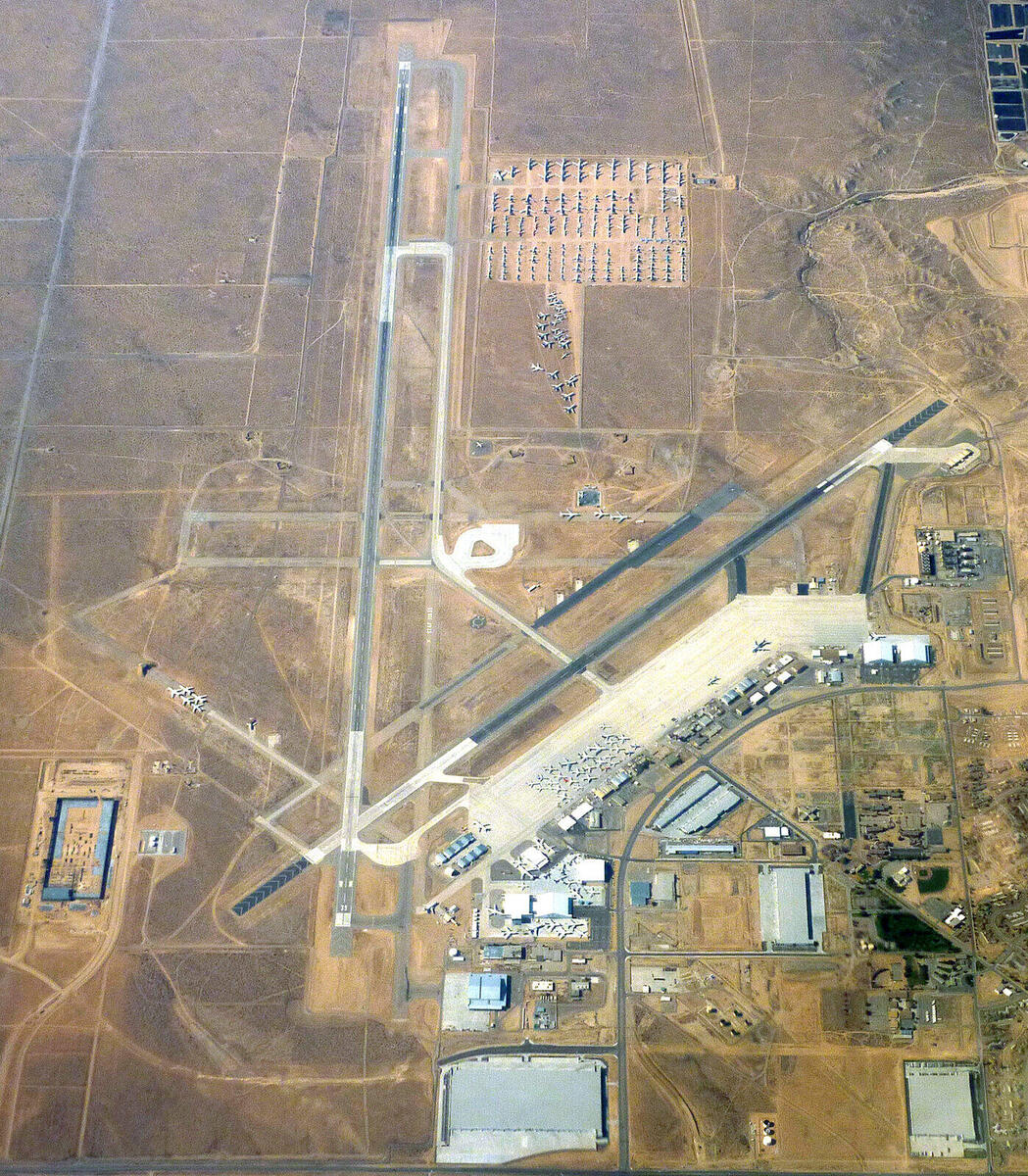
George Air Force Base
George Air Force Base was a United States Air Force installation located in the Mojave Desert near Victorville, California, roughly 75 miles northeast of Los Angeles. The base was established in 1941 as Victorville Army Air Field, an advanced flying school for the Army Air Corps during World War II. After closing at the end of the war, the base was reactivated in November 1950 during the Korean War and spent the following decades training fighter pilots and weapon systems officers, primarily under Tactical Air Command, for the Air Force and allied nations. The base was selected for closure by the 1988 Base Realignment and Closure Commission and was decommissioned in December 1992. The property is now home to the Southern California Logistics Airport.
There are concerns about carcinogenic health hazards at George Air Force Base, due to potential exposure to several environmental contaminants documented in the base's soil and groundwater:
- TCE (trichloroethylene): TCE is a chlorinated solvent that was widely used at the base to degrease metal aircraft parts during maintenance operations. Decades of use and disposal left a groundwater plume of roughly 600 acres in the northeast portion of the base that extends beyond the base boundary. TCE is classified as a known human carcinogen, and exposure has been associated with kidney cancer and other serious health conditions.
- PCE (tetrachloroethylene): PCE is a related chlorinated solvent used for cleaning and degreasing. It has also been detected in groundwater at the former base, and exposure to PCE has been associated with an increased risk of certain cancers.
- Benzene: Benzene is a component of jet fuel and gasoline that entered soil and groundwater through fuel spills and leaking storage tanks. It is a known human carcinogen, and exposure has been associated with leukemia and other blood disorders.
- Jet fuel: An estimated two million gallons or more of jet fuel remains in the groundwater as free product. Passive skimming to recover fuel began in 1992, and regulators have estimated that some fuel contaminated groundwater could take tens of thousands of years to attenuate naturally. Fuel constituents may potentially be linked to a range of health concerns.
- PFAS (per- and polyfluoroalkyl substances): PFAS contamination at the base has been traced largely to firefighting foam (AFFF) used in fire training areas. PFAS compounds have been documented in groundwater monitoring wells at the site, in some cases at levels well above federal health advisory guidelines, and exposure has been associated with certain cancers and other adverse health effects.
George Air Force Base was added to the EPA's National Priorities List (Superfund) in 1990, and the EPA, the State of California, and the Air Force signed a Federal Facilities Agreement in October 1990 to guide the cleanup. Remediation is still ongoing more than three decades later; an early groundwater pump and treat system was shut down in 2003 after proving ineffective, soil vapor extraction continues at fuel contaminated sites, and a revised remedy for the main TCE plume has been under development. Former residents and service members have also filed federal claims over alleged toxic exposure at the base, reporting reproductive health problems and other illnesses.
It's important to note that while there are concerns about potential exposure to these contaminants, establishing definitive links between specific exposures and individual health conditions can be complex. Research into these substances and their long term effects is ongoing. Veterans and family members who lived or worked at the base are encouraged to stay informed about the cleanup, document their service history, and consult the VA regarding health monitoring and potential benefits.
Featured photo: Bobak Ha'Eri, licensed CC-BY 3.0.
Were you stationed at a contaminated site?
The PACT Act of 2022 added more than 20 presumptive conditions for toxic exposure, including many cancers, and there is no deadline to file a VA claim.
This page is for informational purposes only and is not medical or legal advice. Consult a qualified professional about your health or benefits.
Discussion
No approved comments yet.