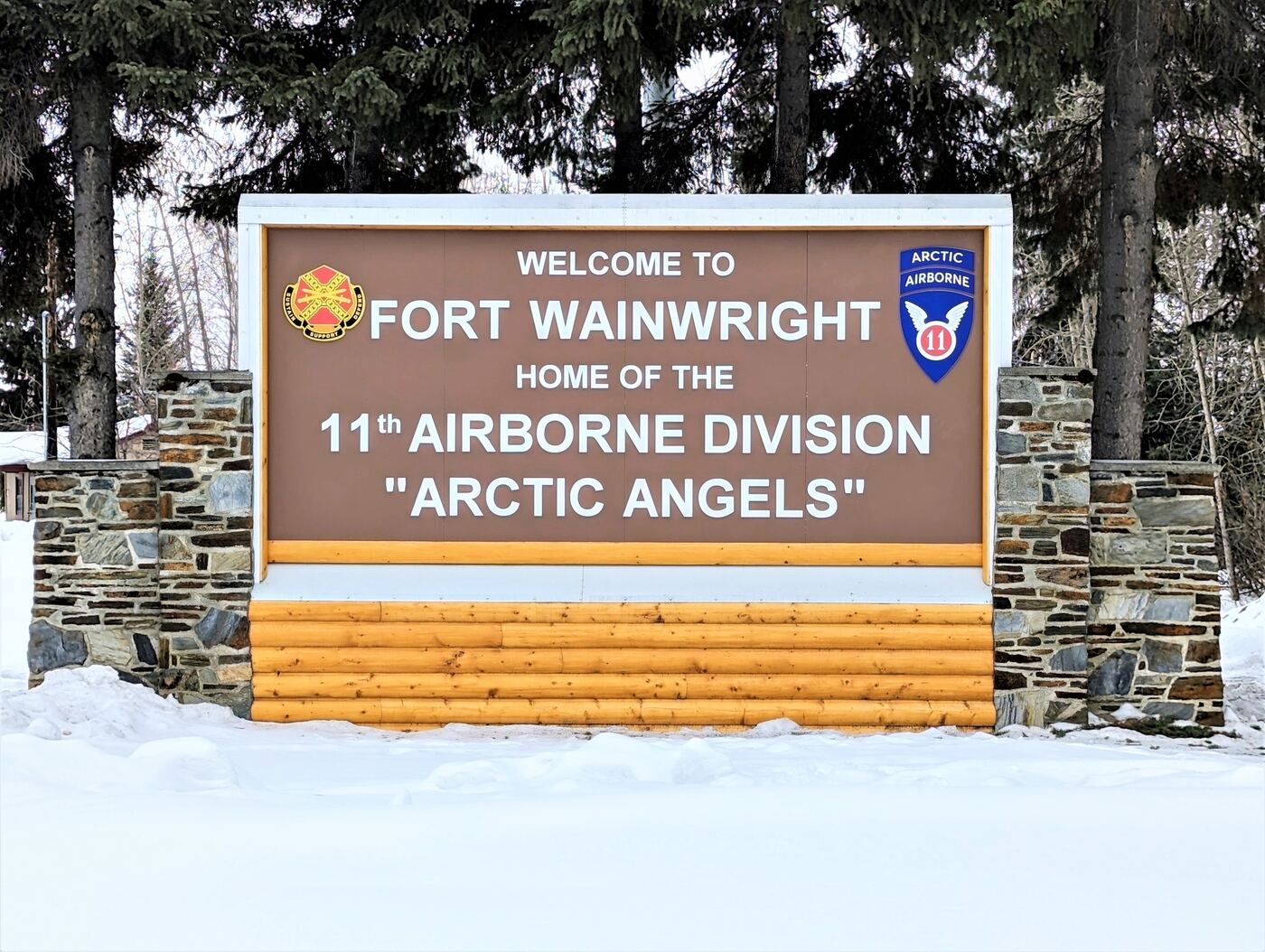
Fort Wainwright
Fort Wainwright is a U.S. Army installation on the eastern edge of Fairbanks, Alaska. It was established in 1939 as Ladd Field, an Army Air Corps station built for cold weather aircraft testing, and during World War II it served as a key transfer point for Lend-Lease aircraft being ferried to the Soviet Union. The installation became Ladd Air Force Base in 1947, then transferred to the Army in 1961 and was renamed for General Jonathan M. Wainwright. Today it is home to elements of the 11th Airborne Division and is one of the Army's principal Arctic and cold weather installations.
Decades of aircraft and vehicle maintenance, fuel storage, landfill operations, power generation, and firefighting training have left documented contamination in soil and groundwater at Fort Wainwright. These findings have raised concerns about potential exposure for service members, families, and civilian workers who lived or worked on post.
- PFAS (per- and polyfluoroalkyl substances) are a family of long-lasting synthetic chemicals detected in on-base groundwater and in samples of base drinking water. PFAS exposure has been associated in studies with certain cancers, thyroid conditions, and immune effects.
- PFOS, one of the most studied PFAS compounds, has been reported in on-base groundwater at Fort Wainwright at concentrations far above current federal drinking water limits. PFOS exposure has been associated with kidney and other health concerns.
- PFOA, a related PFAS compound, has also been reported in groundwater at the post at levels well above federal thresholds. PFOA has been classified as carcinogenic to humans by international health agencies, though individual risk depends on dose and duration of exposure.
- AFFF (aqueous film forming foam) was used for years at Fort Wainwright's fire training areas and airfield to fight and train against fuel fires. AFFF is considered the primary source of the PFAS found in groundwater at the installation.
- TCE (trichloroethylene), a degreasing solvent used in maintenance operations, was identified in groundwater solvent plumes during the Superfund investigation. TCE exposure has been associated with kidney cancer and other serious health conditions.
- Benzene, a component of fuels, was documented at fuel spill areas on post. Benzene is a recognized human carcinogen, and long-term exposure has been linked to blood disorders, including leukemia.
- Jet fuel and other petroleum products leaked and spilled at fuel terminals, the airfield, and storage areas, leaving petroleum constituents in soil and groundwater that have been the focus of cleanup actions.
- Industrial solvents beyond TCE, used in vehicle and aircraft maintenance, contributed to groundwater plumes addressed under the cleanup program. Health concerns vary by compound and level of exposure.
Fort Wainwright was added to the EPA National Priorities List in 1990, and a 1992 Federal Facilities Agreement among the Army, EPA, and the State of Alaska organized the cleanup. The Army reported completing construction of its legacy cleanup systems by 2002, using soil excavation, soil vapor extraction, air sparging, and monitored natural attenuation, with five-year reviews and groundwater monitoring continuing. PFAS sites are being addressed separately under the Army's PFAS remedial investigation program, with ongoing drinking water testing and oversight from the Alaska Department of Environmental Conservation.
Veterans and family members who spent time at Fort Wainwright may want to follow the ongoing PFAS investigations and health studies as new information becomes available. Anyone with questions about past exposure or current health concerns can speak with their health care provider and contact the VA about registry exams and potential benefits.
Were you stationed at a contaminated site?
The PACT Act of 2022 added more than 20 presumptive conditions for toxic exposure, including many cancers, and there is no deadline to file a VA claim.
This page is for informational purposes only and is not medical or legal advice. Consult a qualified professional about your health or benefits.
Discussion
No approved comments yet.