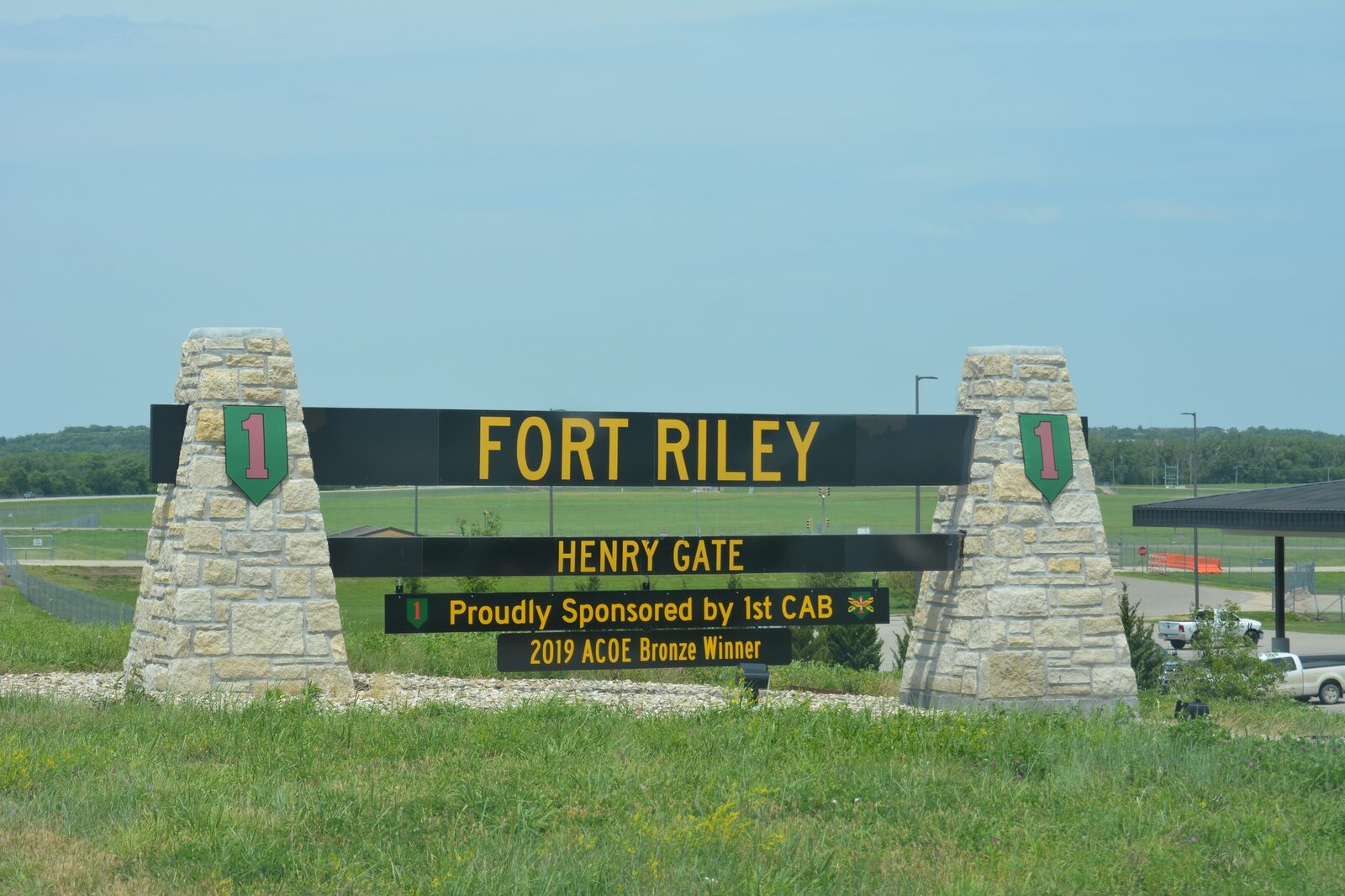
Fort Riley
Fort Riley is a United States Army installation in northeastern Kansas, situated along the Kansas River between Junction City and Manhattan and covering roughly 101,000 acres. The post was established in 1853 and named for Major General Bennett C. Riley, who led the first military escort along the Santa Fe Trail. In the nineteenth century it served as a cavalry post protecting settlers moving west, and it later became a major training and education center for the Army. The 1st Infantry Division, known as the Big Red One, arrived at Fort Riley in 1955 and, after a decade headquartered in Germany, returned to the post in 2006.
There are concerns about potential carcinogenic health hazards at Fort Riley, stemming from decades of military and industrial operations that released hazardous substances into soil, surface water, and groundwater:
- TCE (trichloroethylene): TCE is a chlorinated solvent that was widely used by the military for degreasing metal parts and equipment maintenance. At Fort Riley, TCE is identified by the EPA as the main contaminant at multiple operable units, including a groundwater plume associated with the Building 354 Solvent Detection Area in the Main Post cantonment area north of the Kansas River. Exposure to TCE has been associated with kidney cancer and other serious health conditions.
- Solvents and other chlorinated volatile organic compounds: In addition to TCE, other chlorinated VOCs from vehicle maintenance, dry cleaning, and industrial activities have been detected in groundwater at the post. A 2006 Record of Decision selected monitored natural attenuation and institutional controls to address the Main Post groundwater plume, and additional monitoring wells were installed as recently as 2020. Long term exposure to chlorinated solvents may be linked to cancers and damage to the liver and nervous system.
- Heavy metals: The 120-acre Southwest Funston Landfill received municipal and industrial waste from the mid-1950s until 1981, and metals are among the site's documented contaminants of concern. The landfill was capped, and a 1996 Record of Decision required institutional controls and ongoing groundwater monitoring. Chronic exposure to certain heavy metals has been associated with elevated cancer risk and other health effects.
- PFAS (per- and polyfluoroalkyl substances): According to the Army Environmental Command, PFAS has been detected in soil, groundwater, and surface water at Fort Riley, largely tied to the historical use of AFFF firefighting foam at locations such as the former fire training area at Marshall Army Airfield. A site inspection found PFOS and PFOA in groundwater beneath the airfield at concentrations above federal screening levels, and the Army has been investigating potential PFAS releases since 2020. PFAS exposure has been associated in some studies with kidney and testicular cancer, among other health concerns.
Fort Riley was added to the EPA National Priorities List (Superfund) on October 1, 1990. A Federal Facility Agreement among the Army, the EPA, and the Kansas Department of Health and Environment was finalized in 1991, and Records of Decision were signed for multiple operable units between 1996 and 2020. The EPA reports that existing remedies are currently protective, with annual long term monitoring continuing at several operable units and munitions removal work still ongoing.
It is important to note that while there are concerns about potential exposure to these contaminants at Fort Riley, establishing a definitive link between service at the post and any individual health condition can be complex. Research into the long term effects of these substances is ongoing. Veterans and family members who lived or worked at Fort Riley are encouraged to stay informed about the cleanup, document their service history, and consult the VA about health monitoring and potential benefits.
Were you stationed at a contaminated site?
The PACT Act of 2022 added more than 20 presumptive conditions for toxic exposure, including many cancers, and there is no deadline to file a VA claim.
This page is for informational purposes only and is not medical or legal advice. Consult a qualified professional about your health or benefits.
Discussion
No approved comments yet.