Fort Leavenworth
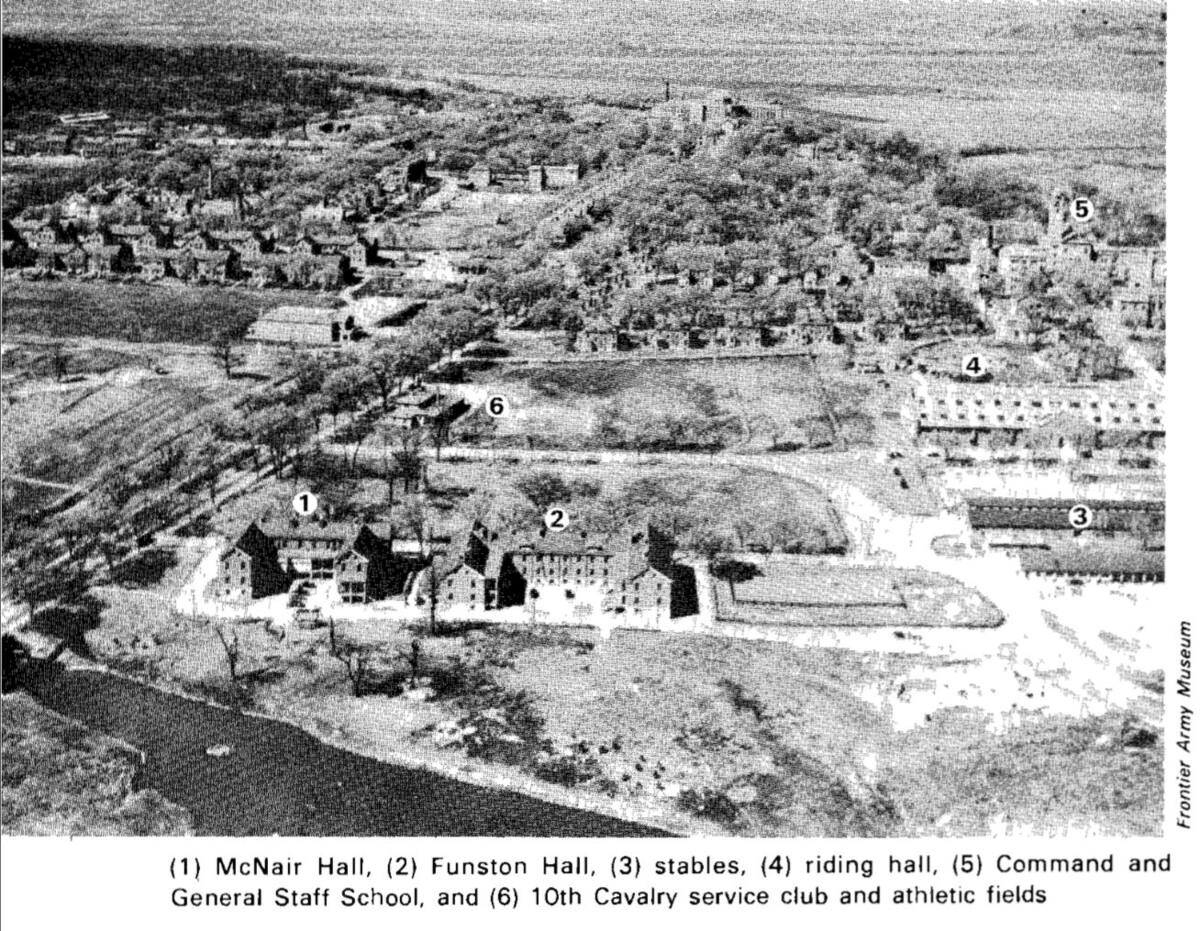
Fort Leavenworth is an active U.S. Army installation located on the Missouri River in northeastern Kansas, near the city of Leavenworth. Established on May 8, 1827, it is widely described as the oldest continuously active Army post west of the Missouri River, originally associated with protecting commerce along the Santa Fe Trail. Over nearly two centuries it has served as a quartermaster depot, arsenal, and troop post. Today it is home to the U.S. Army Combined Arms Center and the Command and General Staff College, a role that has earned it the description of the "Intellectual Center of the Army." Its long history and riverside location place it among the Army's most prominent installations.
As at many long-serving military installations, environmental sampling at Fort Leavenworth identified concerns about potential exposure to certain man-made chemicals in the drinking-water supply. In 2017, testing of the garrison's five production groundwater wells found that three of the five exceeded the Environmental Protection Agency health advisory levels in place at the time. Army data placed Fort Leavenworth high on its list of affected posts, reporting 10 PFAS compounds totaling 4,022 parts per trillion in the drinking-water system, with two significant contributors traced to the area of a former fire station at Sherman Army Airfield.
- PFAS: PFAS (per- and polyfluoroalkyl substances) are a large family of synthetic chemicals valued for their resistance to heat, water, and grease. At Fort Leavenworth, this class of compounds was detected in the drinking-water system, with sources connected to firefighting activities near Sherman Army Airfield. PFAS have been associated in some studies with a range of potential health effects, and concerns about long-term exposure have prompted federal and state action.
- PFOS: PFOS (perfluorooctane sulfonate) is one specific PFAS compound that was among those measured in the post's wells. It was historically a key ingredient in firefighting foams used at military airfields. PFOS has been associated in research with concerns about potential health effects, which is why combined PFOS and PFOA levels became a focus of monitoring at the installation.
- PFOA: PFOA (perfluorooctanoic acid) is a related PFAS compound that was also part of the contamination reported at Fort Leavenworth. Like PFOS, it resists breaking down in the environment. Studies have raised concerns about potential exposure to PFOA, and it was tracked alongside PFOS against the federal advisory target.
- AFFF: AFFF (aqueous film-forming foam) is the firefighting foam that has been identified as the source of the PFAS detected at the post. It was used for decades at military fire stations and airfields to suppress fuel fires, and residues near the former Sherman Army Airfield fire station were linked to the contamination. Because AFFF historically contained PFOS and PFOA, its past use has been associated with concerns about groundwater quality at many installations.
Fort Leavenworth is not listed on the National Priorities List as a federal Superfund site. As an interim measure, garrison leadership arranged to purchase drinking water from the city of Leavenworth through a pipeline while a long-term solution was developed. Working with the U.S. Army Environmental Command and the Kansas Department of Health and Environment (KDHE), the post gained approval to construct a four-vessel granular activated carbon (GAC) filtration system adjacent to its existing treatment plant, an effort that also required coordination with state historic preservation officials because the plant sits within a National Historic Landmark District. Following the 2022 upgrade, the installation has reported meeting the 70 ppt combined PFOS and PFOA target.
Veterans, family members, and civilian employees who lived or worked at Fort Leavenworth and have questions about past water quality are encouraged to stay informed as monitoring continues. Anyone with concerns about potential exposure may wish to discuss their service history with the U.S. Department of Veterans Affairs, which can provide current guidance on benefits and health resources.
Were you stationed at a contaminated site?
The PACT Act of 2022 added more than 20 presumptive conditions for toxic exposure, including many cancers, and there is no deadline to file a VA claim.
This page is for informational purposes only and is not medical or legal advice. Consult a qualified professional about your health or benefits.
Discussion
No approved comments yet.