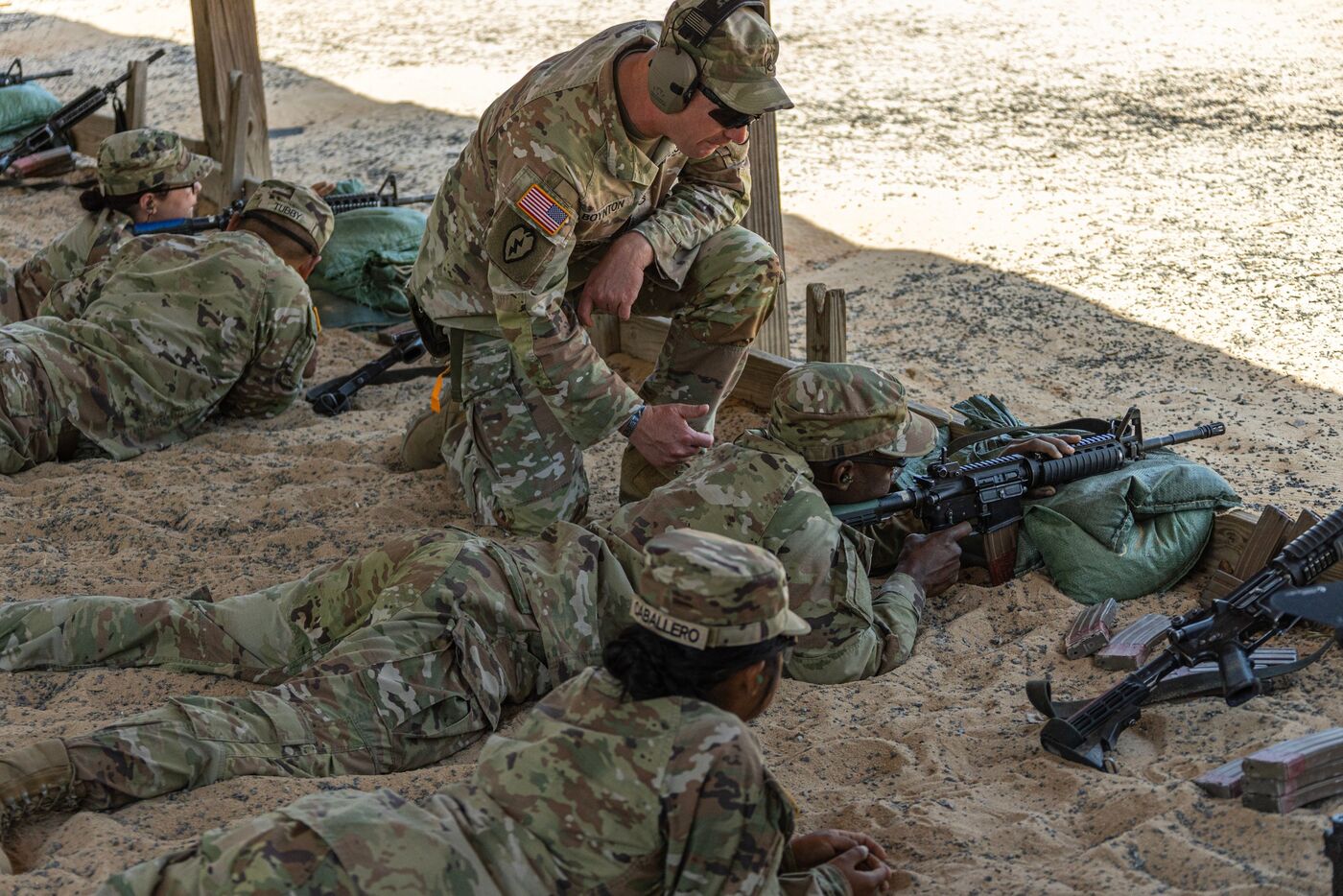
Fort Jackson
Fort Jackson is a United States Army installation located in Columbia, South Carolina. It was first established in 1917 as Camp Jackson, named after President Andrew Jackson, and was redesignated Fort Jackson in 1940. Today it is described as the largest and most active Initial Entry Training center in the Army, where a substantial share of soldiers entering the service each year complete basic combat training and advanced individual training. Over its long history the post has supported mobilization through both world wars, Korea, Vietnam and later conflicts, and it remains a central hub for the Army's training mission.
As with many installations of its size and age, decades of training, firefighting practice, munitions activity and industrial operations at Fort Jackson have been associated with concerns about potential environmental contamination. Environmental investigations have reported several contaminants in soil, groundwater and drinking water at levels that, in some cases, have exceeded applicable federal standards, prompting ongoing study and response by the Army.
- PFAS: Per- and polyfluoroalkyl substances are a large family of synthetic chemicals valued for their resistance to heat, water and oil. At Fort Jackson, PFAS contamination has been associated primarily with the historical use of firefighting foam at fire training areas, along with landfill and industrial areas. Reported groundwater concentrations of PFOS and PFOA have exceeded EPA health advisory and standard levels. These compounds have been studied for potential health effects, and concerns about potential exposure have been raised.
- AFFF: Aqueous film-forming foam is a firefighting agent that was widely used to suppress fuel fires and in training exercises. AFFF is regarded as a principal source of the PFAS detected at the installation, given its repeated historical use at fire training areas.
- RDX and explosives: RDX is a compound associated with munitions and explosives testing. At Fort Jackson, RDX has been documented in drinking water at some residences, and the Army has reported providing whole-house filtration systems to affected family homes. Exposure to certain explosive residues has been studied for potential health concerns.
- TCE: Trichloroethylene is a solvent that was commonly used in degreasing and maintenance operations. TCE has been documented among the contaminants of concern at Fort Jackson, and exposure to it has been associated in scientific literature with a range of potential health concerns.
- Heavy metals: Lead and other metals have been documented in environmental media at the installation, reflecting historical industrial, training and disposal activities. Lead exposure has long been studied for its potential health effects.
- Solvents and PAHs: Beyond TCE, polycyclic aromatic hydrocarbons and related compounds have been reported among the documented contaminants, consistent with combustion, fuel handling and industrial use. These substances have been the subject of ongoing investigation.
Fort Jackson is not listed as a National Priorities List Superfund site. Environmental work at the installation is being carried out under the Army's Environmental Restoration Program, often referred to as the Army Cleanup Program, which addresses hazardous contaminants and military munitions to protect human health and the environment. Documentation associated with this program has identified cleanup efforts involving PFAS, TCE and PAHs, and the Army has reported continuing investigation and restoration activities.
Veterans, family members and civilian workers who spent time at Fort Jackson may wish to stay informed as environmental investigations and cleanup efforts continue. Anyone with questions about potential exposure or related health concerns is encouraged to speak with the U.S. Department of Veterans Affairs and a personal healthcare provider, who can offer guidance based on individual circumstances.
Were you stationed at a contaminated site?
The PACT Act of 2022 added more than 20 presumptive conditions for toxic exposure, including many cancers, and there is no deadline to file a VA claim.
This page is for informational purposes only and is not medical or legal advice. Consult a qualified professional about your health or benefits.
Discussion
No approved comments yet.