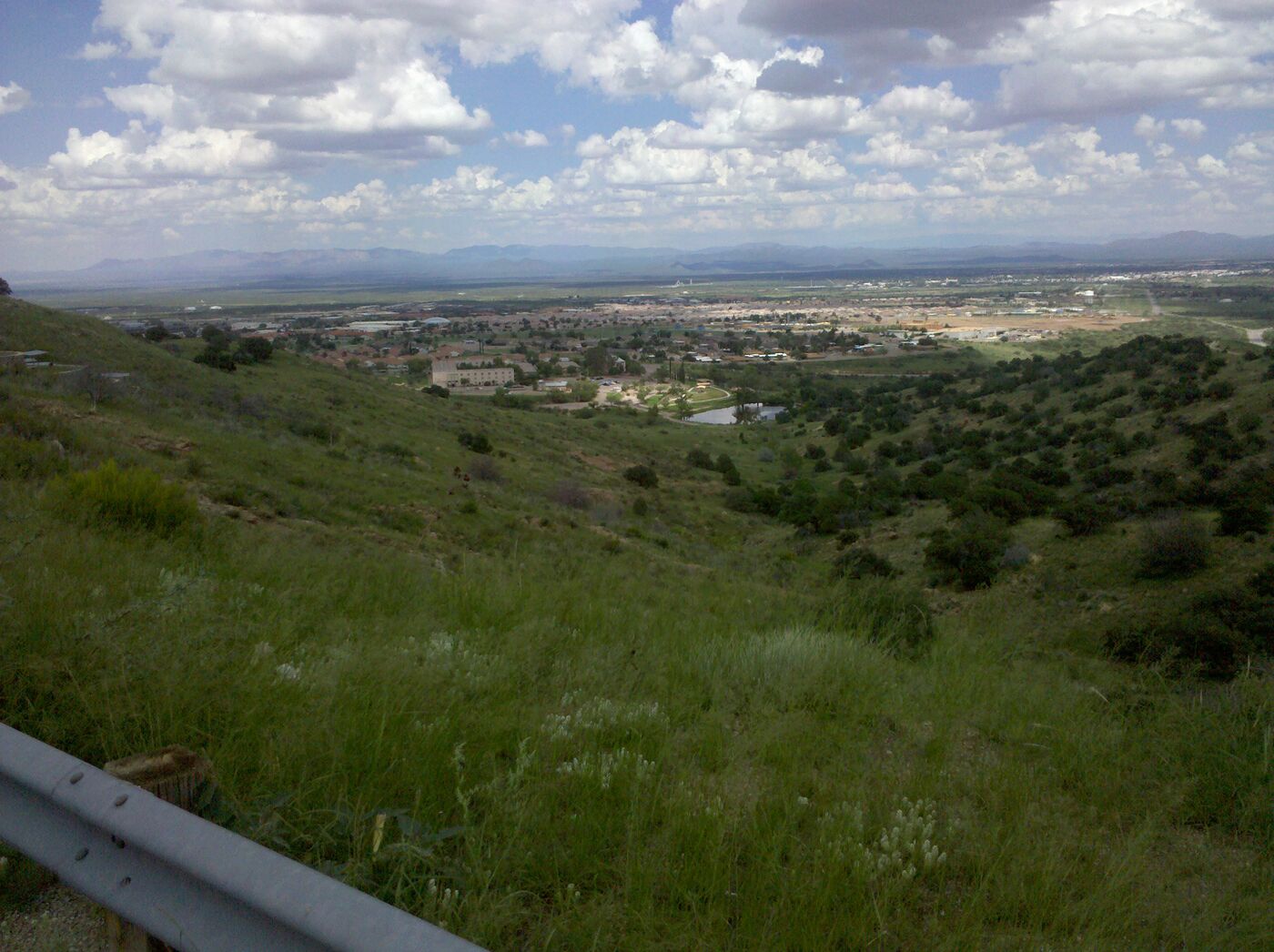
Fort Huachuca
Fort Huachuca is an active United States Army installation in southern Arizona, just west of Sierra Vista. It was established on March 3, 1877 as Camp Huachuca to protect settlers and trade routes in the region, and it later served for many years as home to the 10th Cavalry, the Buffalo Soldiers. Spanning roughly 115 square miles in the foothills of the Huachuca Mountains, the post grew into a center for Army intelligence and communications missions. Today it hosts the U.S. Army Intelligence Center of Excellence and the Network Enterprise Technology Command. Its long operational history has included testing ranges, training areas, and waste disposal sites now subject to environmental review.
Past operations and waste handling at Fort Huachuca have raised concerns about potential exposure to several substances. State and Department of Defense records describe contamination associated with former landfill and range sites, as well as detections of so-called forever chemicals in drinking water. The items below summarize the documented contaminants and the hedged health concerns associated with them.
- PFAS are a large family of synthetic fluorinated compounds historically used in firefighting foams, coatings, and many industrial products. Department of Defense data documented PFAS in the installation's drinking water at a reported level of 26.5 parts per trillion, placing Fort Huachuca among the seven Arizona Army sites identified with such detections. Exposure to PFAS has been associated in some studies with a range of potential health effects, which has prompted ongoing testing and monitoring.
- PFOS is one specific PFAS compound that was a common ingredient in older firefighting foam formulations used at military installations. Because of its presence in such products, PFOS is among the chemicals examined in drinking water sampling at the post. Research has raised concerns about potential health effects linked to long-term PFOS exposure.
- PFOA is a related PFAS compound widely used in industrial processes and consumer products that can appear alongside PFOS in water sampling. It has been included in the testing conducted at the installation. PFOA exposure has been associated with possible adverse health outcomes in scientific literature.
- Solvents, including volatile organic compounds, have been a focus of groundwater monitoring at the post's former range and disposal sites. State records note that no volatile organic compounds have been reported in groundwater samples from the east range mine shaft during monitoring, while sampling continues at other locations. Some solvents have been associated with potential health concerns when present in drinking water above regulatory standards.
- Heavy metals and other trace contaminants have been detected in shallow subsurface soil, leachate beneath the south range landfill, and in groundwater near the east range mine shaft. These materials can originate from historic waste disposal and range activities. Certain heavy metals have been associated with health concerns at elevated exposure levels, which supports continued sampling.
Fort Huachuca is not listed on the National Priorities List (Superfund). Environmental oversight is carried out through the Arizona Department of Environmental Quality (ADEQ) together with Department of Defense cleanup programs. ADEQ tracks leachate and shallow-soil contaminants beneath the south range landfill and trace contaminants near the east range mine shaft, with groundwater monitoring wells in place. According to state summaries, the regional aquifer that supplies area drinking water wells has not been impacted above applicable Aquifer Water Quality Standards near these sites to date, and monitoring is ongoing.
Veterans, family members, and civilian workers who spent time at Fort Huachuca may wish to stay informed as environmental investigations and water testing continue. Anyone with questions about possible exposure is encouraged to speak with the U.S. Department of Veterans Affairs and a personal healthcare provider.
Were you stationed at a contaminated site?
The PACT Act of 2022 added more than 20 presumptive conditions for toxic exposure, including many cancers, and there is no deadline to file a VA claim.
This page is for informational purposes only and is not medical or legal advice. Consult a qualified professional about your health or benefits.
Discussion
No approved comments yet.