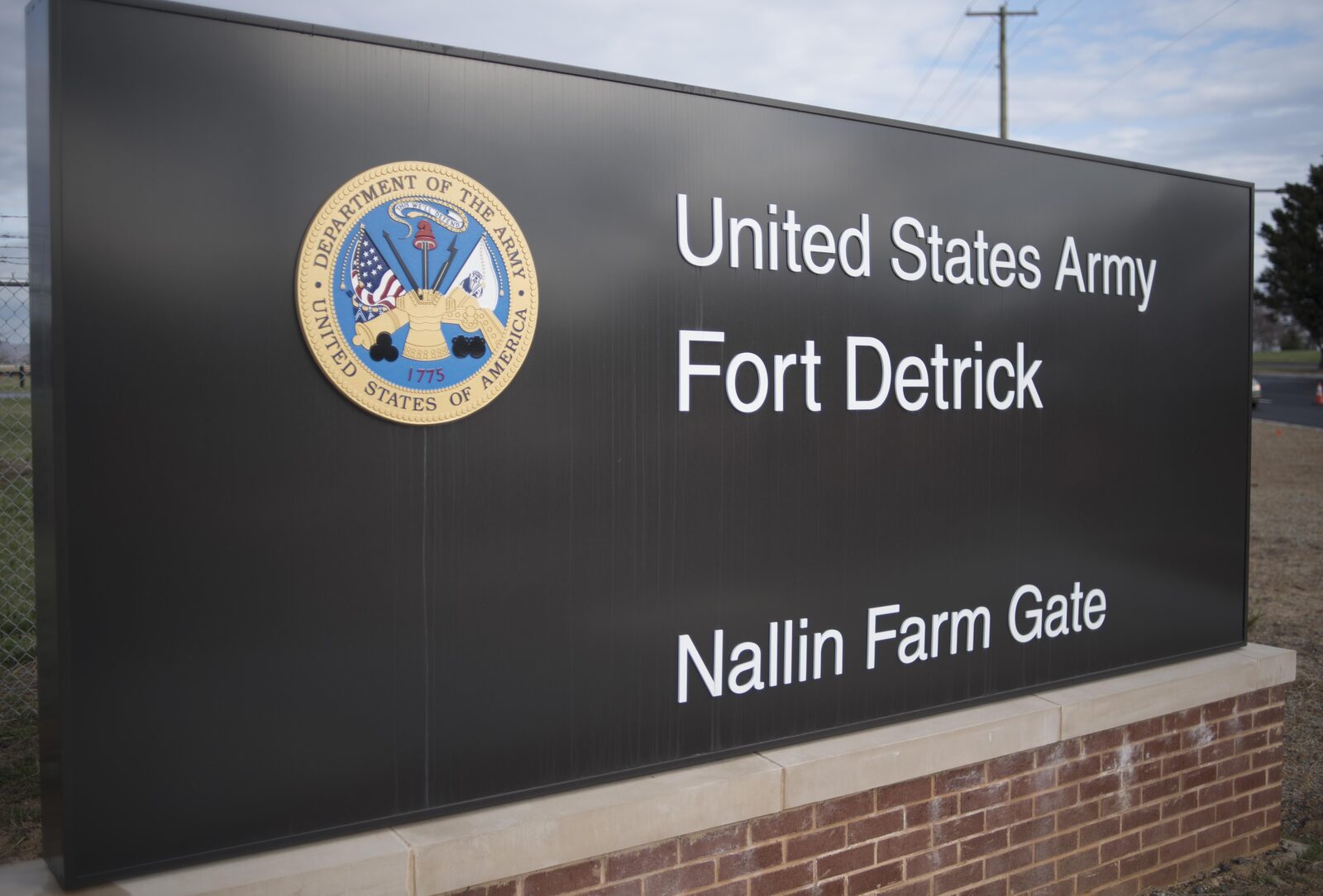
Fort Detrick
Fort Detrick is a United States Army installation in Frederick, Maryland. Established in 1943 as Camp Detrick, it served as the center of the U.S. biological weapons program from 1943 until the offensive program ended in 1969, after which research shifted to defensive and biomedical work. Today the post is home to the U.S. Army Medical Research and Development Command and the U.S. Army Medical Research Institute of Infectious Diseases (USAMRIID), and it supports a multi-agency community engaged in biomedical research, medical logistics, and the study of infectious diseases and foreign plant pathogens. A separate 399-acre parcel known as Area B was used in past decades for testing and for the disposal of chemical, medical, and radiological laboratory wastes.
There are concerns about carcinogenic health hazards at Fort Detrick, particularly in and around Area B, due to potential exposure to several environmental contaminants:
- TCE (trichloroethylene): TCE is a chlorinated solvent widely used for degreasing and laboratory work. At Fort Detrick, laboratory wastes, reportedly including 55-gallon drums of TCE, were buried in the B-11 disposal pits in Area B around 1968. TCE later migrated into the karst groundwater system beneath the area and was detected in residential drinking water wells, including a well on Shookstown Road. TCE exposure has been associated in scientific studies with kidney cancer, non-Hodgkin lymphoma, and other illnesses, so past use of affected well water has raised concerns about potential health effects.
- PCE (tetrachloroethylene): PCE is a solvent historically used for degreasing and dry cleaning. It was found alongside TCE in groundwater beneath Area B, in some cases at concentrations suggesting the chemicals may be present as dense non-aqueous phase liquid in the subsurface, which can act as a long-term source of contamination. PCE is classified as likely carcinogenic to humans, and exposure may potentially be linked to certain cancers and other health conditions.
- Other solvents and volatile organic compounds: According to a U.S. Geological Survey investigation, more than a dozen additional volatile organic compounds have been detected in Area B groundwater at levels exceeding EPA maximum contaminant levels. Long-term exposure to such solvent mixtures has been associated with a range of potential health concerns.
The Fort Detrick Area B Groundwater site was added to the EPA National Priorities List (Superfund) in April 2009. An interim removal action between 2001 and 2004 excavated roughly 4,000 tons of waste and contaminated soil from the B-11 pits, and the area was capped in 2010. Most nearby drinking water wells have been closed, affected residents have been connected to public water supplies, and the Army began operating a groundwater pump and treat system in 2021. Investigation of the nature and extent of contamination is ongoing under a Federal Facilities Agreement among the Army, EPA, and the State of Maryland, and a final cleanup decision for the groundwater has not yet been issued.
It is important to note that while there are documented contaminants and concerns about potential exposure at and near Fort Detrick, establishing a definitive connection between service at a particular installation and a later diagnosis can be complex, and research into these questions is ongoing. Veterans and family members who lived or worked at Fort Detrick may wish to stay informed about the Area B cleanup, discuss any health concerns with their medical providers, and contact the Department of Veterans Affairs regarding health registries and potential benefits.
Were you stationed at a contaminated site?
The PACT Act of 2022 added more than 20 presumptive conditions for toxic exposure, including many cancers, and there is no deadline to file a VA claim.
This page is for informational purposes only and is not medical or legal advice. Consult a qualified professional about your health or benefits.
Discussion
No approved comments yet.