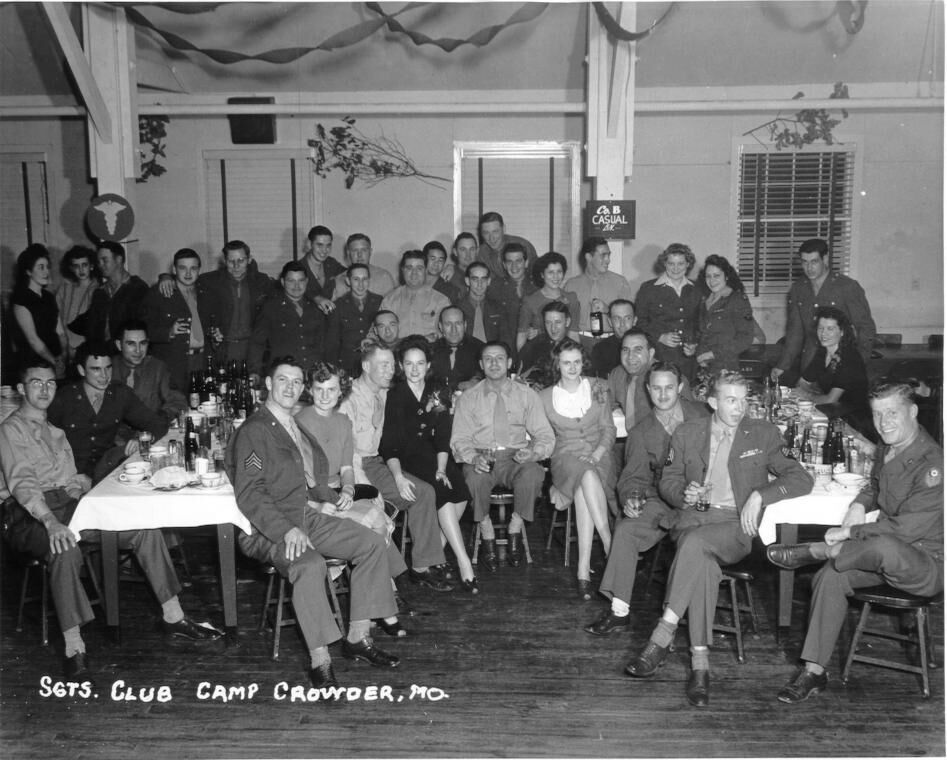
Fort Crowder (Camp Crowder)
Fort Crowder, also known as Camp Crowder, was a United States Army installation located near Neosho in Newton and McDonald Counties in southwestern Missouri. The Army broke ground for the post in August 1941, and by 1943 the Department of Defense had acquired roughly 42,786 acres of former agricultural and residential land. Named for Major General Enoch H. Crowder, a Missouri native, the camp served during World War II as one of the Army's largest Signal Corps training centers, where soldiers learned communications specialties involving radio, radar, and telephone equipment. In the 1950s a portion of the installation was transferred to the Air Force for the construction of a rocket engine manufacturing plant, and engine testing and overhaul activities later took place at the site. A part of the property, including the Engine Test Area, remains in use today by the Missouri Army National Guard.
Because of the camp's long history of military training, aircraft and engine work, industrial waste handling, and fuel storage, environmental records have identified concerns about potential exposure to several contaminants in soil and groundwater. State and federal agencies have documented these substances as part of the cleanup and investigation work carried out under defense restoration programs.
- Trichloroethylene (TCE): TCE is an industrial solvent commonly used to degrease metal parts and equipment. At Fort Crowder, it was associated with cleaning rocket and jet engine components, and Missouri environmental records document TCE in soils and groundwater, with possible off-site contamination of some private wells. Exposure to TCE has been associated in studies with concerns about effects on the liver, kidneys, immune system, and developing children, although individual outcomes vary.
- Solvents and related volatile organic compounds: Beyond TCE, the site has been associated with other industrial solvents, including tetrachloroethylene, used in cleaning and maintenance operations. These volatile organic compounds can migrate through soil into groundwater, and there have been concerns about potential exposure for people relying on nearby wells.
- Jet and aviation fuels, oils, and greases: Aviation and vehicular fuels, oils, and greases were stored and used in connection with engine testing, aircraft maintenance, and vehicle operations. Records describe underground fuel storage, burn pits, and lagoons as past sources, and fuel-related compounds have been associated with concerns about soil and groundwater quality.
- Heavy metals: Metals associated with paints, plating, and industrial activities have been documented at the installation. Certain heavy metals can persist in soil and water, and prolonged exposure to some of them has been associated with a range of health concerns, depending on the specific metal and the level and duration of contact.
Fort Crowder is tracked as a Formerly Used Defense Site under the Defense Environmental Restoration Program, with oversight involving the U.S. Army Corps of Engineers and the Missouri Department of Natural Resources. A related portion of the former installation, including the Engine Test Area, is part of the Pools Prairie Superfund site, which was added to the National Priorities List in 1999. Removal actions at the principal source areas have been completed, and remedial investigation and feasibility work to address remaining groundwater contamination has continued in recent years.
Veterans, former civilian workers, and family members who spent time at Fort Crowder or Camp Crowder may wish to stay informed about ongoing environmental investigations and cleanup efforts at the site. Anyone with questions about possible exposure and related health care or benefits is encouraged to speak with the U.S. Department of Veterans Affairs and a personal physician, who can provide guidance based on individual circumstances.
Were you stationed at a contaminated site?
The PACT Act of 2022 added more than 20 presumptive conditions for toxic exposure, including many cancers, and there is no deadline to file a VA claim.
This page is for informational purposes only and is not medical or legal advice. Consult a qualified professional about your health or benefits.
Discussion
No approved comments yet.