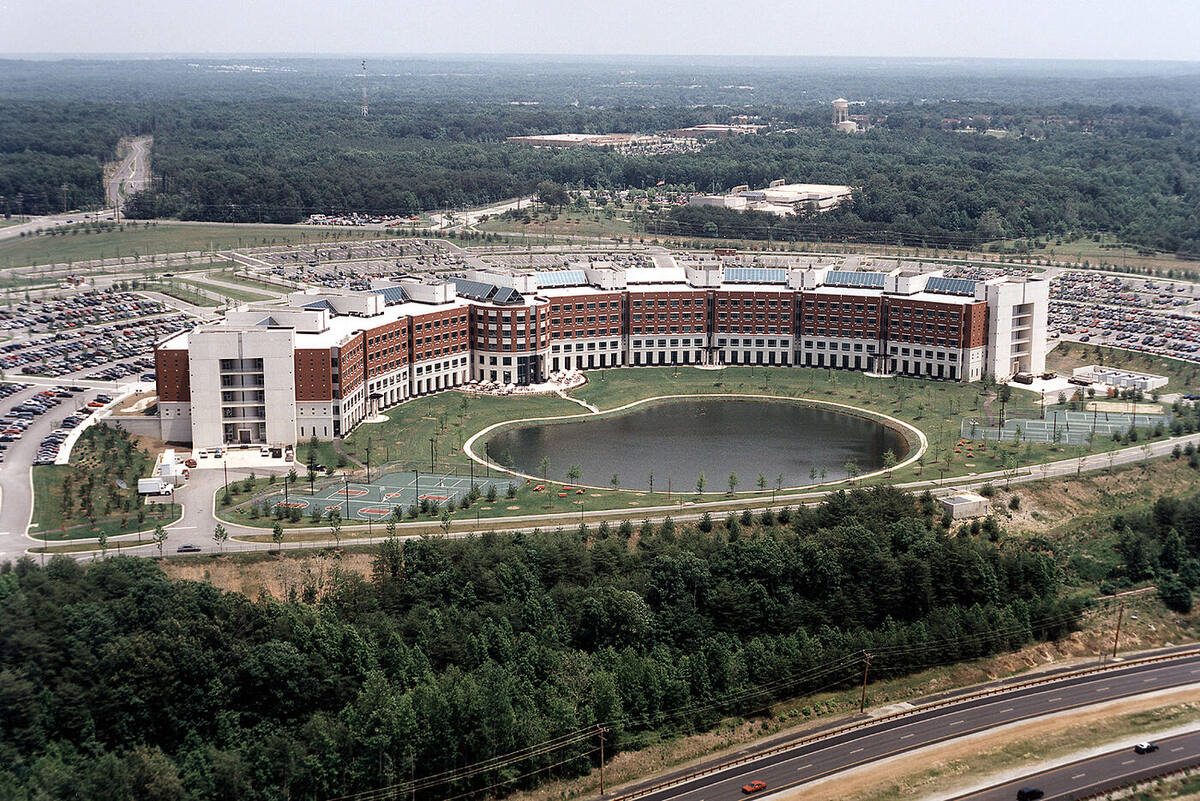
Fort Belvoir
Fort Belvoir is a U.S. Army installation in Fairfax County, Virginia, along the Potomac River about 20 miles south of Washington, D.C. The post traces its origins to 1912, when the War Department acquired land from the former Belvoir plantation as a rifle range and training camp for engineer troops, and it was developed as Camp A.A. Humphreys in 1917 to train engineer replacements during World War I. It was renamed Fort Humphreys in 1922 and became Fort Belvoir in 1935. For decades the post served as home of the Army Engineer School, and today it hosts a wide range of Army and Department of Defense organizations, a military hospital, and a large workforce and residential community.
Recent attention at Fort Belvoir has focused on per- and polyfluoroalkyl substances, often called forever chemicals. The Army's nationwide PFAS preliminary assessment and site inspection program examined 16 areas of interest at the post and detected these compounds in soil and/or groundwater at all of them, with 10 areas showing concentrations above risk-based screening levels. Most of those exceedances have been attributed to historical and current fire station operations, firefighter training, and fire truck maintenance. Environmental groups have also raised concerns about discharges to nearby Accotink Creek, which flows toward the Potomac River.
- PFAS are a large family of synthetic chemicals prized for resisting heat, oil, and water, and they break down very slowly in the environment. At Fort Belvoir, PFAS contamination is linked primarily to firefighting foam used at fire stations and training areas. Exposure to certain PFAS has been associated in some studies with potential health effects, including certain cancers, thyroid conditions, and immune system changes.
- PFOS is one of the most studied PFAS compounds and a key ingredient in older firefighting foams. Sampling of the post's community water system on October 1, 2024 found PFOS at 6.3 parts per trillion, above the EPA maximum contaminant level of 4 parts per trillion finalized in April 2024. PFOS exposure has been associated with concerns about possible kidney, liver, and immune effects.
- PFOA, a related compound, was measured at 7.7 parts per trillion in the same October 2024 drinking water sampling, also above the new 4 parts per trillion federal limit. PFOA has been classified by some health agencies as a likely human carcinogen, though individual risk depends on many factors.
- AFFF (aqueous film-forming foam) is a PFAS-based fire suppressant used for decades at Fort Belvoir's fire stations, training exercises, and fire truck maintenance activities, and is considered the main source of PFAS releases at the post. The Army has since restricted AFFF to emergency use with containment measures. Concerns about AFFF stem from the PFAS compounds it contains rather than the foam itself.
Fort Belvoir is not on the EPA's National Priorities List. Investigation and response are proceeding under the federal CERCLA cleanup process, overseen by the Army Environmental Command, with site inspection results guiding further remedial investigation, while drinking water systems work toward compliance with the new Safe Drinking Water Act limits that become enforceable in 2029. In December 2025, Wild Virginia and the Potomac Riverkeeper Network filed suit challenging the post's industrial stormwater permit over the absence of PFAS monitoring and limits.
Veterans, family members, and civilian workers who spent time at Fort Belvoir may wish to follow the Army's ongoing PFAS investigation as new sampling results are released. Anyone with questions about past exposure or health concerns that may be related to service at the post is encouraged to speak with a health care provider and contact the Department of Veterans Affairs about registry and benefits options.
Were you stationed at a contaminated site?
The PACT Act of 2022 added more than 20 presumptive conditions for toxic exposure, including many cancers, and there is no deadline to file a VA claim.
This page is for informational purposes only and is not medical or legal advice. Consult a qualified professional about your health or benefits.
Discussion
No approved comments yet.