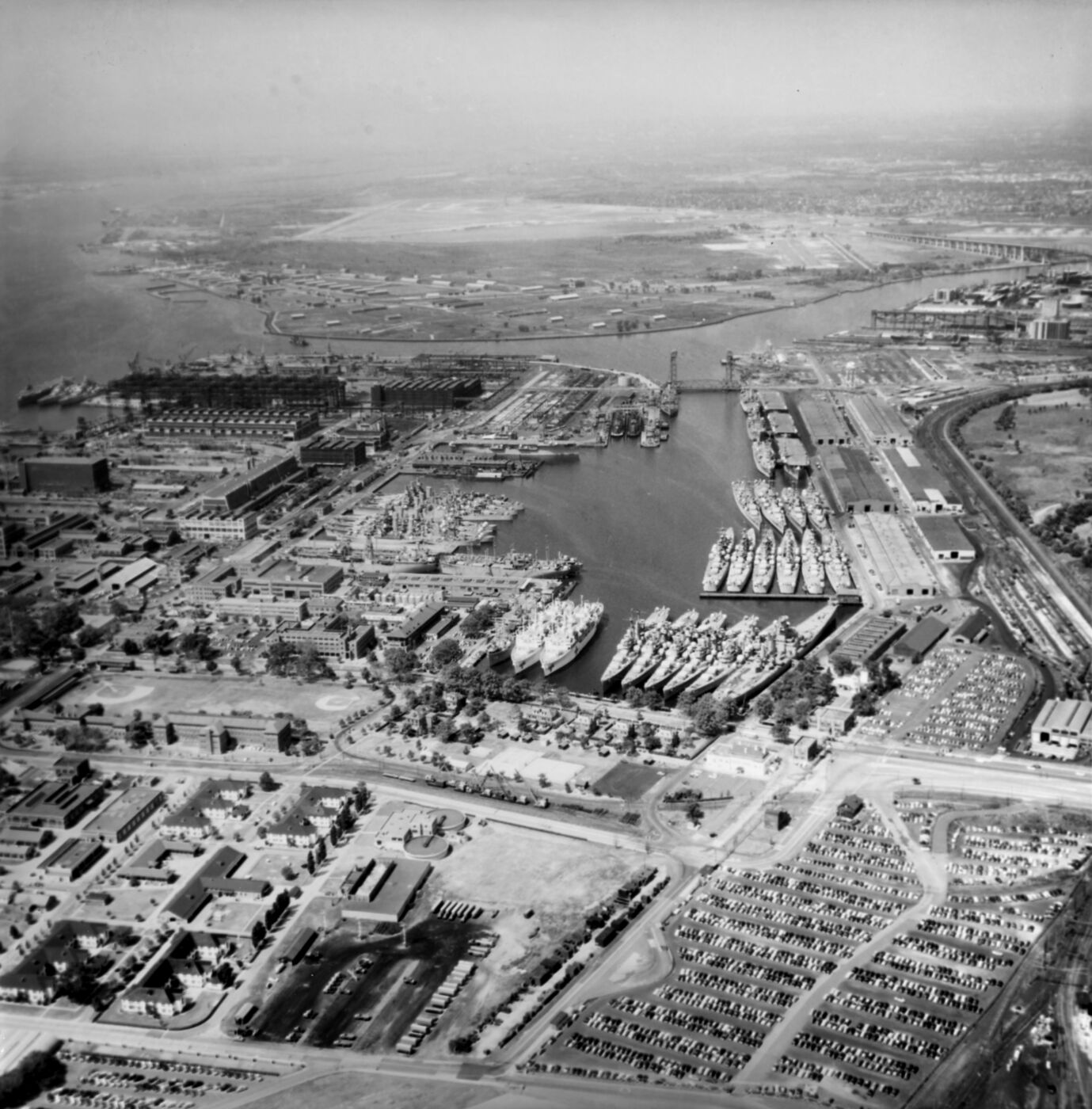
Former Philadelphia Naval Shipyard
The Former Philadelphia Naval Shipyard, part of the Philadelphia Navy Yard, is a historic naval installation located roughly four miles south of downtown Philadelphia, Pennsylvania. The site traces its origins to 1801, when it became the nation's first government-owned shipyard. The shipyard occupies roughly 348 acres within the broader 1,455-acre Navy Yard property and grew into a major shipbuilding and ship repair complex. During World War II the facility employed tens of thousands of workers and launched many warships. The Naval Base was designated for closure under the Defense Base Closure and Realignment (BRAC) process in 1991, and the shipyard itself was recommended for closure in 1995. The property has since been redeveloped while environmental work continued under federal and state oversight.
Because of its long history of shipbuilding, ship repair, and related industrial operations, the property has been associated with a range of environmental contaminants. The Navy operated facilities including a power plant, foundry, paint shop, and electroplating plant, where various hazardous chemicals were stored and used. Investigations have raised concerns about potential exposure to the substances described below.
- Asbestos is a fibrous mineral once widely used for insulation and fireproofing in ships and buildings. At this installation, asbestos abatement in buildings has been a documented part of the environmental work. Inhalation of asbestos fibers has been associated with respiratory illnesses and certain cancers.
- PCBs (polychlorinated biphenyls) are synthetic chemicals formerly used in electrical equipment and transformers. At the Philadelphia site, PCB-contaminated soil and transformer sites were addressed through excavation, landfilling, and dechlorination. PCBs have been associated with a variety of health concerns in exposed populations.
- Heavy metals, including lead, were used and generated through foundry, paint, and electroplating operations. Contaminated soil containing metals has been identified during environmental assessments. Exposure to certain heavy metals has been associated with effects on the nervous system and other organs.
- Solvents and other organic chemicals were used in cleaning, degreasing, and maintenance work across the complex. Such solvents have been documented among the hazardous chemicals stored and used on site.
- Jet fuel and other petroleum products were stored in underground tanks. Removal of underground storage tanks and associated contaminated soil has been part of the cleanup. Fuel-related contamination has been associated with concerns about soil and groundwater quality.
- PFAS (per- and polyfluoroalkyl substances) are long-lasting synthetic chemicals. The Pennsylvania Department of Environmental Protection lists the Philadelphia Naval Complex among sites where PFAS contamination has been identified. PFAS have been associated with potential health effects in ongoing research.
- AFFF (aqueous film-forming foam) is a firefighting foam historically used at many military installations and is a known source of PFAS. Its past use at military firefighting activities has been associated with PFAS detections in soil and groundwater at such sites.
This site is not listed on the National Priorities List (Superfund). The Department of the Navy began environmental assessment and cleanup at the property in 1991 under the oversight of the U.S. Environmental Protection Agency, with coordination from the Pennsylvania Department of Environmental Protection. Work has included asbestos abatement, PCB transformer site remediation, and the removal of underground storage tanks and contaminated soil. According to the EPA, the Navy has reported that the response actions needed to support transfer and reuse of the former complex have been implemented.
Veterans, civilian workers, and family members who spent time at the Former Philadelphia Naval Shipyard may wish to stay informed about ongoing environmental findings related to the site. Anyone with questions about possible exposure is encouraged to speak with the U.S. Department of Veterans Affairs and a personal healthcare provider.
Were you stationed at a contaminated site?
The PACT Act of 2022 added more than 20 presumptive conditions for toxic exposure, including many cancers, and there is no deadline to file a VA claim.
This page is for informational purposes only and is not medical or legal advice. Consult a qualified professional about your health or benefits.
Discussion
No approved comments yet.