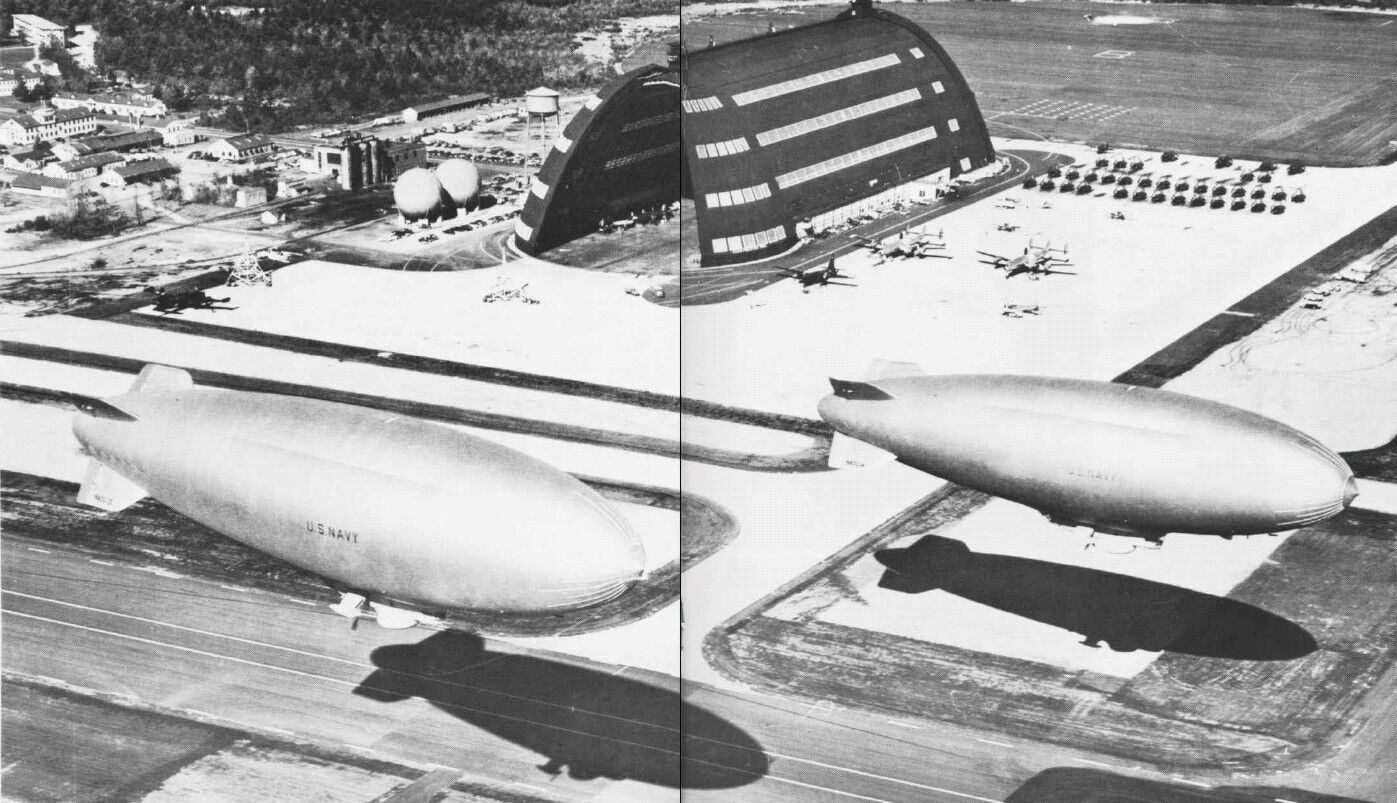
Former Naval Air Station South Weymouth
The former Naval Air Station South Weymouth was a United States Navy air installation located in the towns of Weymouth, Abington, and Rockland in Norfolk and Plymouth Counties, Massachusetts. Commissioned in 1942, the base initially served as a Navy blimp station during World War II, supporting non-rigid airships used for coastal anti-submarine patrols. After the war it transitioned to fixed-wing operations and hosted Navy and Marine Corps reserve aircraft squadrons. The station operated for roughly 55 years before closing in 1997 as part of base realignment. Decades of aviation, maintenance, and firefighting activity across the approximately 1,444-acre property left a legacy of soil and groundwater contamination that continues to be investigated and addressed.
Environmental investigations at the former installation have documented a range of contaminants associated with aircraft operations, fuel handling, waste disposal in on-site landfills, and firefighting training. Several of these substances have been associated with health concerns, and the discussion below describes what was found and the potential exposure pathways that prompted further study.
- TCE (trichloroethylene) is a chlorinated solvent historically used to degrease engines, parts, and equipment. At South Weymouth, TCE and other chlorinated volatile organic compounds were detected in groundwater and contributed to the site's federal listing. Exposure to TCE has been associated in some studies with effects on the liver, kidneys, immune system, and with certain cancers.
- Solvents and other volatile organic compounds were used broadly in maintenance and cleaning operations. These compounds migrated into soil and groundwater at several areas of the base and remain a focus of long-term monitoring. Concerns about potential exposure to such solvents generally center on drinking water and vapor pathways.
- Jet fuel and petroleum products were stored and handled extensively to support flight operations. Spills and releases left petroleum hydrocarbons in soil and groundwater. Petroleum constituents have been associated with a variety of potential health effects depending on the specific compounds and the degree of exposure.
- PFAS (per- and polyfluoroalkyl substances) are a large family of manmade chemicals valued for their resistance to heat, water, and oil. At South Weymouth, PFAS contamination has been linked to the historical use of firefighting foam, and the Navy designated a basewide operable unit to investigate it. PFAS compounds are persistent in the environment and have been associated with concerns about potential effects on the immune system, cholesterol, and certain cancers.
- PFOS (perfluorooctane sulfonate) is a specific PFAS compound commonly found in older firefighting foam formulations. It has been detected during PFAS assessment work at the former station. PFOS has been associated in some research with potential developmental and other health concerns.
- PFOA (perfluorooctanoic acid) is another individual PFAS compound linked to legacy foam and industrial uses. It has been included in PFAS sampling at the site. PFOA has been associated with concerns about potential effects on the liver, the immune system, and certain cancers.
- AFFF (aqueous film-forming foam) is the firefighting foam that was used in training and emergency response at airfields. Its use at South Weymouth is understood to be the primary source of PFAS, including PFOS and PFOA, in site soil and groundwater. Concerns about AFFF relate chiefly to the persistent PFAS compounds it contains.
The former Naval Air Station South Weymouth was placed on the EPA National Priorities List, the federal Superfund program, in 1994 for chlorinated solvent and related contamination in groundwater. Cleanup proceeds under the Comprehensive Environmental Response, Compensation, and Liability Act (CERCLA), guided by a Federal Facility Agreement between the Navy and EPA. The site is divided into multiple operable units addressing landfills, soil, and groundwater, with a dedicated basewide PFAS operable unit (OU27) designated in 2018 following recognition of foam-related contamination. Remedial actions have been completed at several units, with long-term monitoring, land-use controls, and ongoing PFAS investigation continuing.
Veterans, civilian workers, and family members who spent time at the former Naval Air Station South Weymouth may wish to stay informed as the Navy and EPA continue their investigation and cleanup. Anyone with questions about possible exposure and related health care or benefits is encouraged to contact the U.S. Department of Veterans Affairs, which can provide current guidance and discuss individual circumstances.
Were you stationed at a contaminated site?
The PACT Act of 2022 added more than 20 presumptive conditions for toxic exposure, including many cancers, and there is no deadline to file a VA claim.
This page is for informational purposes only and is not medical or legal advice. Consult a qualified professional about your health or benefits.
Discussion
No approved comments yet.