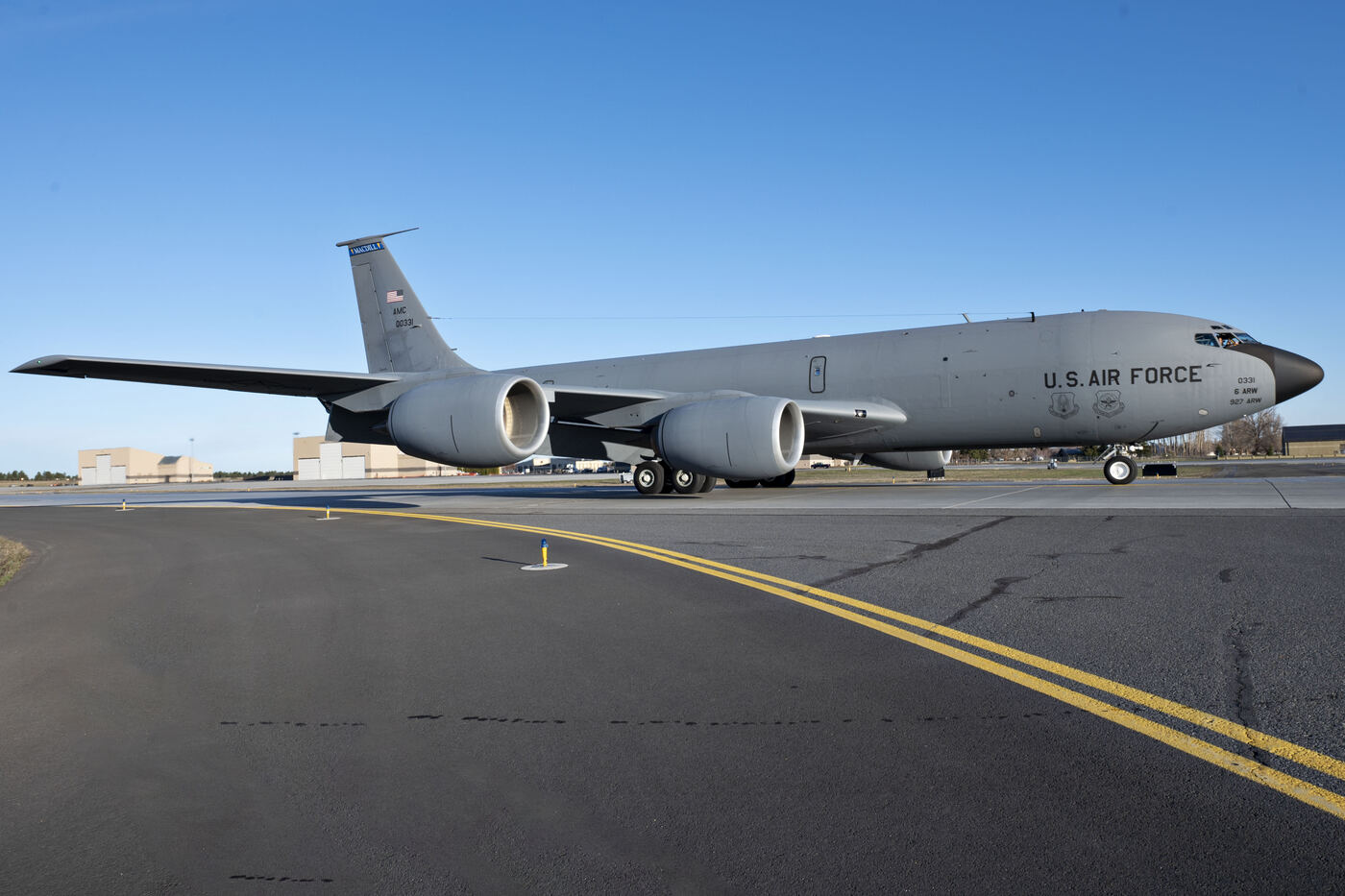
Fairchild Air Force Base
Fairchild Air Force Base sits on the West Plains about twelve miles west of Spokane, Washington. Established in 1942 as the Spokane Army Air Depot, it served as a major aircraft repair and supply facility during World War II and was renamed in 1950 in honor of General Muir S. Fairchild. During the Cold War the base supported Strategic Air Command heavy bombers and refueling aircraft, and today it is home to the 92nd Air Refueling Wing, one of the largest KC-135 Stratotanker operations in the Air Force. Generations of service members, civilians, and families have lived and worked around the installation.
Decades of industrial activity left a legacy of environmental contamination. Air Force records indicate that past operations disposed of the equivalent of more than 4,000 drums of solvents, paint wastes, plating sludge, and related wastes at locations across the base. In 2017, the base also acknowledged that firefighting foam used since the 1970s had contaminated drinking water in the neighboring city of Airway Heights. Several substances documented at or near Fairchild have been associated with potential health concerns.
- PFAS. PFAS (per- and polyfluoroalkyl substances) are persistent synthetic chemicals sometimes called forever chemicals. PFAS from firefighting activities at Fairchild migrated into groundwater beneath the West Plains, and a CDC and ATSDR exposure assessment found that levels of some PFAS in the blood of Airway Heights residents were up to 56 times national averages. PFAS exposure has been associated in some studies with effects on cholesterol levels, the immune system, and certain cancers, although research is ongoing.
- PFOS. PFOS was a key ingredient in older firefighting foam formulations used at the base. It was detected in Airway Heights municipal wells in May 2017, prompting the city to shut down affected wells and distribute bottled water. PFOS has been linked in some research to thyroid, immune, and developmental concerns.
- PFOA. PFOA, a related compound in the same foam products, was detected alongside PFOS in area drinking water. Some studies have associated PFOA exposure with kidney and testicular cancers, though exposure levels and risk remain under study.
- AFFF. AFFF (aqueous film forming foam) was used in fire training exercises and crash response at Fairchild from the 1970s until recent years. The foam is considered the primary source of the PFAS releases that reached groundwater in Airway Heights and the surrounding West Plains.
- Solvents. Industrial solvents, including the degreaser TCE (trichloroethylene), contaminated groundwater at the base-owned Craig Road Landfill. Between 1995 and 2012, more than a billion gallons of TCE-contaminated groundwater were extracted and treated there. TCE is classified as a human carcinogen, and exposure has been associated with kidney cancer and other health effects.
EPA placed the installation on the National Priorities List in March 1989 as Fairchild Air Force Base (4 Waste Areas), covering a dry well system, two inactive landfills, and a wastewater lagoon. A 1993 Record of Decision led to landfill caps and a groundwater extraction and treatment system at the Craig Road Landfill. To address PFAS, Airway Heights now draws its drinking water from the city of Spokane, with the Air Force covering part of the cost and installing filters on some affected private wells, but under a Department of Defense directive the target date for the PFAS remedial investigation and feasibility study has slipped from 2026 to 2032.
Veterans and family members who spent time at Fairchild, and neighbors in the Airway Heights area, may want to follow the ongoing investigations, keep records of where and when they served or lived, and raise any health questions with their medical providers and the Department of Veterans Affairs.
Were you stationed at a contaminated site?
The PACT Act of 2022 added more than 20 presumptive conditions for toxic exposure, including many cancers, and there is no deadline to file a VA claim.
This page is for informational purposes only and is not medical or legal advice. Consult a qualified professional about your health or benefits.
Discussion
No approved comments yet.