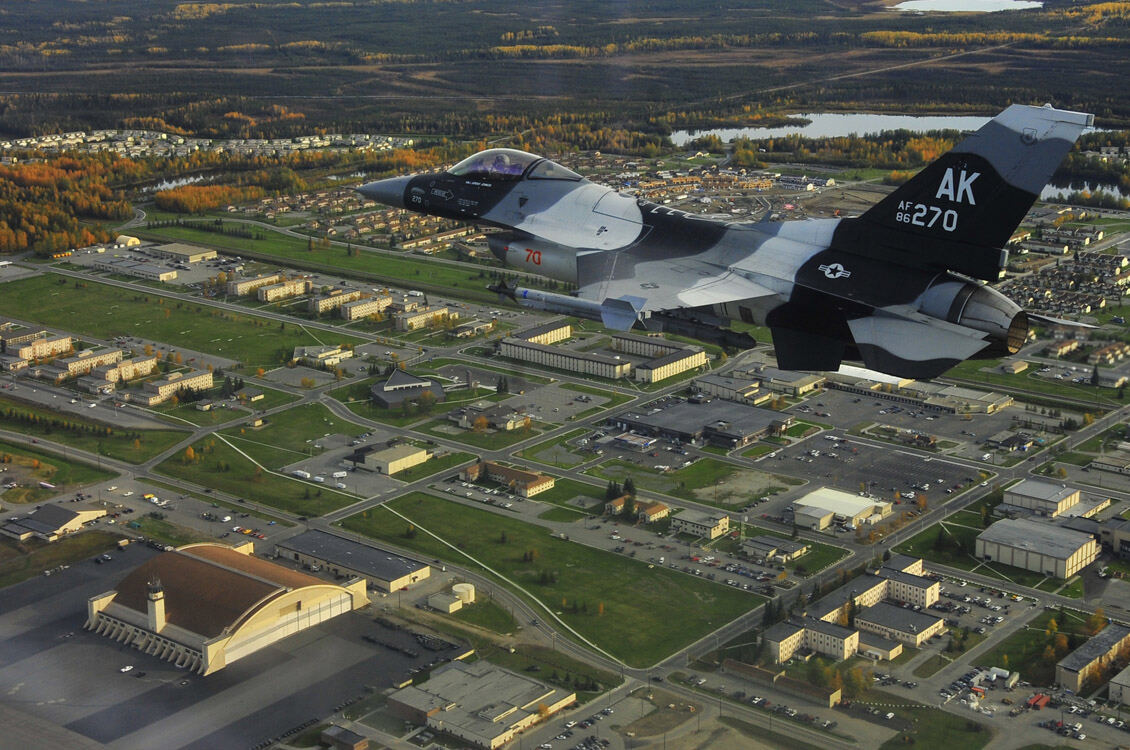
Eielson Air Force Base
Eielson Air Force Base is an approximately 20,000 acre installation in the Fairbanks North Star Borough of interior Alaska, about 26 miles southeast of Fairbanks. The airfield was established in 1943 as Mile 26 Satellite Field, supported the World War II Alaska-Siberia Lend-Lease air route, and was renamed in 1948 in honor of polar aviation pioneer Carl Ben Eielson. Today the base hosts the 354th Fighter Wing, which flies the F-35A Lightning II and supports RED FLAG-Alaska, a series of large joint air combat training exercises. Over its eight decades of operation, the base has supported bombers, reconnaissance aircraft, and fighter wings in one of the harshest operating climates in the Air Force.
Those decades of flight operations, fuel handling, and fire training left a legacy of soil and groundwater contamination. Environmental investigations identified dozens of potential source areas, including unlined landfills, buried tank sludge trenches, drum storage areas, and fire training sites, and several contaminants have been documented at or near the base.
- PFAS (per- and polyfluoroalkyl substances) are a large family of long-lasting synthetic chemicals. At Eielson, PFAS from firefighting foam soaked into soil and groundwater and formed a plume that migrated off base into the neighboring Moose Creek community, where private wells were affected. PFAS exposure has been associated in some studies with potential health effects, including certain cancers, though research is ongoing.
- PFOS is one of the most studied PFAS compounds. Groundwater at Eielson has measured PFOS in the thousands of parts per trillion, far above the EPA maximum contaminant level, and an ATSDR exposure assessment found average blood levels of PFOS and PFHxS in Moose Creek participants up to 7.7 times national levels.
- PFOA, a related compound, was detected along with PFOS in the large majority of Moose Creek drinking water wells tested in 2015, prompting concerns about long-term exposure for residents and personnel.
- AFFF (aqueous film-forming foam) was used in firefighter training at the base beginning at least in the 1980s. The foam itself contained PFOS and other PFAS, and repeated training use is considered the primary source of the plume.
- Solvents, including TCE (trichloroethylene), were used for degreasing and maintenance work and have been detected in soil and groundwater. TCE exposure has been associated with potential health concerns in occupational studies.
- Jet fuel and other petroleum products contaminated soil and groundwater through spills, leaks, and disposal areas, and prolonged exposure to fuel constituents has been linked to potential health concerns.
The EPA placed Eielson Air Force Base on the National Priorities List in November 1989, and the Air Force, EPA, and the State of Alaska signed a Federal Facility Agreement in 1991 to govern cleanup. Remediation in the 1990s used soil vapor extraction, bioventing, landfarming, and capping, followed by long-term monitoring. After the off-base PFAS plume was confirmed, the Air Force delivered bottled water and filtration systems to affected households, and a 2019 interim record of decision funded extension of the City of North Pole piped water system to Moose Creek. ATSDR released its PFAS exposure assessment report in May 2022, and cleanup continues under Alaska Department of Environmental Conservation and EPA oversight.
Veterans, civilian employees, and family members who lived or worked at Eielson may wish to keep a record of their time at the base and stay current on the ongoing investigations. Anyone with questions about potential exposure or health concerns may find it helpful to speak with their health care provider and contact the VA about registry options and benefits eligibility.
Were you stationed at a contaminated site?
The PACT Act of 2022 added more than 20 presumptive conditions for toxic exposure, including many cancers, and there is no deadline to file a VA claim.
This page is for informational purposes only and is not medical or legal advice. Consult a qualified professional about your health or benefits.
Discussion
No approved comments yet.