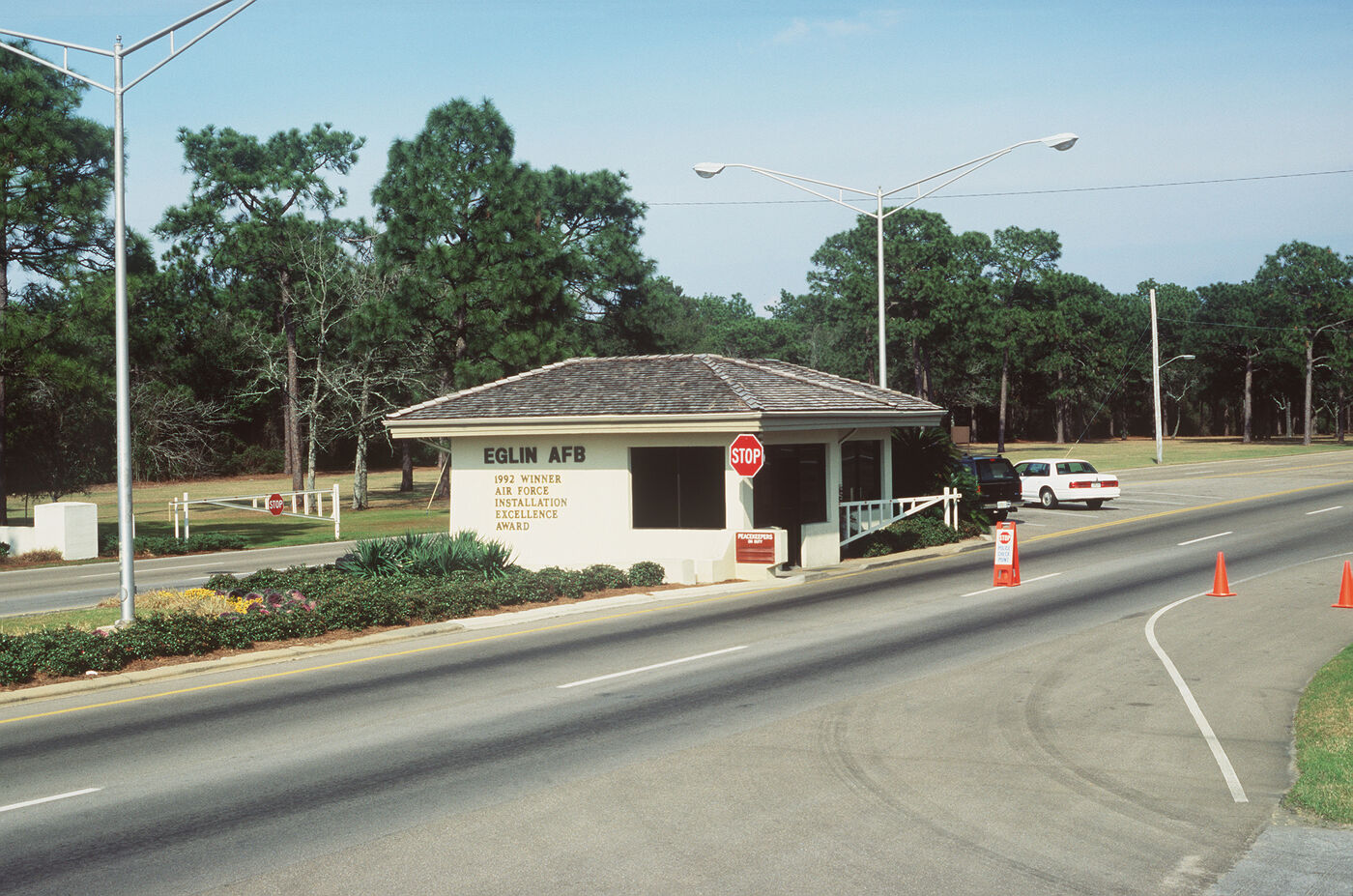
Eglin Air Force Base
Eglin Air Force Base is a large Air Force installation in the western Florida Panhandle, located near Valparaiso and Fort Walton Beach. It was established in 1935 as the Valparaiso Bombing and Gunnery Base and was later renamed in honor of Lieutenant Colonel Frederick I. Eglin, who died in a 1937 aircraft crash. During World War II the installation grew into a major proving ground for aircraft armament, gunnery training, and weapons testing. Today Eglin remains a center for the development, testing, and evaluation of air-delivered weapons and related systems, and it is home to the 96th Test Wing.
Like many long-operating military airfields, Eglin has been the subject of environmental concerns tied to decades of industrial and firefighting activity. The most widely reported of these concerns involves a group of synthetic chemicals associated with firefighting foam that has been detected in groundwater on the installation.
- AFFF (aqueous film-forming foam): This firefighting foam was used at Eglin beginning around 1970 for fire training, hangar suppression systems, equipment testing, and responses to aircraft accidents and fuel spills. AFFF formulations contained fluorinated compounds that can migrate into soil and groundwater, and repeated use at fire training areas has been associated with the contamination later documented on the base.
- PFAS (per- and polyfluoroalkyl substances): PFAS are a broad family of manufactured chemicals valued for their resistance to heat, water, and oil, which also makes them persistent in the environment. They were a primary component of the AFFF used at Eglin. Research has raised concerns about potential health effects from prolonged PFAS exposure, though findings continue to be studied.
- PFOS (perfluorooctane sulfonate): PFOS is a specific PFAS compound that was common in older firefighting foams. Groundwater testing at Eglin reported PFOS at roughly 535,000 parts per trillion in affected on-base wells, far above federal health advisory levels. PFOS has been associated in some studies with a range of health concerns, and exposure remains an area of ongoing review.
- PFOA (perfluorooctanoic acid): PFOA is another individual PFAS compound found in firefighting foam and other products. Testing at Eglin reported PFOA at about 17,200 parts per trillion in contaminated groundwater. Concerns about potential exposure to PFOA have been raised in scientific literature, and the compound is among those being evaluated at affected sites.
Environmental work at Eglin is being carried out under the Department of Defense and Air Force cleanup framework rather than through the National Priorities List. The installation's Armament Division has an EPA Superfund site profile, but it is not on the National Priorities List, and the EPA has noted that certain matters were deferred to other regulatory programs. Site investigation of PFAS-affected areas has been completed and remedial investigation has been reported as underway, with the base stating that its active drinking water draws from the deeper Floridan aquifer. Cleanup and monitoring efforts have continued in recent years.
Veterans, family members, and others who lived or worked at Eglin Air Force Base may wish to stay informed as investigation and remediation continue. Those with questions about possible exposure are encouraged to keep records of their service history and to speak with the U.S. Department of Veterans Affairs about available health resources and any benefits for which they may qualify.
Were you stationed at a contaminated site?
The PACT Act of 2022 added more than 20 presumptive conditions for toxic exposure, including many cancers, and there is no deadline to file a VA claim.
This page is for informational purposes only and is not medical or legal advice. Consult a qualified professional about your health or benefits.
Discussion
No approved comments yet.