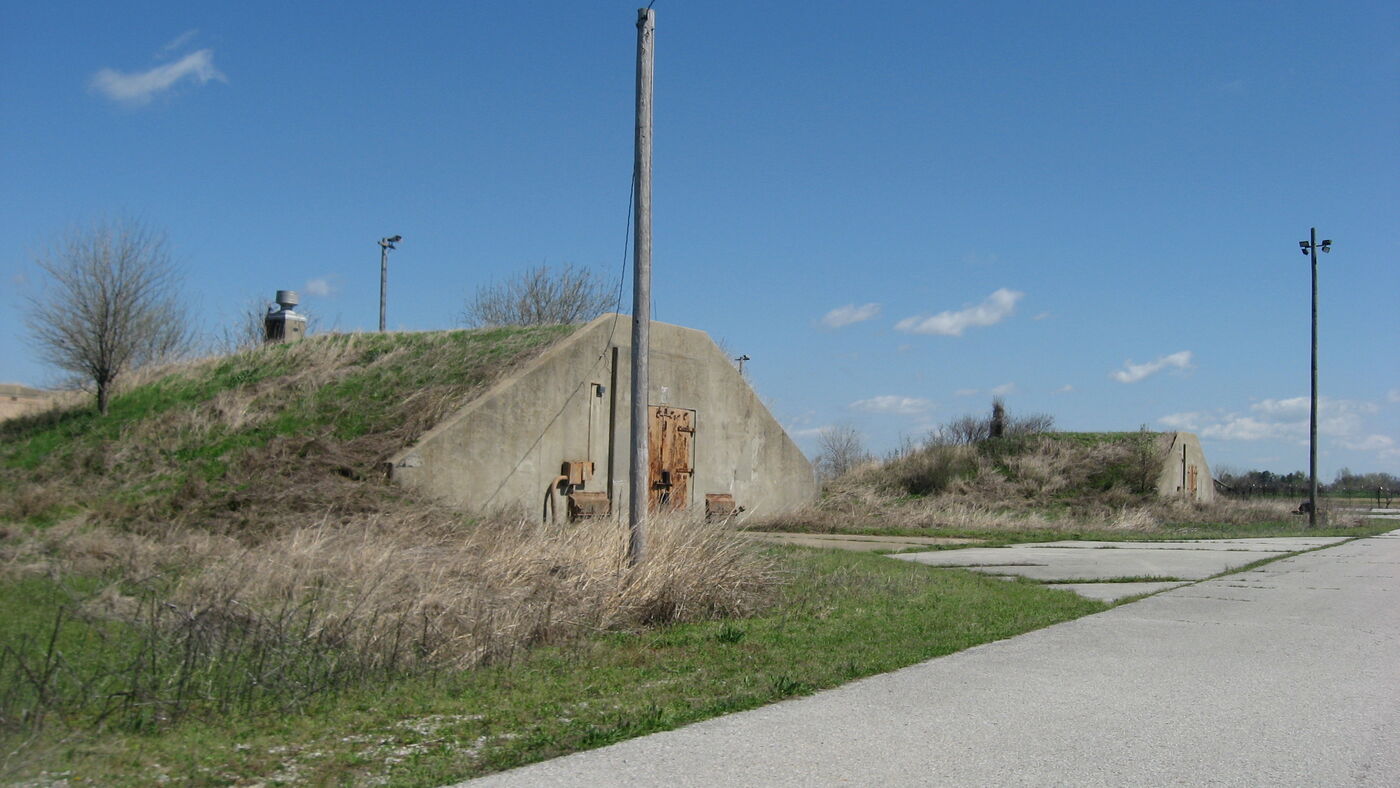
Eaker Air Force Base
Eaker Air Force Base was a United States Air Force installation near Blytheville in northeastern Arkansas. The site began as Blytheville Army Airfield in 1942, serving as a pilot training field during World War II, and later reopened as a Strategic Air Command (SAC) base in the mid 1950s. The 97th Bombardment Wing arrived in 1959 and operated B-52 Stratofortress bombers and KC-135 Stratotanker refueling aircraft from the base, which functioned for years as part of SAC's around the clock ground alert program during the Cold War. The installation was renamed in 1988 to honor World War II Lieutenant General Ira C. Eaker. Selected for closure under the 1991 Base Realignment and Closure (BRAC) round, the base shut down in 1992 and the property has since been redeveloped as a civilian airport and industrial park.
As with many former military airfields where firefighting and aircraft operations continued for decades, environmental testing at the former Eaker Air Force Base has raised concerns about potential exposure to certain industrial chemicals. The contaminants of greatest concern relate to firefighting foams historically used at the base.
- PFAS: PFAS (per- and polyfluoroalkyl substances) are a large group of synthetic chemicals valued for their resistance to heat, water, and oil, and often described as "forever chemicals" because they break down very slowly. At the former Eaker Air Force Base, PFAS are associated with the use of firefighting foam during training and emergency response. Department of Defense testing has reported PFAS concentrations far above the U.S. Environmental Protection Agency's drinking water guidance, and exposure to elevated PFAS levels has been associated in some studies with a range of health concerns.
- PFOS: PFOS (perfluorooctane sulfonate) is one of the most studied individual PFAS compounds and was a primary ingredient in older firefighting foams. Testing connected to the base recorded PFOS among the substances detected at very high concentrations. PFOS has been associated in research with potential effects on the immune system, liver, and other areas, though findings continue to be studied.
- PFOA: PFOA (perfluorooctanoic acid) is another individual PFAS compound found alongside PFOS in foam related contamination. Combined PFOS and PFOA levels reported in testing at the former base have been cited at up to roughly 280,000 parts per trillion, many times above current EPA limits. PFOA has been the subject of research into possible long term health concerns.
- AFFF: AFFF (aqueous film forming foam) is the firefighting foam that served as the likely source of PFAS at the base. AFFF was widely used at military airfields beginning in the 1970s to suppress fuel fires during training and emergencies. Because AFFF formulations contained PFOS and PFOA, repeated use is understood to have contributed to the PFAS concentrations later documented in soil and groundwater.
The former Eaker Air Force Base is not listed on the EPA's National Priorities List (Superfund). Environmental investigation and cleanup at the property have been carried out under the Department of Defense's BRAC and environmental restoration framework, in coordination with the EPA and Arkansas state environmental authorities. The base was also named among Arkansas military sites in a PFAS lawsuit filed by the Arkansas Attorney General against chemical manufacturers, which seeks to hold those companies accountable for the spread of PFAS.
Veterans, civilian workers, and family members who spent time at the former Eaker Air Force Base may wish to stay informed as testing and cleanup efforts continue. Anyone with questions about possible exposure or related health concerns is encouraged to speak with the U.S. Department of Veterans Affairs (VA) and a personal healthcare provider, who can offer guidance based on individual circumstances.
Were you stationed at a contaminated site?
The PACT Act of 2022 added more than 20 presumptive conditions for toxic exposure, including many cancers, and there is no deadline to file a VA claim.
This page is for informational purposes only and is not medical or legal advice. Consult a qualified professional about your health or benefits.
Discussion
No approved comments yet.