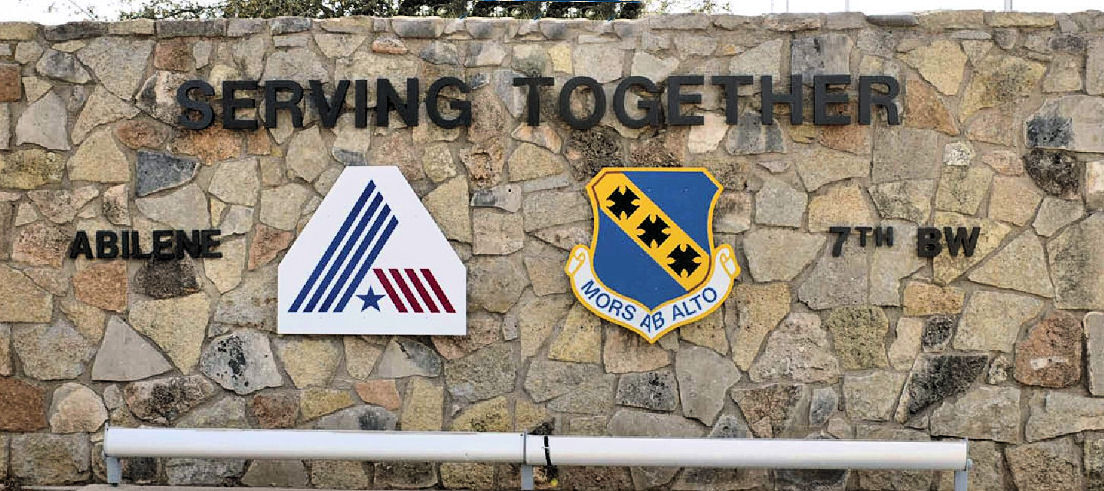
Dyess Air Force Base
Dyess Air Force Base is an active United States Air Force installation located just southwest of Abilene, in west central Texas. The site was established in 1942 as Abilene Army Air Base and was later renamed in honor of Lieutenant Colonel William Dyess, a Texas native and survivor of the Bataan Death March. Today the base serves as home to the 7th Bomb Wing, which moved to Dyess in 1993 and operates the B-1B Lancer strategic bomber along with the C-130 transport aircraft. The 7th Bomb Wing is one of only two B-1B Lancer wings in the Air Force.
As with many military airfields where firefighting agents were stored and used over many decades, Dyess Air Force Base has been associated with groundwater contamination, and concerns have been raised about potential exposure for personnel, families, and nearby communities. Environmental testing has identified a group of long lasting synthetic chemicals in groundwater connected to historical firefighting activities. The documented contaminants of concern at this installation are described below.
- PFAS (per and polyfluoroalkyl substances) are a large family of human made chemicals valued for their resistance to heat, water, and oil. At Dyess they are understood to originate primarily from firefighting foam used in training and emergency response. Reporting on testing at the base has described very high combined PFAS levels in groundwater, with figures around 448,200 parts per trillion cited, and multiple individual PFAS compounds detected. PFAS exposure has been associated in research with a range of potential health concerns, and study of these chemicals is ongoing.
- PFOS (perfluorooctane sulfonate) is one of the most studied PFAS compounds and was a common ingredient in legacy firefighting foam. At Dyess, PFOS has been reported in groundwater at concentrations far above the Environmental Protection Agency drinking water standard of 4 parts per trillion. PFOS has been associated with potential effects on the immune system, cholesterol, and other measures in scientific literature, though findings continue to be studied.
- PFOA (perfluorooctanoic acid) is another widely studied PFAS compound linked to historical foam formulations. Reporting on Dyess has described PFOA in groundwater at levels said to be tens of thousands of times above the EPA standard of 4 parts per trillion. PFOA has been associated with potential health concerns in some studies, and research into long term effects remains active.
- AFFF (aqueous film forming foam) is the firefighting foam widely used at military airfields to suppress fuel fires, and it is regarded as the principal source of the PFAS detected at Dyess. Decades of AFFF use during training exercises and emergency response are understood to have allowed PFAS compounds to migrate into the underlying groundwater. Concerns about potential exposure relate to the PFAS constituents of the foam rather than the foam itself.
Dyess Air Force Base is not listed on the EPA National Priorities List, and EPA records describe the federal facility as not qualifying for that list based on existing information. Investigation and any cleanup are being addressed through the Department of Defense and Air Force environmental restoration process, which for PFAS typically begins with preliminary assessment and site inspection steps. According to available reporting, that investigation and related cleanup work remain ongoing.
Veterans, service members, and family members who lived or worked at Dyess Air Force Base may wish to stay informed as testing and investigation continue. Anyone with questions about possible exposure or related health matters is encouraged to speak with the Department of Veterans Affairs and a personal healthcare provider, who can offer guidance based on individual circumstances and the most current information.
Were you stationed at a contaminated site?
The PACT Act of 2022 added more than 20 presumptive conditions for toxic exposure, including many cancers, and there is no deadline to file a VA claim.
This page is for informational purposes only and is not medical or legal advice. Consult a qualified professional about your health or benefits.
Discussion
No approved comments yet.