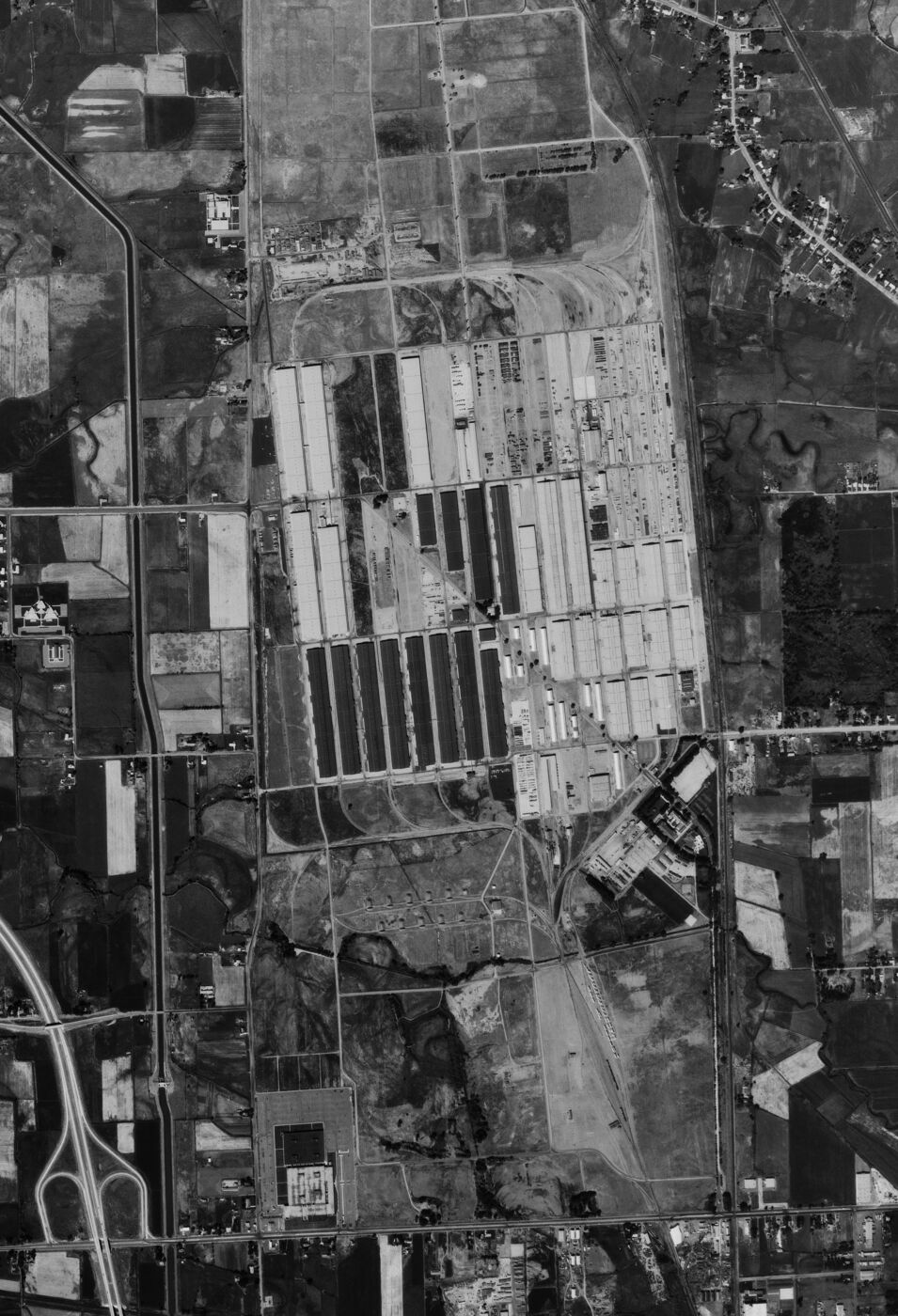
Defense Depot Ogden
Defense Depot Ogden (DDOU) was a Defense Logistics Agency warehousing and distribution depot located in Weber County, Utah, in the northwestern part of Ogden, about 40 miles north of Salt Lake City. The installation was activated in 1941 and grew to roughly 1,139 acres, serving as one of several national supply depots that received, stored and shipped a wide range of materials, including medical, industrial, construction, electronics, food, clothing and petroleum products, to military installations and other federal agencies. For decades the depot handled large volumes of solvents, oils and other industrial materials. The facility was selected for closure under the 1995 Base Realignment and Closure (BRAC) process and ceased its supply mission on September 30, 1997. Much of the original footprint has since been redeveloped into the Business Depot Ogden (BDO) business park.
Historical waste management practices at the depot, including on-site dumping, the burning of combustible materials and the burial of wastes, contaminated soil and groundwater across portions of the property. Environmental investigations identified a mix of solvents, industrial chemicals and metals that have raised concerns about potential exposure for people who worked at or lived near the installation.
- Trichloroethylene (TCE) and other volatile organic compounds: TCE is an industrial solvent historically used for degreasing metal parts and equipment. At Defense Depot Ogden, TCE and related volatile organic compounds were detected in groundwater, along with breakdown products such as vinyl chloride and dichloroethene. Exposure to TCE has been associated in some studies with a range of health concerns, which is part of why it remains a focus of ongoing monitoring at the site.
- Solvents and related organic chemicals: In addition to TCE, the depot's operations involved various solvents and other organic compounds. Investigations also identified dioxins and pesticides in soil and groundwater. These substances have been associated with concerns about potential long-term exposure when they migrate into soil or groundwater.
- Polychlorinated biphenyls (PCBs): PCBs are a group of manufactured chemicals once widely used in electrical equipment, hydraulic systems and certain oils. Their presence at the depot is consistent with the materials handled and disposed of on site. PCBs are persistent in the environment, and exposure to them has been associated with various health concerns in the scientific literature.
- Heavy metals: Sampling at the site identified metals including arsenic and lead in soil, debris and groundwater. Metals of this kind can originate from a variety of industrial and material handling activities. Exposure to certain heavy metals has been associated with potential health effects, which is among the reasons institutional controls remain in place at the redeveloped property.
Defense Depot Ogden was placed on the EPA National Priorities List on July 22, 1987, designating it as a federal Superfund site. In 1989 the Defense Logistics Agency, EPA and the Utah Department of Environmental Quality signed a Federal Facility Agreement committing to investigation and cleanup, and the site was divided into operable units based on where contamination had occurred. The site reached construction completion in September 1995, and remediation has included groundwater treatment systems, one of which was decommissioned in 2023 while another remains operational. Cleanup and long-term monitoring continue under EPA and Utah Department of Environmental Quality oversight, with institutional controls intended to address vapor intrusion and groundwater use as redevelopment proceeds.
Veterans and civilians who served or worked at Defense Depot Ogden may wish to stay informed about the site's ongoing monitoring. Anyone with questions about possible exposures and related benefits is encouraged to keep records of their service and to consult the U.S. Department of Veterans Affairs, which can provide current guidance on eligibility and available health resources.
Were you stationed at a contaminated site?
The PACT Act of 2022 added more than 20 presumptive conditions for toxic exposure, including many cancers, and there is no deadline to file a VA claim.
This page is for informational purposes only and is not medical or legal advice. Consult a qualified professional about your health or benefits.
Discussion
No approved comments yet.