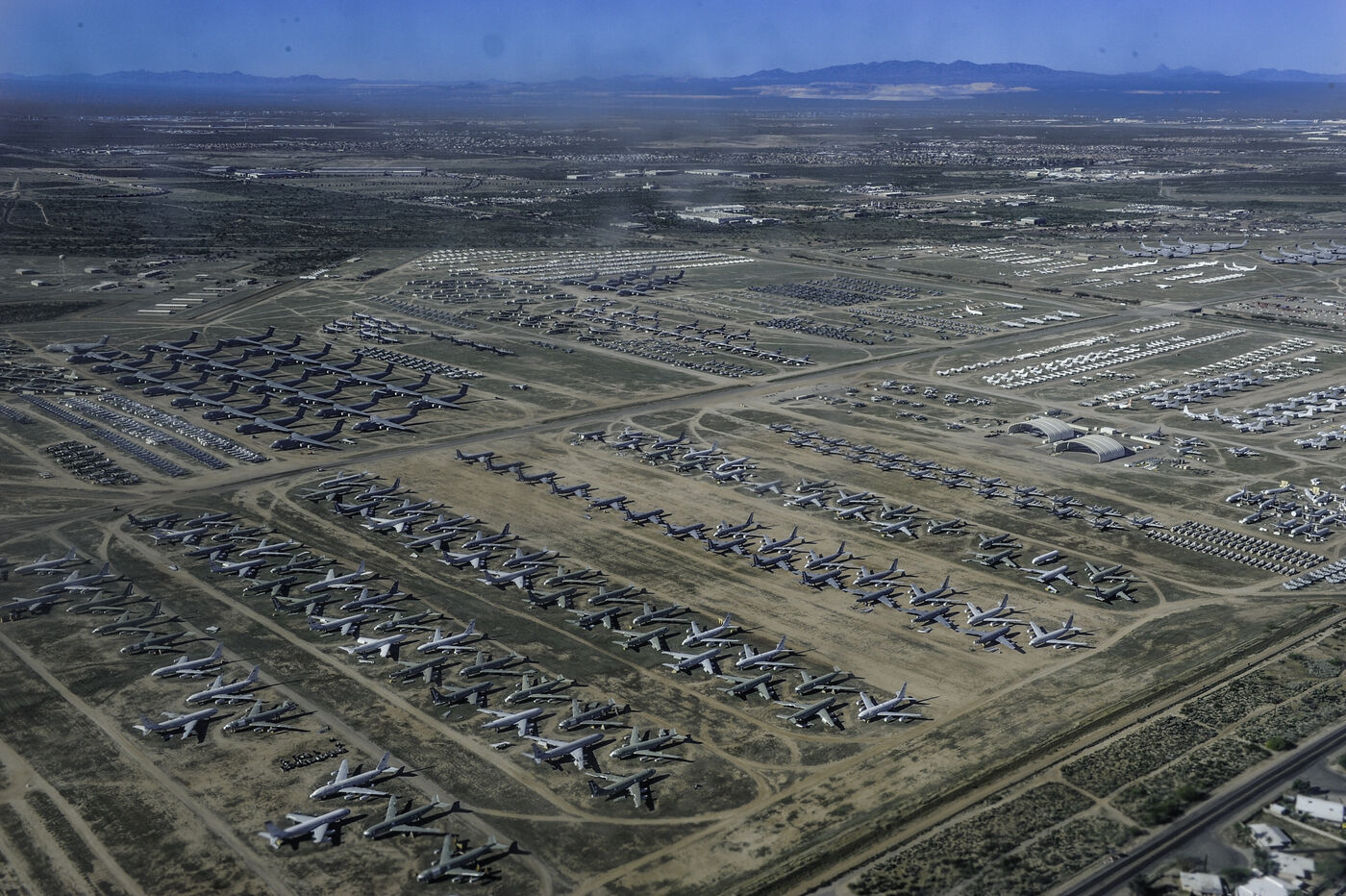
Davis-Monthan Air Force Base
Davis-Monthan Air Force Base is an active United States Air Force installation in Tucson, Arizona. It was established in 1925 as Davis-Monthan Landing Field and was named for two World War I pilots, Samuel H. Davis and Oscar Monthan. During World War II the field served as a training center for heavy bomber crews, and it later became home to the 355th Wing, which flies the A-10 Thunderbolt II for close air support. The base is perhaps best known for the 309th Aerospace Maintenance and Regeneration Group, the large aircraft storage and reclamation facility often called the boneyard, where Tucson's dry climate helps preserve retired military aircraft.
Decades of flight operations, maintenance, fuel handling, and firefighting training have raised concerns about potential exposure to several substances in soil and groundwater on and near the installation. State and federal agencies have tracked multiple sub-sites at the base, and some contaminants have been detected in drinking water supply wells north of the property.
- PFAS are a family of synthetic compounds sometimes called forever chemicals because they break down very slowly. At Davis-Monthan they are associated with AFFF firefighting foam, which the Air Force reported using from the 1970s until around 2017. PFAS, including PFOS and PFOA, have been found in groundwater and in several Tucson Water supply wells at levels above the former 70 parts per trillion federal health advisory. PFAS exposure has been associated in some studies with a range of health effects, which is why the detections have drawn close regulatory attention.
- TCE (trichloroethylene) is an industrial solvent historically used for degreasing aircraft parts and equipment. TCE is a contaminant of concern in the wider Tucson International Airport area aquifer near the base, where it has been addressed alongside other compounds. TCE has been associated with concerns about potential effects on the liver, kidneys, and immune system.
- Solvents and other volatile organic compounds were used in maintenance and were among materials disposed of historically at base landfills, along with metals and other debris. Volatile organic compounds and metals are listed among the contaminants of concern for the capped landfill, and such compounds have been associated with concerns about long term exposure through soil vapor or groundwater.
- Jet fuel (including JP-4) was stored and handled in large quantities to support flight operations. A 1989 soil investigation at one site documented JP-4 contamination extending to substantial depths, prompting the installation of downgradient monitoring wells. Petroleum hydrocarbons and related compounds have been associated with concerns about potential exposure where releases reached soil or groundwater.
Davis-Monthan is not listed on the National Priorities List, and cleanup is managed under the Department of Defense environmental restoration program with oversight from the Arizona Department of Environmental Quality. In 2015, Records of Decision were signed covering 22 sub-sites at the base, most requiring no further action while others addressed specific releases. For PFAS, the EPA issued an order in 2024 and secured a commitment from the Air Force to collect data, conduct pilot treatment studies, and help cover the cost of treating affected Tucson drinking water, with a pilot treatment effort planned for wells north of the base.
Veterans, families, and former civilian workers who spent time at Davis-Monthan may wish to stay informed as investigation and cleanup continue. Anyone with questions about possible exposure and related benefits is encouraged to speak with the U.S. Department of Veterans Affairs, which can provide current guidance on eligibility, screening, and care.
Were you stationed at a contaminated site?
The PACT Act of 2022 added more than 20 presumptive conditions for toxic exposure, including many cancers, and there is no deadline to file a VA claim.
This page is for informational purposes only and is not medical or legal advice. Consult a qualified professional about your health or benefits.
Discussion
No approved comments yet.