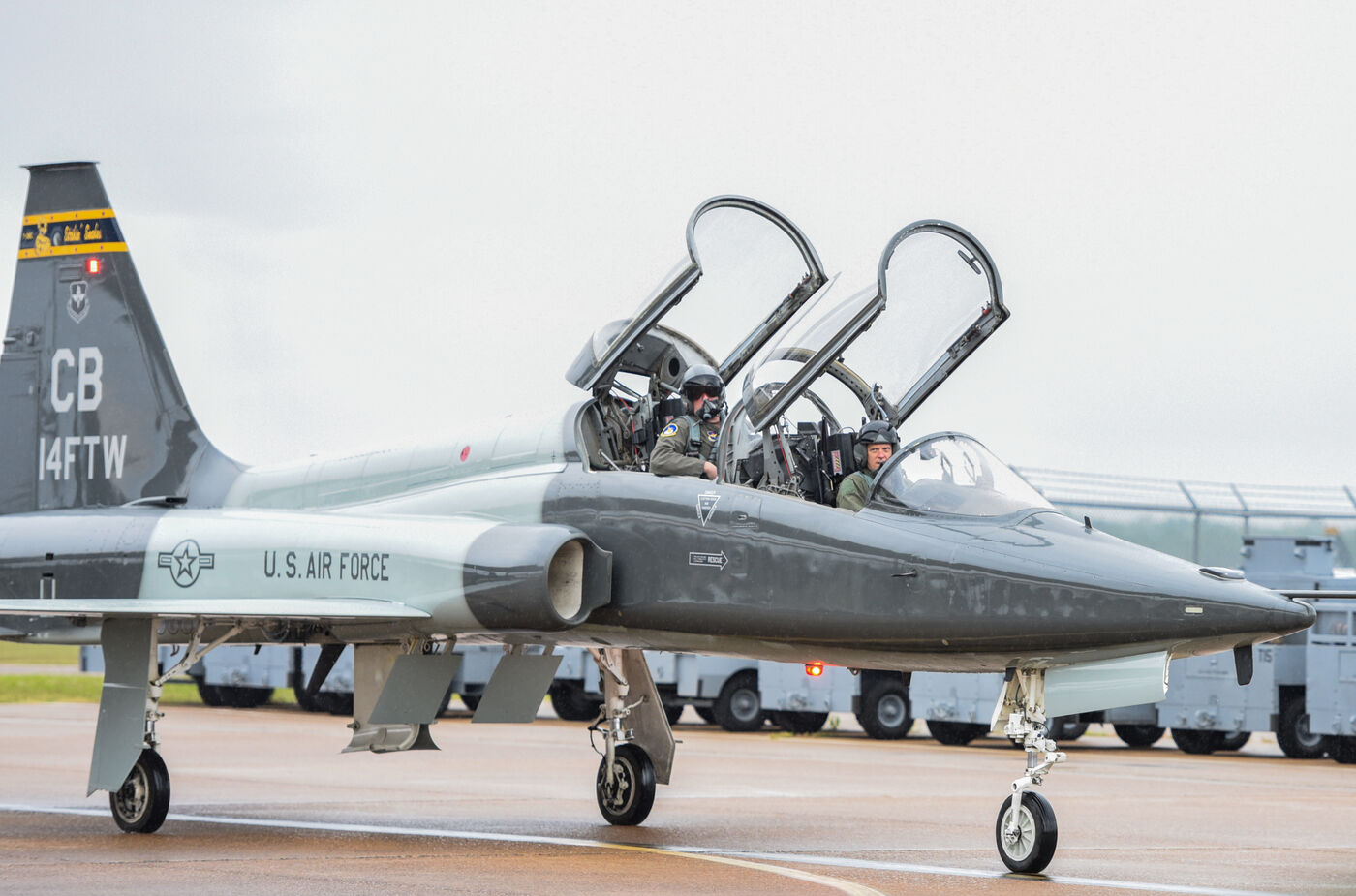
Columbus Air Force Base
Columbus Air Force Base is an active United States Air Force installation located in Lowndes County, Mississippi, several miles north of the city of Columbus. The site was established in 1941 as an Army advanced flying school, training pilots during World War II before being placed in inactive status and later reactivated for pilot training. Over the following decades the base also served briefly under Strategic Air Command before returning to its training role. Today the host unit is the 14th Flying Training Wing, assigned to Air Education and Training Command, which conducts specialized undergraduate pilot training for Air Force and allied students using aircraft such as the T-6, T-38, and T-1. Its long history as a flying and training installation means the base has supported flight-line, fueling, and emergency-response operations for many years.
Like many long-operating military airfields, Columbus Air Force Base has been associated with concerns about potential exposure to certain chemicals used in routine base activities, particularly firefighting operations and training. Testing has indicated elevated levels of certain fluorinated compounds in groundwater samples on and around the installation, and the Air Force has identified the base among Mississippi sites where these substances have been documented. The contaminants of concern described below reflect compounds commonly linked to firefighting foam used at airfields of this type.
- AFFF (aqueous film-forming foam): AFFF is a firefighting foam historically used at military airfields to suppress fuel fires during emergencies and training exercises. At Columbus Air Force Base, the use of this foam over many years has been identified as the likely source of fluorinated compounds detected in groundwater. Repeated application and storage of such foam has been associated with the migration of these chemicals into soil and water.
- PFAS (per- and polyfluoroalkyl substances): PFAS are a broad family of synthetic chemicals that resist breakdown in the environment and were a key component of the firefighting foam used at the base. Sampling near Columbus Air Force Base has shown PFAS in groundwater. These substances have been associated in some studies with a range of potential health concerns, and research into their effects is ongoing.
- PFOS (perfluorooctane sulfonate): PFOS is a specific PFAS compound that was present in older formulations of firefighting foam. It is among the substances investigated in connection with foam use at the base. PFOS has been the subject of health research examining possible links to certain conditions, though findings continue to be studied.
- PFOA (perfluorooctanoic acid): PFOA is another individual PFAS chemical associated with legacy firefighting foam and industrial uses. It is among the compounds considered in assessments of groundwater near the installation. Concerns about potential exposure to PFOA have prompted continued environmental review and monitoring.
Columbus Air Force Base is not listed as a National Priorities List Superfund site. Environmental review at the installation has proceeded under the Department of Defense and Air Force process for evaluating PFAS, which typically involves preliminary assessment, site inspection, and further investigation where warranted, with the Air Force investigation reported as underway. At the state level, the Mississippi Department of Environmental Quality has examined the occurrence of these substances in public water supplies, and Columbus Air Force Base has been named among sites identified in Mississippi state legal action against foam manufacturers.
Veterans, service members, and family members who lived or worked at Columbus Air Force Base may wish to stay informed as the Air Force and state agencies continue their review of these substances. Anyone with questions about possible exposure or related health concerns is encouraged to speak with the U.S. Department of Veterans Affairs and a personal health care provider, who can offer guidance based on individual circumstances.
Were you stationed at a contaminated site?
The PACT Act of 2022 added more than 20 presumptive conditions for toxic exposure, including many cancers, and there is no deadline to file a VA claim.
This page is for informational purposes only and is not medical or legal advice. Consult a qualified professional about your health or benefits.
Discussion
No approved comments yet.