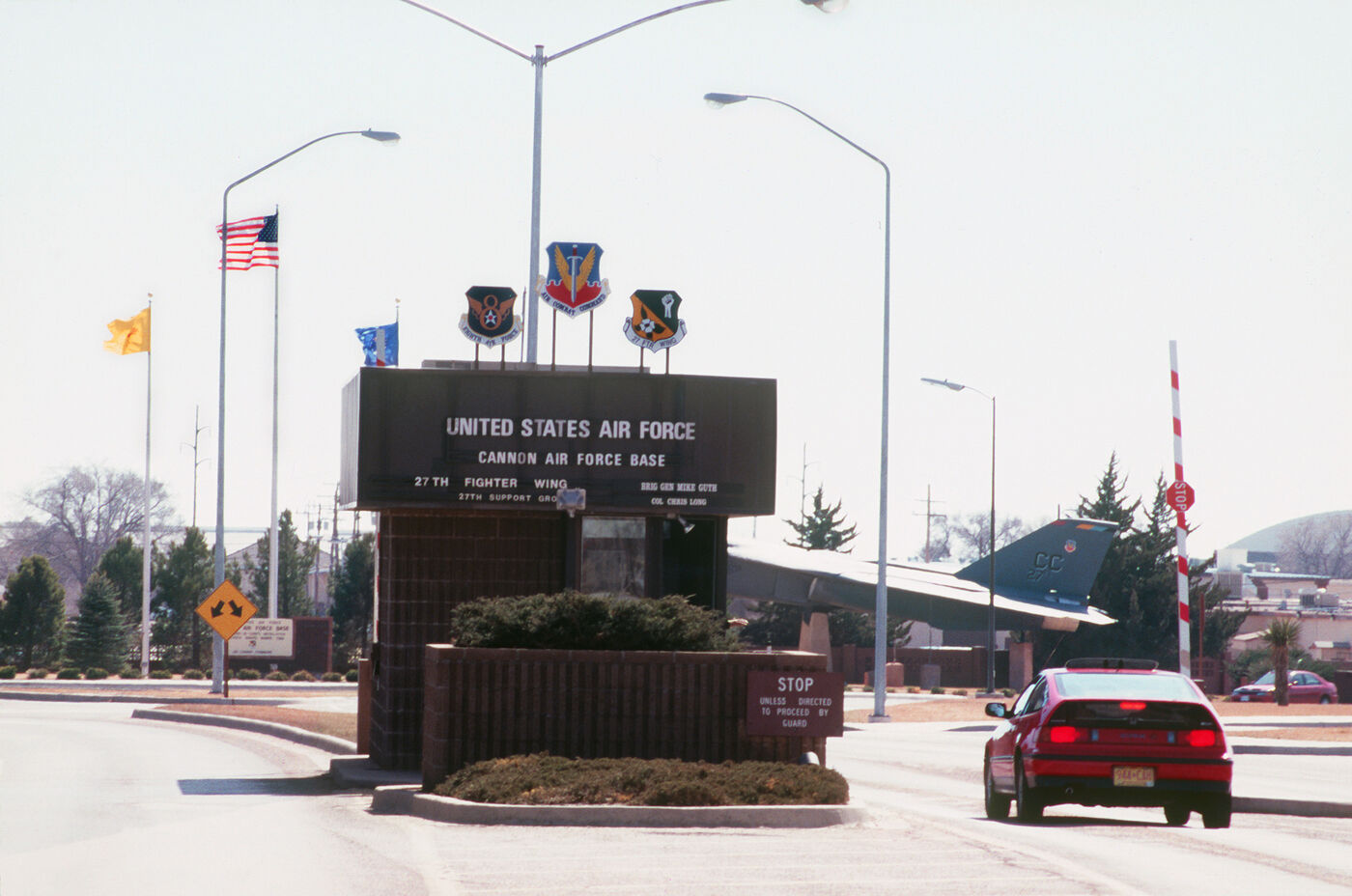
Cannon Air Force Base
Cannon Air Force Base is a United States Air Force installation in Curry County, near Clovis in eastern New Mexico. The site began as a civilian airfield in the 1920s and was redesignated as an Air Force base in 1947 following the establishment of the U.S. Air Force. In 2007, Cannon transitioned from Air Combat Command to Air Force Special Operations Command, and the resident unit became the 27th Special Operations Wing. Today the base supports specialized aircraft and air commandos who train for and carry out special operations missions, including precision air support, mobility, and intelligence and reconnaissance activities.
As with many long-operating airfields, decades of fire training and aircraft emergency response at Cannon involved firefighting agents that have since drawn scrutiny. State officials and the Air Force have documented groundwater contamination extending off base, and a portion of that concern has centered on the surrounding agricultural community. These conditions have prompted study of potential exposure among nearby residents, workers, and current and former service members.
- AFFF (aqueous film-forming foam) is a firefighting foam developed to suppress fuel fires and used in training and emergency response at military airfields. At Cannon, AFFF use over many years has been identified as the source of a groundwater plume that migrated beyond the base boundary. Because AFFF contains fluorinated compounds, its use has been associated with concerns about long-term contamination of drinking water and soil in the area.
- PFAS (per- and polyfluoroalkyl substances) are a large family of synthetic chemicals valued for their resistance to heat, water, and oil, and they are key ingredients in older firefighting foams. At Cannon, PFAS from AFFF entered the aquifer and affected private wells and dairy land, a situation linked to the euthanization of more than 3,500 dairy cows. A 2024 New Mexico state blood-testing project found detectable PFAS in 99.7 percent of nearby residents tested, and these substances have been associated in research with a range of potential health effects, though findings vary.
- PFOS (perfluorooctane sulfonate) is a specific PFAS compound historically used in military and airport firefighting foam. State sampling around Cannon identified PFOS among the most commonly detected compounds in residents' blood. PFOS has been the subject of ongoing study regarding concerns about potential effects on the immune system, liver, and other functions.
- PFOA (perfluorooctanoic acid) is a related PFAS compound found in firefighting foam as well as a variety of consumer products. Testing near Cannon detected PFOA in nearly all participants sampled. PFOA has been associated in some studies with concerns about potential health outcomes, and regulatory agencies continue to evaluate exposure levels.
Cannon Air Force Base is not listed on the National Priorities List. The U.S. Environmental Protection Agency classifies the site as deferred to corrective action under the Resource Conservation and Recovery Act (RCRA) rather than addressing it through the Superfund program. The Air Force reports having invested more than $74 million in PFAS identification and treatment, including the Southeast Playa Groundwater Treatment Facility that became operational in May 2025. The base has also been the subject of New Mexico litigation and state penalties related to PFAS, and in 2026 the state and the Air Force announced an agreement to jointly address contamination around the base.
Veterans and family members who lived or worked at Cannon Air Force Base may wish to stay informed as testing, cleanup, and policy continue to develop. Anyone with questions about possible exposure or related benefits is encouraged to speak with the U.S. Department of Veterans Affairs and to consult a personal healthcare provider for individualized guidance.
Were you stationed at a contaminated site?
The PACT Act of 2022 added more than 20 presumptive conditions for toxic exposure, including many cancers, and there is no deadline to file a VA claim.
This page is for informational purposes only and is not medical or legal advice. Consult a qualified professional about your health or benefits.
Discussion
No approved comments yet.