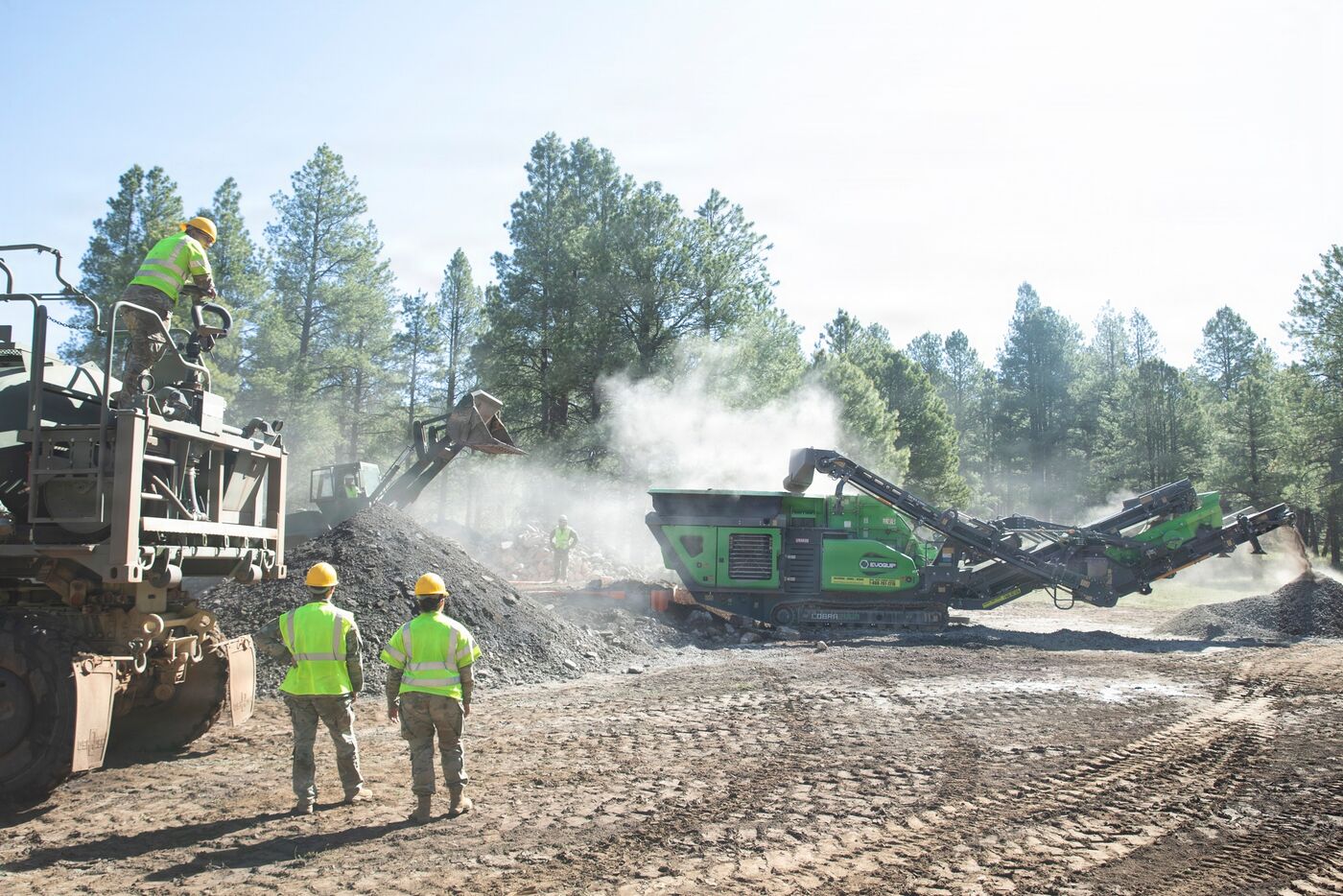
Camp Navajo
Camp Navajo is an Arizona Army National Guard training site and munitions storage installation located near Bellemont, west of Flagstaff, Arizona. The installation opened in 1942 as the Navajo Ordnance Depot, where it stored ammunition used during World War II, and it was later renamed the Navajo Army Depot in 1965 and the Navajo Depot Activity in 1982. Operational control transferred from the Secretary of the Army to the Arizona Army National Guard in 1982, and under the Base Realignment and Closure process the site took its current name, Camp Navajo, in 1993. Today the installation supports National Guard training, ranges, and ammunition and equipment storage on a large high desert tract that has been in continuous use since the 1940s. Decades of munitions handling, storage, and testing have left a number of areas subject to environmental investigation and long term monitoring.
Concerns about potential exposure at Camp Navajo center on a group of synthetic chemicals known as per- and polyfluoroalkyl substances, which were detected in the installation's drinking water. Department of Defense sampling data obtained by the Environmental Working Group documented these compounds in samples collected during 2016 to 2018.
- PFAS: PFAS are a large family of manufactured chemicals valued for resisting heat, water, and oil, and they are commonly associated with firefighting foams used at military installations. At Camp Navajo, total PFAS were reported in drinking water at 31.26 parts per trillion, a level that placed the site among the four highest of Arizona's seven contaminated Army installations. Several PFAS compounds, including PFBS, PFHxS, and PFHpA, were among those identified in 2017 sampling. PFAS have been associated in some studies with a range of health concerns, and exposure remains an area of ongoing research.
- PFOS: PFOS is one of the most studied PFAS compounds and was a primary ingredient in older aqueous film forming foam, the type of AFFF historically used in military firefighting and training. PFOS was among the compounds detected in the Camp Navajo drinking water samples. PFOS has been associated with concerns about potential effects on the immune system, thyroid, and other functions, though findings continue to be evaluated.
- PFOA: PFOA is another widely studied PFAS compound that, like PFOS, can persist in the environment and in the human body over long periods. PFOA was also reported among the substances found in the installation's drinking water during the documented sampling period. Researchers have examined possible associations between PFOA exposure and various health outcomes, and assessments of these chemicals are continuing.
Camp Navajo did not qualify for inclusion on the U.S. Environmental Protection Agency's National Priorities List. Instead, regulatory oversight is provided by the Arizona Department of Environmental Quality under the Department of Defense Installation Restoration Program and the Resource Conservation and Recovery Act. Over the years, studies, investigations, and removal actions have addressed numerous munitions related sites, with outcomes that include no further action, long term management, land use controls, or post closure care. State and federal records indicate there are currently no known exposures to contaminants of concern above applicable health based levels at the regulated sites.
Veterans, National Guard members, and others who lived or worked at Camp Navajo may wish to stay informed as environmental monitoring and PFAS research continue to evolve. Anyone with questions about possible exposure or related health concerns is encouraged to speak with the U.S. Department of Veterans Affairs and a personal health care provider, who can offer guidance based on individual circumstances.
Were you stationed at a contaminated site?
The PACT Act of 2022 added more than 20 presumptive conditions for toxic exposure, including many cancers, and there is no deadline to file a VA claim.
This page is for informational purposes only and is not medical or legal advice. Consult a qualified professional about your health or benefits.
Discussion
No approved comments yet.