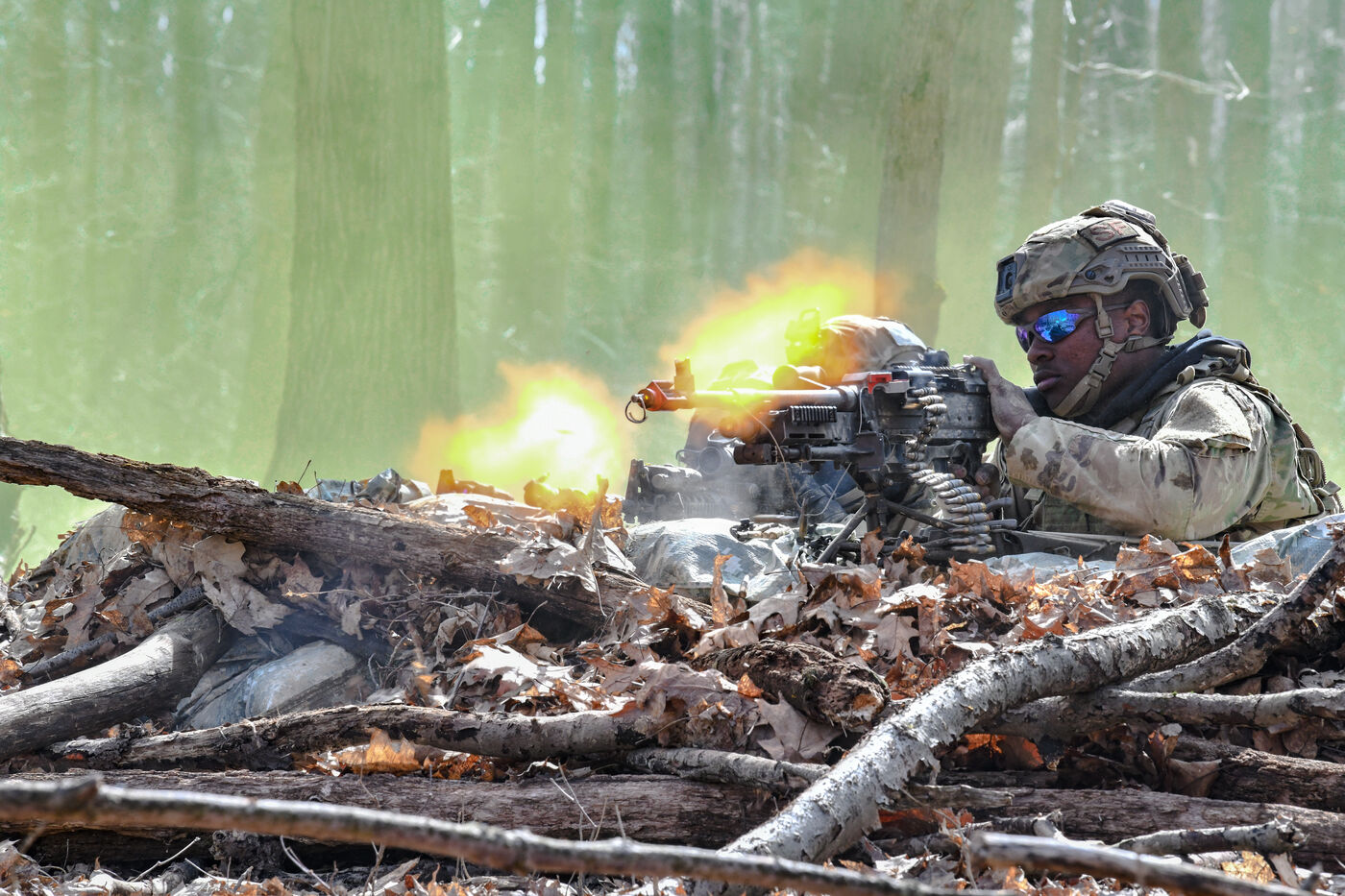
Camp James A. Garfield Joint Military Training Center (Ravenna Army Ammunition Plant)
Camp James A. Garfield Joint Military Training Center, located between Ravenna and Newton Falls in Portage and Trumbull counties, Ohio, was established in 1942 as the Ravenna Ordnance Plant and the adjoining Portage Ordnance Depot. During World War II the facility loaded, assembled and packed conventional ammunition across roughly a dozen production lines, producing millions of bombs, shells and other munitions, and it returned to activity during the Korean and Vietnam eras before entering long periods of standby and demilitarization. The site spans more than 21,000 acres and once held hundreds of storage bunkers and over a thousand buildings, most dating to the war years. The Ohio Army National Guard began taking control of the property in the late 1990s, with full transfer completed in 2002, and the installation was renamed Camp James A. Garfield in 2018 in honor of the 20th president, who represented the area. Today it serves as a regional military training center.
Decades of munitions production, handling and disposal left a range of residues in soil, sediment, surface water and groundwater across dozens of separate cleanup areas. Several of the substances associated with this history have been studied for potential effects on human health, and former workers and service members have raised concerns about potential exposure.
- Explosives and propellant residues (RDX and related compounds): The plant loaded and assembled artillery projectiles, bombs and other ordnance, and equipment was periodically washed with steam and hot water. The resulting explosive-laden wastewater, often called "pink water," drained onto surrounding soils or into ditches and ponds. Explosive compounds such as RDX have been associated in some studies with effects on the nervous system and other organs, raising questions about long-term exposure.
- PFAS: Per- and polyfluoroalkyl substances, sometimes called "forever chemicals," have been identified at the installation. These compounds, which include PFAS chemicals historically present in firefighting foams and many industrial products, persist in the environment and have been the subject of concerns about potential health effects, including certain cancers.
- Heavy metals: Munitions manufacturing and the materials used in projectiles, primers and related processes can leave metals in soil and water. Exposure to certain heavy metals has been associated with a variety of health concerns depending on the metal, the dose and the route of exposure.
- PCBs: Polychlorinated biphenyls were documented at the site, including in building paint that complicated demolition plans. PCBs are persistent compounds that have been associated in research with effects on the immune, reproductive and other systems, prompting concerns about potential exposure where they remain in soil, sediment or structures.
Camp James A. Garfield is not listed on the National Priorities List. Investigation and remediation are instead carried out under the Department of Defense Installation Restoration Program, working with the Ohio Environmental Protection Agency and a multi-agency team addressing more than eighty legacy contamination sites. Published figures indicate that roughly $132 million had been spent on evaluation and cleanup, with additional funding still needed, and the Department of Defense has estimated that work across all sites could be completed by 2031. Land use restrictions include prohibitions on using groundwater for drinking or domestic purposes in affected areas.
Veterans, former civilian workers and others who spent time at the Ravenna Army Ammunition Plant or Camp James A. Garfield may wish to keep track of their service history and stay informed as cleanup continues and as exposure research develops. Anyone with questions about possible health effects or available benefits is encouraged to speak with the U.S. Department of Veterans Affairs and with qualified medical professionals, who can offer guidance based on individual circumstances.
Were you stationed at a contaminated site?
The PACT Act of 2022 added more than 20 presumptive conditions for toxic exposure, including many cancers, and there is no deadline to file a VA claim.
This page is for informational purposes only and is not medical or legal advice. Consult a qualified professional about your health or benefits.
Discussion
I worked at the Ravenna arsenal during desert storm in 1990 thru 1992 can I get information please