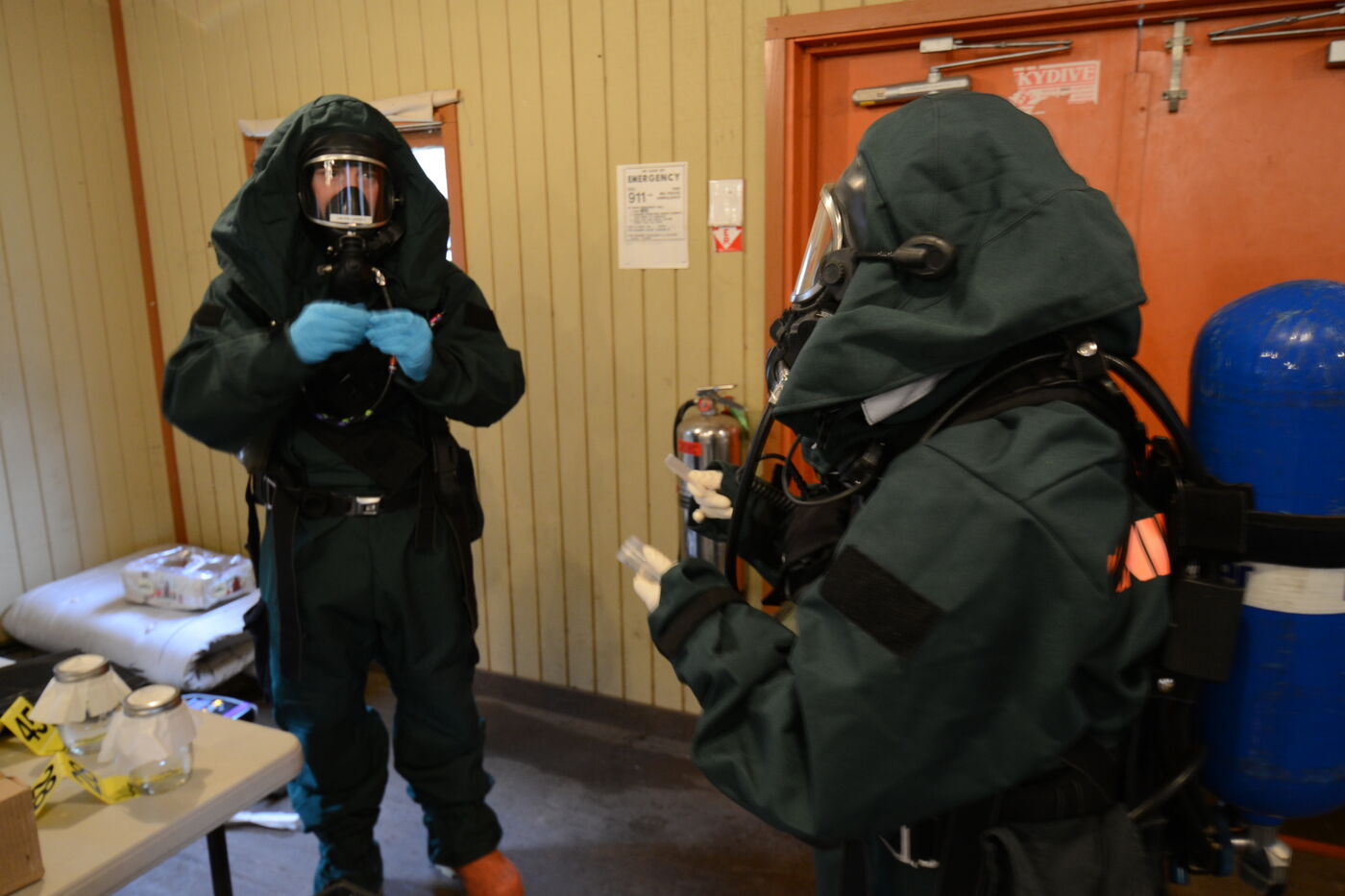
Camp Bonneville
Camp Bonneville was a U.S. Army training reservation located near Vancouver, in Clark County, Washington. Established in 1909, the roughly 4,000-acre site served for much of the twentieth century as a rifle range and weapons training facility supporting troops stationed at nearby Fort Vancouver, and it remained in use through both World Wars and the Korean, Vietnam, and Gulf War eras. The installation was recommended for closure under the 1995 Base Realignment and Closure (BRAC) round, and its decades of munitions training left behind unexploded ordnance across the property, including a heavily used central impact area. The land was later transferred to Clark County for conversion to public parkland and wildlife habitat, with a portion remaining permanently restricted because of safety concerns.
Because of the long history of live-fire and demolition training at the site, environmental investigations have identified several substances of concern in soil and groundwater. The contaminants below have been documented in connection with past training and waste-handling activities, and they have raised concerns about potential exposure pathways for people and the surrounding environment.
- RDX and other explosive compounds. RDX (sometimes called Royal Demolition Explosive) is a powerful military explosive that was used and disposed of during demolition and munitions training at Camp Bonneville. Investigations have detected RDX and related explosive residues in soil and groundwater at the site. Exposure to explosive compounds in drinking water has been associated in some studies with concerns about potential effects on the nervous system, which is part of why groundwater monitoring has continued at the installation.
- Perchlorate. Perchlorate is a chemical associated with propellants, munitions, and explosives, and it has been detected in groundwater at Camp Bonneville in connection with the site's training history. Perchlorate is highly soluble and can migrate in groundwater, which is one reason it has been a focus of long-term investigation. It has been associated with concerns about potential effects on thyroid function, and ongoing monitoring is intended to track its presence over time.
- Lead and other heavy metals. Lead is a heavy metal that accumulated at the site largely from spent ammunition and small-arms range use over many decades. Environmental testing identified lead and other metals in soil and groundwater, with much of the affected soil addressed through interim cleanup actions. Lead exposure has long been associated with concerns about potential effects on the nervous system and other organs, particularly for children, which underscores the attention given to range-related residues.
Camp Bonneville is not listed on the National Priorities List (Superfund). Instead, cleanup has been carried out under an enforcement order with the U.S. Army and is supervised by the Washington State Department of Ecology, with involvement from the U.S. Environmental Protection Agency, the Department of Defense, and Clark County. A multi-year munitions clearance effort across hundreds of acres was reported complete around 2020, while groundwater investigation and long-term monitoring have continued on a quarterly basis, with remedial planning and public comment opportunities extending into recent years.
Veterans, family members, and others who trained or worked at Camp Bonneville may wish to stay informed as cleanup and monitoring continue at the site. Those with questions about possible exposures and their health are encouraged to speak with the U.S. Department of Veterans Affairs and their own medical providers, who can offer guidance based on individual history and current VA programs.
Were you stationed at a contaminated site?
The PACT Act of 2022 added more than 20 presumptive conditions for toxic exposure, including many cancers, and there is no deadline to file a VA claim.
This page is for informational purposes only and is not medical or legal advice. Consult a qualified professional about your health or benefits.
Discussion
No approved comments yet.