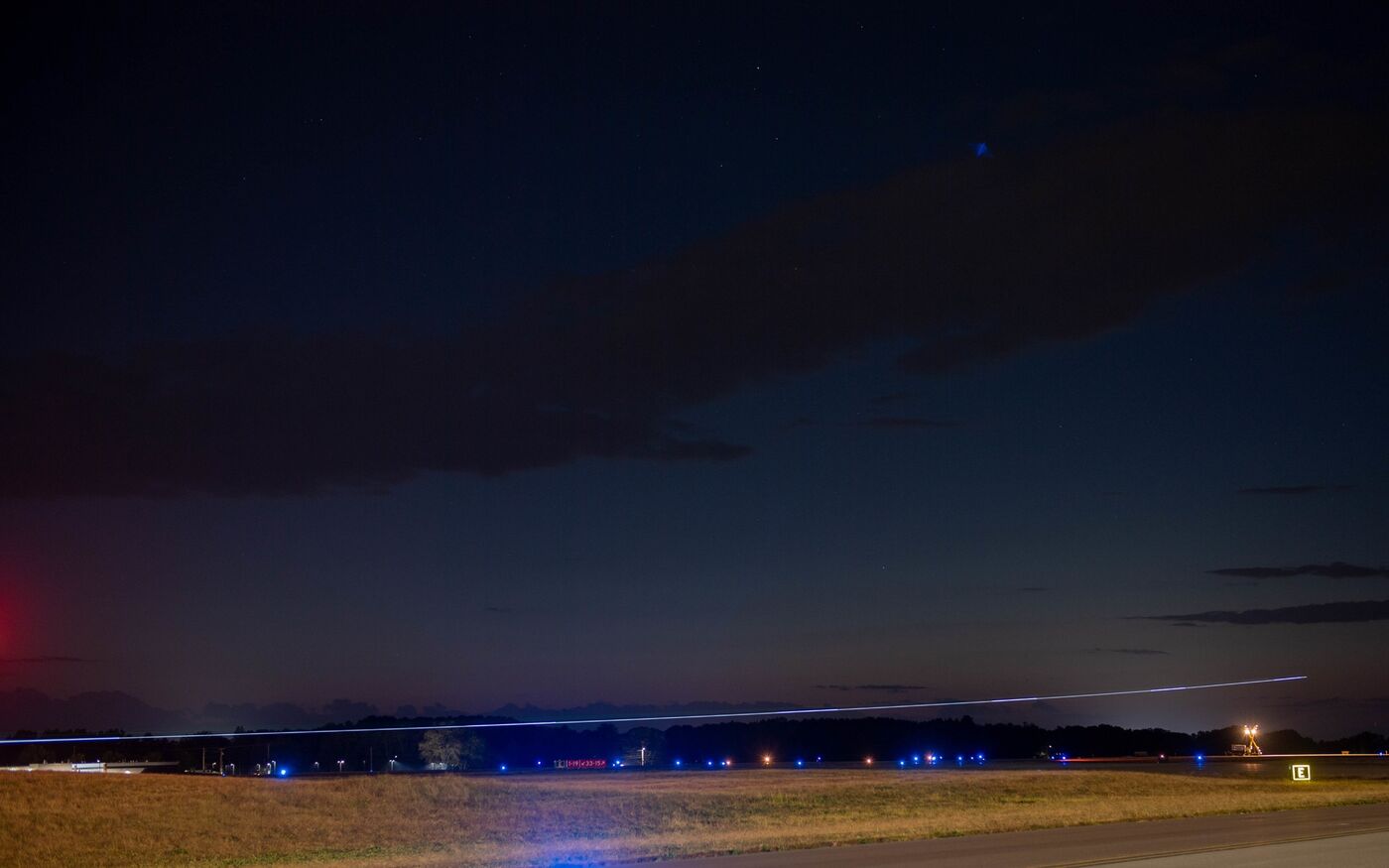
Burlington Air National Guard Base
Burlington Air National Guard Base is a Vermont Air National Guard installation located at Burlington International Airport in South Burlington, Vermont. It is home to the 158th Fighter Wing, whose Vermont Air National Guard lineage traces to federal recognition in the mid 1940s and the early postwar reorganization of the National Guard. Over the decades the wing has flown a succession of fighter aircraft, beginning with propeller driven fighters, transitioning to the F-16, and converting to the F-35 Lightning II beginning in 2019. The base supports both a federal mission, providing combat ready personnel and equipment to the United States Air Force, and a state mission, assisting Vermont during local and statewide emergencies. Because the installation operates alongside a civilian airport, its firefighting and aircraft support activities have been the subject of environmental review.
Environmental sampling at and around the base has identified per and polyfluoroalkyl substances in groundwater and surface water, raising concerns about potential exposure for personnel, neighboring residents, and area farms.
- AFFF (aqueous film forming foam): AFFF is a firefighting foam historically used to suppress fuel fires. At Burlington it was used for roughly four decades in firefighting training and response, and Air National Guard officials have acknowledged that this use contributed to groundwater contamination on the base. Reporting and state records have also described foam releases connected to the site. Exposure to the foam and its breakdown components has been associated with health concerns that remain under study.
- PFAS (per and polyfluoroalkyl substances): PFAS are a large family of persistent synthetic chemicals found in older AFFF formulations. Samples from the former firefighting training area reportedly reached tens of thousands of parts per trillion, with one 2018 result cited as high as 72,000 ppt, far above Vermont's combined drinking water standard of 20 ppt for five regulated PFAS compounds. PFAS exposure has been associated in some studies with effects on the immune system, cholesterol levels, and certain other health outcomes, though research continues.
- PFOS (perfluorooctane sulfonate): PFOS is one of the individual PFAS compounds present in legacy firefighting foam used at the base. It is among the regulated substances counted toward Vermont's enforcement standard and has been detected in site related sampling. PFOS has been associated with concerns about potential effects on the liver, thyroid, and developmental health.
- PFOA (perfluorooctanoic acid): PFOA is another regulated PFAS compound associated with the contamination assessed at the installation. Like PFOS, it is persistent in the environment and slow to leave the human body. PFOA exposure has been associated in some research with concerns about kidney and other health effects, and it remains the subject of ongoing scientific review.
Burlington Air National Guard Base is not listed on the National Priorities List as a federal Superfund site. The Vermont Department of Environmental Conservation has overseen investigation of the contamination, including installation of filtration on an affected agricultural well, while remediation involving the federally operated Air National Guard proceeds under federal environmental law as a multi year process. State regulators have documented a contamination plume in groundwater and have reported PFAS reaching the nearby Winooski River, and the older foam has reportedly been replaced with a newer formulation considered less hazardous.
Veterans and family members who served at or lived near Burlington Air National Guard Base may wish to stay informed as environmental investigation and cleanup continue. Those with questions about possible exposure are encouraged to speak with the U.S. Department of Veterans Affairs about available health resources and to discuss any individual concerns with a qualified medical provider.
Were you stationed at a contaminated site?
The PACT Act of 2022 added more than 20 presumptive conditions for toxic exposure, including many cancers, and there is no deadline to file a VA claim.
This page is for informational purposes only and is not medical or legal advice. Consult a qualified professional about your health or benefits.
Discussion
No approved comments yet.