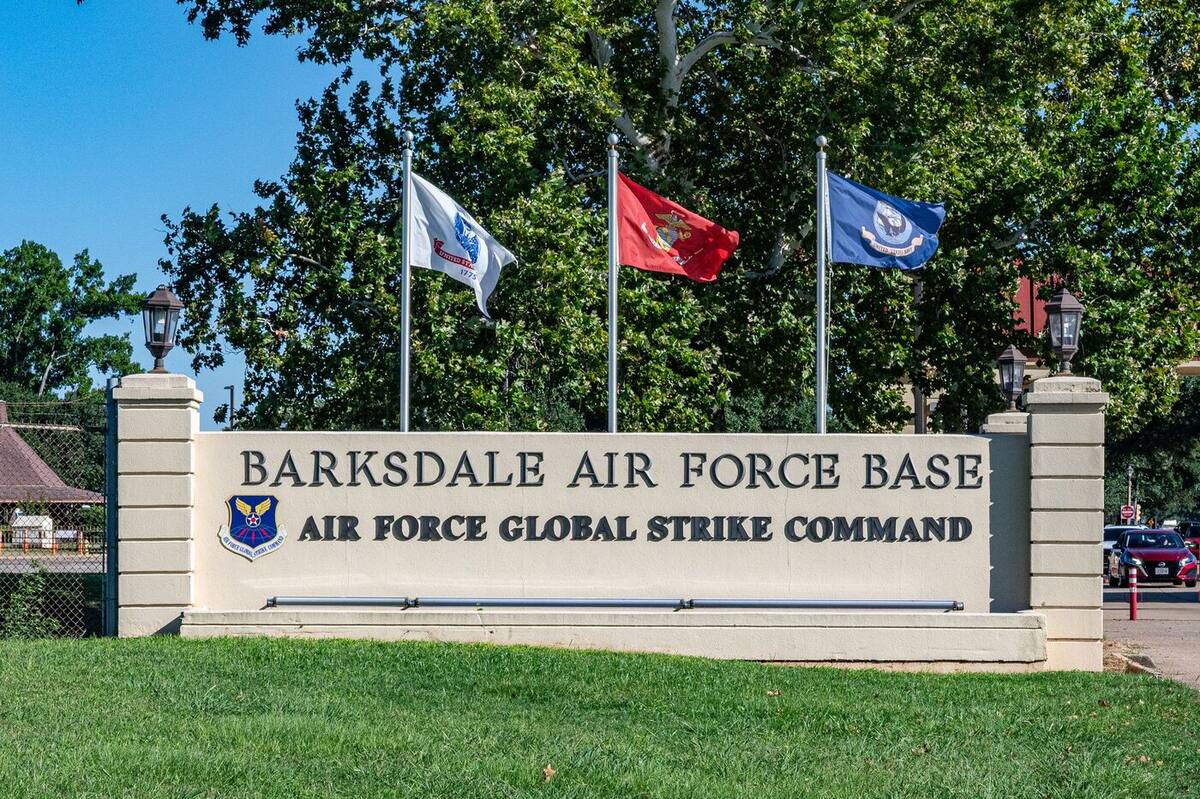
Barksdale Air Force Base
Barksdale Air Force Base is a U.S. Air Force installation located in Bossier Parish, Louisiana, near Bossier City and the Shreveport metropolitan area. The base was established in 1933 as Barksdale Field, named in honor of Lieutenant Eugene Hoy Barksdale, an aviator who died in a 1926 crash. Originally built as a bomber and flight training facility, the installation expanded significantly during World War II and later became a center of strategic bomber operations. The first B-52 aircraft arrived at Barksdale in 1958, and the 2nd Bomb Wing, the oldest bomb wing in the Air Force, transferred to the base in 1963. Today Barksdale serves as the home of the 2nd Bomb Wing, which operates the B-52H Stratofortress in support of global strike and national security missions.
As with many longstanding military airfields, Barksdale has been the subject of environmental investigations into chemicals associated with routine flight line and firefighting activities. Department of Defense testing has identified contamination at the installation, and these findings have raised concerns about potential exposure among service members, families, and civilian workers who lived or worked on or near the base.
- PFAS (per- and polyfluoroalkyl substances) are a large family of synthetic chemicals valued for their resistance to heat, water, and oil. At Barksdale, PFAS compounds have been detected in groundwater and in surface water and sediment surrounding former fire training areas, where they are understood to originate from decades of firefighting foam use. PFAS exposure has been associated in some studies with potential effects on the kidneys, liver, thyroid, and immune system, though individual outcomes vary.
- PFOS (perfluorooctane sulfonate) is one of the most studied individual PFAS compounds and was a primary ingredient in older firefighting foam formulations used at military installations. Testing at Barksdale has reported PFOS among the substances present in groundwater near historical training sites. Research has examined possible associations between PFOS exposure and changes in cholesterol levels, thyroid function, and certain health conditions.
- PFOA (perfluorooctanoic acid) is another widely recognized PFAS compound historically linked to industrial uses and firefighting foam. Department of Defense testing reported elevated levels of PFOA in groundwater at Barksdale, with some samples measured far above federal screening guidance. PFOA has been studied for potential associations with certain cancers and other health effects, although findings continue to be reviewed by health agencies.
- AFFF (aqueous film forming foam) is a firefighting agent used to suppress fuel fires and was relied upon for training and emergency response at airfields for many years. At Barksdale, repeated use of AFFF at fire training areas is identified as the principal source of the PFAS, PFOS, and PFOA detected in the surrounding environment. Because AFFF contains PFAS, concerns about its long-term use focus on the persistence of these chemicals in soil and water.
Barksdale Air Force Base is not listed as a federal Superfund site on the National Priorities List. Instead, the contamination is being addressed through the Department of Defense and Air Force environmental investigation and cleanup process. Reported steps have included site assessment, groundwater monitoring, drinking water testing, and ongoing evaluation of contaminated areas, with investigation and remediation described as continuing.
Veterans, families, and civilian employees who spent time at Barksdale and have questions about possible exposure are encouraged to stay informed as new environmental and health information becomes available. The U.S. Department of Veterans Affairs offers guidance on toxic exposure and related benefits, and speaking with a VA representative or a qualified health care provider can help individuals understand their own situation and any options that may apply.
Were you stationed at a contaminated site?
The PACT Act of 2022 added more than 20 presumptive conditions for toxic exposure, including many cancers, and there is no deadline to file a VA claim.
This page is for informational purposes only and is not medical or legal advice. Consult a qualified professional about your health or benefits.
Discussion
No approved comments yet.