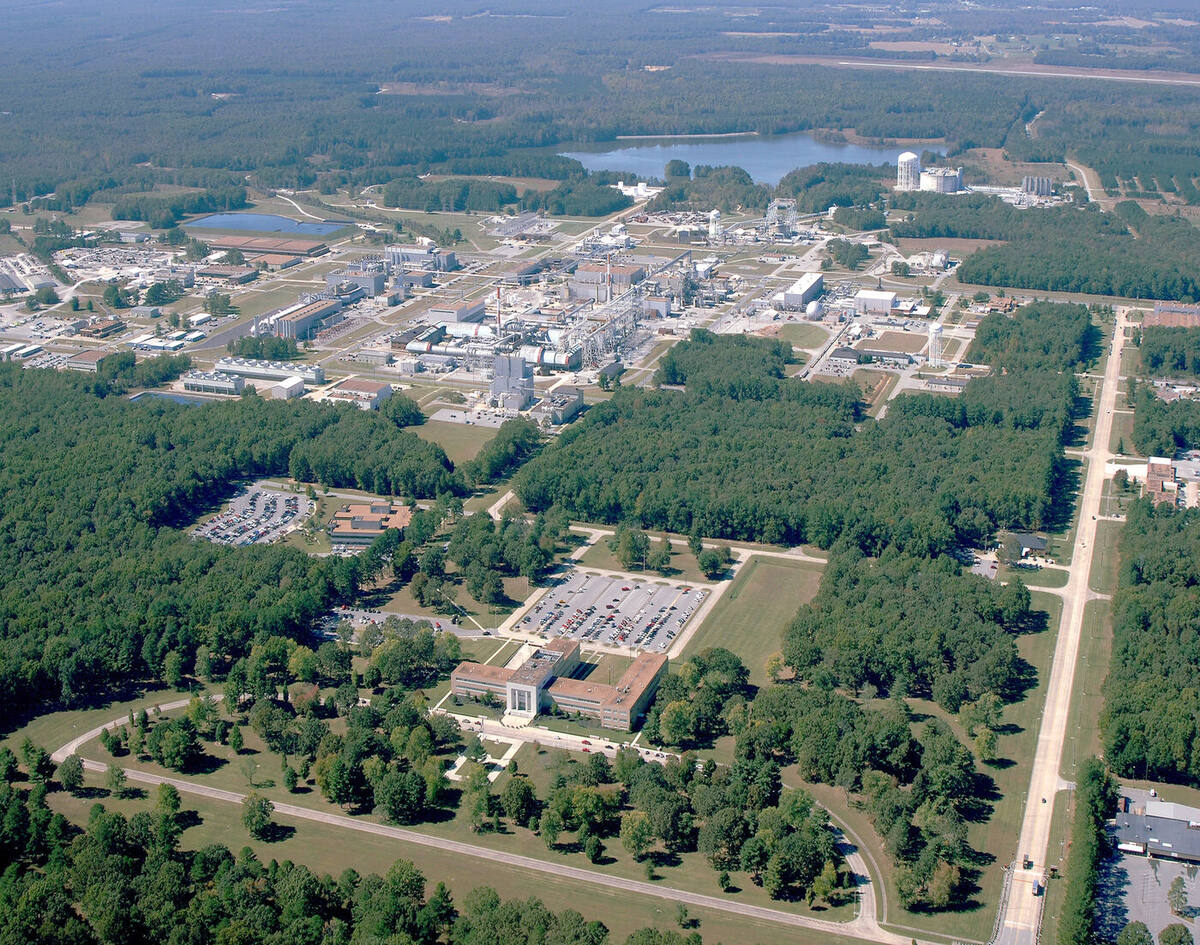
Arnold Air Force Base
Arnold Air Force Base is an Air Force installation in Coffee and Franklin counties in middle Tennessee, near Manchester and Tullahoma, on the former site of Camp Forrest. The base was established and dedicated in 1951 and named in honor of General of the Air Force Henry H. "Hap" Arnold. It is home to the Arnold Engineering Development Complex (AEDC), described as one of the largest and most advanced collections of flight simulation and aerospace ground test facilities in the world, with wind tunnels, engine test cells, and space simulation chambers. Over the decades AEDC has supported the development of numerous national aerospace programs, including ballistic missiles, the space shuttle, and crewed spaceflight projects. The testing mission has involved extensive use of fuels, solvents, and other industrial chemicals on the site.
Because of these long-running operations, the base and surrounding waters have been associated with several environmental contaminants, and there have been concerns about potential exposure for workers, residents, and people who use nearby surface waters for recreation.
- PFAS: PFAS are a family of persistent synthetic chemicals once common in firefighting products. At Arnold, a gravel-filled fire-training tract used for practice burns was reported as a source, and testing in 2016 found groundwater contamination beneath that area roughly 2,500 times above the EPA health advisory level at the time. PFAS exposure has been associated in some studies with a range of health concerns, though findings continue to be studied.
- PFOS and PFOA: PFOS and PFOA are two of the most studied PFAS compounds. Reporting on the base cited combined PFOS and PFOA totals in groundwater far above advisory levels, and the Air Force notified hundreds of nearby landowners. These compounds have been the subject of concerns about potential long-term health effects.
- AFFF: AFFF, or aqueous film-forming foam, is a firefighting foam that contains PFAS. At Arnold it was reportedly used during routine fire-training exercises beginning in the 1970s, which has been identified as a primary pathway for PFAS reaching groundwater at the site.
- PCBs: PCBs are industrial chemicals formerly used in electrical and hydraulic equipment. PCBs from the site have been reported in off-site surface water, sediment, and fish, which prompted concerns about potential exposure through recreational fishing.
- TCE and solvents: TCE and other chlorinated solvents were widely used as industrial degreasers and cleaners. Several volatile organic compounds, primarily chlorinated solvents, have been identified in groundwater in the AEDC area. Exposure to such solvents has been associated with various health concerns in the scientific literature.
- Jet fuel: Jet fuel and related petroleum products were used in connection with the base's aerospace testing operations and have been noted among the documented contaminants of concern at the site.
Arnold Air Force Base was proposed for addition to the Superfund National Priorities List (NPL) in 1994 because of PCB and related contamination, but it was not ultimately added to the list. Environmental investigation and cleanup at the installation have instead proceeded under federal and Department of Defense restoration programs, with the EPA at one point concluding that human exposure and groundwater contamination at the site were under control. PFAS detected in nearby Woods Reservoir, where people swim and fish, has remained a subject of ongoing attention.
Veterans, civilian employees, and family members who spent time at Arnold Air Force Base may wish to stay informed as monitoring and cleanup work continue. Anyone with questions about possible exposure and related health concerns is encouraged to speak with the U.S. Department of Veterans Affairs (VA) and a personal healthcare provider, who can offer guidance based on individual circumstances.
Were you stationed at a contaminated site?
The PACT Act of 2022 added more than 20 presumptive conditions for toxic exposure, including many cancers, and there is no deadline to file a VA claim.
This page is for informational purposes only and is not medical or legal advice. Consult a qualified professional about your health or benefits.
Discussion
No approved comments yet.