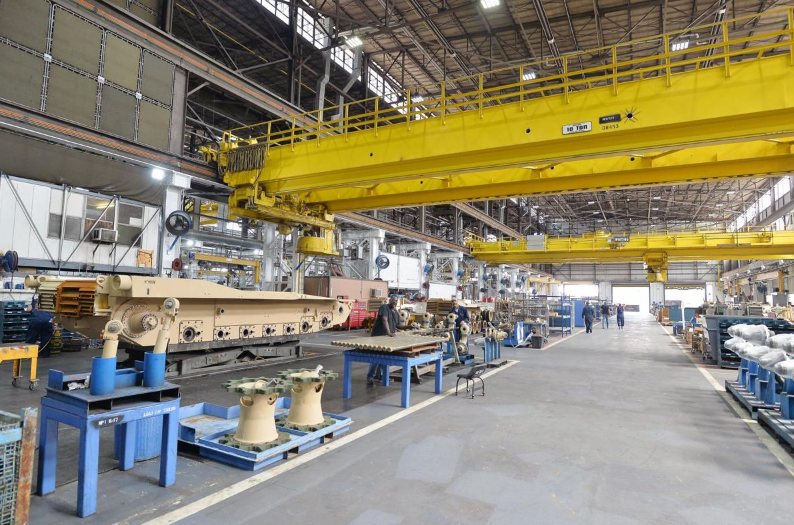
Anniston Army Depot
Anniston Army Depot is an active, 15,319-acre U.S. Army installation in Calhoun County, Alabama, about 10 miles west of Anniston. It was officially designated the Anniston Ordnance Depot on October 14, 1941, with ammunition storage and shipment as its first mission. Combat vehicle overhaul and repair was added in the early 1950s, the name changed to Anniston Army Depot in 1962, and missile maintenance and M1 Abrams tank support followed in the 1980s.
From the 1940s through the late 1970s, wastes generated at the depot were disposed of in trenches, lagoons, landfills, and other holding vessels, with most of the waste coming from the Southeast Industrial Area (SIA). EPA finalized the SIA on the Superfund National Priorities List on March 13, 1989. A 1990 Federal Facilities Agreement among the Army, EPA, and the Alabama Department of Environmental Management brought the entire depot under combined Superfund and hazardous waste cleanup requirements. The cleanup is organized into five operable units: SIA groundwater, SIA soil, the Ammunition Storage Area, the Military Munitions Response Program, and the Western Industrial Area.
EPA identifies the key contaminants of concern at the depot as volatile organic compounds (VOCs), metals, and explosives, found in groundwater and soil:
- TCE (trichloroethylene) is a degreasing solvent and a listed contaminant of concern in SIA groundwater. EPA explains that the depot's VOCs are most often released from cleaning materials used to degrease heavy equipment, and ATSDR called TCE in groundwater the main concern. EPA classifies TCE as "carcinogenic to humans," based on convincing evidence of a causal link with kidney cancer, strong but less convincing evidence for non-Hodgkin lymphoma, and more limited evidence for liver cancer.
- Other VOCs named by EPA in SIA groundwater include tetrachloroethene (PCE), the TCE breakdown product cis-1,2-dichloroethene, 1,1,1-trichloroethane, carbon tetrachloride, and chloroform.
- Hexavalent chromium and other metals are listed as contaminants of concern, including chromium, lead, arsenic, and manganese in groundwater and cadmium, antimony, thallium, and zinc in SIA soil. EPA notes that metals are typically released through heavy equipment maintenance.
- Explosives such as TNT and RDX are listed for the Ammunition Storage Area (all media). EPA describes releases of explosives at the depot as limited.
Polychlorinated biphenyls (PCBs) do not appear on EPA's contaminant of concern list for the depot. The well-known PCB contamination in Anniston is a separate Superfund site, the Anniston PCB Site (Monsanto Co).
Cleanup has included groundwater pump and treat systems, bioremediation, soil removal and capping, and land use controls that prohibit drinking or irrigating with groundwater at the depot. In 2004 the Army paid for air stripping towers at the local municipal plant, and all water from Coldwater Spring, the main drinking water source for Calhoun County, is now treated before it reaches the public. EPA reports that treated water does not contain harmful levels of VOCs. EPA completed an independent assessment in September 2025 that serves as the sixth Five-Year Review, and its site profile reports that high levels of groundwater contamination remain beneath the depot and low levels continue to spread to the boundary, with limited low-level contamination potentially affecting Coldwater Spring just outside the boundary. EPA's performance measures for the site list human exposure and groundwater migration as under control.
ATSDR completed a public health assessment in 1999 and a follow-up health consultation in 2008. The 2008 review concluded that municipal water posed no public health hazard from VOCs and that the 66 tested private wells near the depot posed no apparent public health hazard, while vapor intrusion from contaminated groundwater into on-site buildings was an indeterminate hazard for past, present, and future on-site workers.
For PFAS, the Army completed a preliminary assessment and site inspection at the depot (final report May 2023), which found PFOS, PFOA, or PFBS above Defense Department screening levels at five of nine areas investigated and recommended further study in a remedial investigation. As of June 30, 2026, a PFAS remedial investigation was underway, with the remedial investigation and feasibility study estimated to be completed in May 2037.
The depot also stored chemical weapons from 1963 until 2011, about 7 percent of the original U.S. stockpile: 661,529 nerve and mustard agent munitions holding 2,254 tons of agent. The Anniston Chemical Agent Disposal Facility began destruction on August 9, 2003, finished GB nerve agent in 2006 and VX in 2008, and destroyed the last of the stockpile on September 22, 2011, using incineration and explosive destruction technologies.
What this means for you. This is general information, not legal or medical advice.
- Veterans and service members: No VA presumption exists for service at Anniston Army Depot itself, so a claim based on exposure there would generally be a direct service connection claim that links a current condition to service. Other qualifying service, such as Gulf War or post-9/11 service in a covered location, may carry presumptive conditions under the PACT Act. See our PACT Act checker and claim guide.
- Civilian federal employees: Civilian depot workers do not file with the VA. Federal employees file work-related illness claims with the Department of Labor's Office of Workers' Compensation Programs under the Federal Employees' Compensation Act, using Form CA-2, Notice of Occupational Disease and Claim for Compensation.
Were you stationed at a contaminated site?
The PACT Act of 2022 added more than 20 presumptive conditions for toxic exposure, including many cancers, and there is no deadline to file a VA claim.
This page is for informational purposes only and is not medical or legal advice. Consult a qualified professional about your health or benefits.
Discussion
Just got diagnosed with Multiple Myeloma.Been working at Anniston Army Depot as a civilian 2003 for 23 years.Work around a lot of solvents and different Chemicals.Bynum Alabama which is in Anniston,Alabama.I’m just getting ready to start Chemo and medication in the next 3 weeks. I just want advice on what will be my next move if I file a claim.