Gulf War Illness: Three Decades of Unanswered Questions
The 1990-1991 Persian Gulf War was, by conventional measures, a swift and decisive campaign. Nearly 700,000 American service members deployed for Operations Desert Shield and Desert Storm, and the ground war itself lasted only about 100 hours. Yet in the months and years that followed, veterans began reporting a puzzling cluster of persistent symptoms, including fatigue, headaches, joint pain, indigestion, insomnia, dizziness, respiratory problems, and memory difficulties. According to VA research, a 2020 Department of Defense report estimated that 175,000 to 250,000 of those who deployed developed what is now commonly called Gulf War Illness, a figure that would represent roughly one in four veterans of the conflict. Three decades later, no single cause has been confirmed.
A War of Many Exposures
Part of what makes Gulf War Illness so difficult to study is the sheer number of potential hazards involved. The VA's public health office lists exposures that included oil well fire smoke, pesticides, pyridostigmine bromide pills, depleted uranium, chemical agent resistant coating (CARC) paint, multiple vaccines, sand and dust, and possible low-level nerve agents.
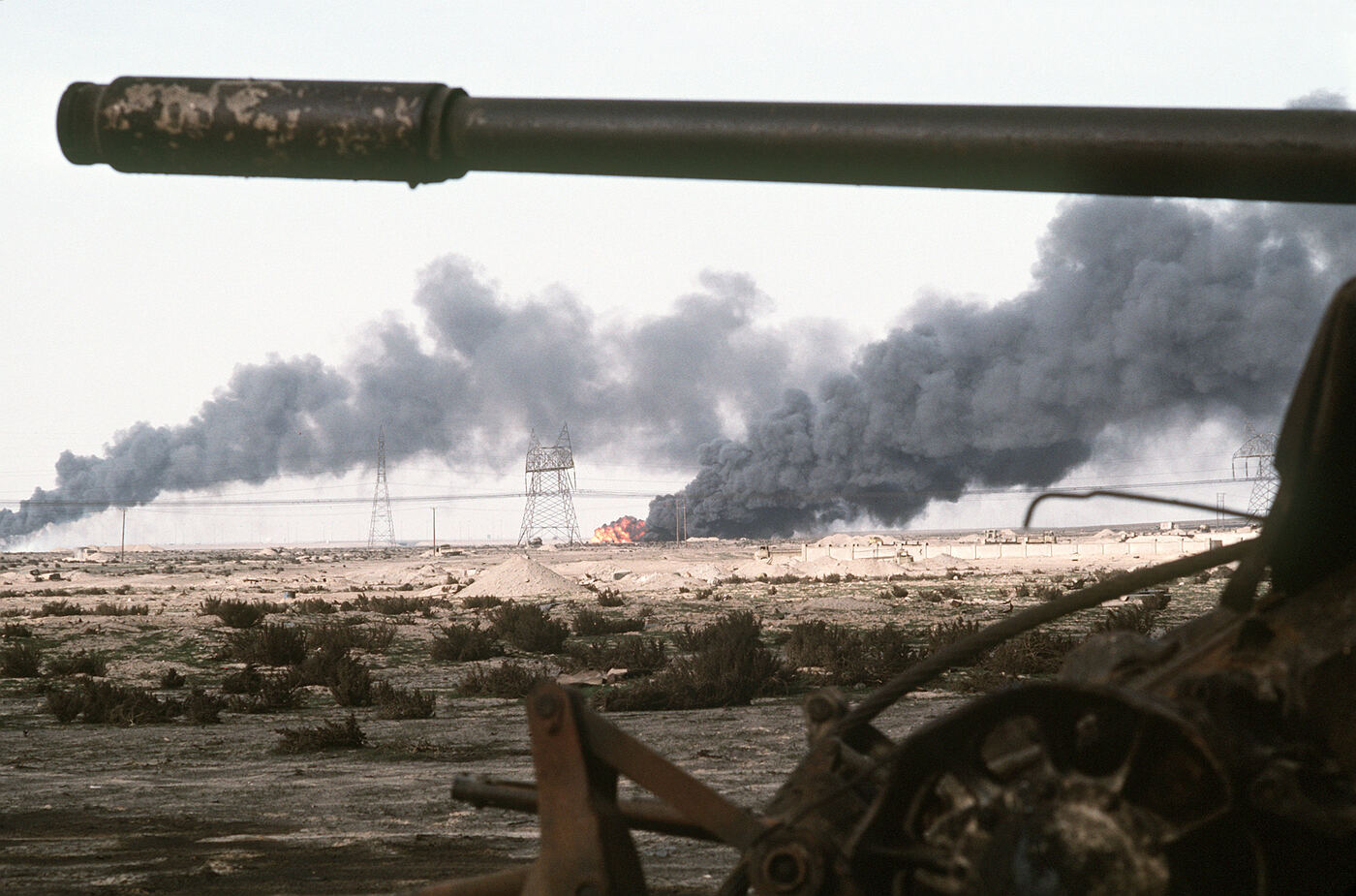
The oil well fires are perhaps the most visually remembered hazard. Retreating Iraqi forces set Kuwaiti oil wells ablaze, and the fires burned from February until November 1991, producing dense clouds of soot, aerosols, and gases that sometimes hung low enough to envelop encamped troops. The VA states that research has not, at this time, shown evidence of long-term health problems from the fires, though a 2005 Institute of Medicine review (the body now known as the National Academies' Health and Medicine Division) noted that exposure to combustion products could be associated with lung cancer in some veterans, while cautioning that data on actual exposure levels were insufficient for firm conclusions.
Pyridostigmine bromide (PB) was a small white tablet issued as a pretreatment to protect troops against the nerve agent soman. Pesticides and insect repellents were used widely to control sand flies and other pests. A federal Research Advisory Committee on Gulf War Veterans' Illnesses found evidence of an association between PB and pesticide exposure and the multisymptom illness consistent with Gulf War Illness, and VA-funded studies have continued to explore how these chemicals, alone or in combination, may affect the brain and nervous system. Depleted uranium, used in tank armor and some munitions, has been followed in a long-running VA surveillance program of veterans who carry embedded fragments. Separately, the demolition of the Khamisiyah munitions depot in 1991 may have released low levels of sarin and cyclosarin, and imaging studies have suggested differences in brain structure among some exposed veterans. None of these threads has produced a definitive answer, which is precisely why researchers describe the condition as one of the most persistent open questions in military medicine.
What VA Presumes, and What the PACT Act Added
Because the illness resists a single diagnosis, VA uses the umbrella terms undiagnosed illness and medically unexplained chronic multisymptom illness rather than "Gulf War Syndrome." For veterans who served in the Southwest Asia theater on or after August 2, 1990, VA presumes that certain chronic conditions are related to that service, with no requirement to prove a direct connection. These presumptives include chronic fatigue syndrome, fibromyalgia, functional gastrointestinal disorders such as irritable bowel syndrome, and other undiagnosed illnesses, provided the symptoms have lasted at least six months. Certain infectious diseases, including brucellosis, Q fever, and malaria, are also presumed service connected when diagnosed within set timeframes.
The 2022 PACT Act broadened the picture considerably. As VA explains, the law established a presumption of exposure to burn pits and other toxins for veterans who served in qualifying locations on or after August 2, 1990, and it added more than 20 presumptive conditions for Gulf War era and post-9/11 veterans. Among them are brain cancer, glioblastoma, and respiratory cancers of any type, along with chronic respiratory conditions such as asthma, chronic bronchitis, and sinusitis. For a fuller breakdown of the law, see our guide to what the PACT Act means for veterans exposed to toxics.
Registry Exams and Next Steps
Veterans of Desert Shield and Desert Storm (as well as Operations Iraqi Freedom and New Dawn) can request a free Gulf War Registry health exam, which documents exposures and health concerns and does not require enrollment in VA health care. Many of the same veterans are also eligible for the Airborne Hazards and Open Burn Pit Registry. It is worth noting that registry participation is separate from the disability compensation process, so veterans seeking benefits still need to file a claim.
Thirty-five years after the first troops deployed to the Gulf, the honest summary is that researchers suggest multiple overlapping exposures likely contributed to Gulf War Illness, but the science remains unsettled. What has changed is the framework around it. Presumptive conditions, the PACT Act, and ongoing VA research mean that veterans no longer carry the entire burden of proof. Veterans with concerns about Gulf War exposures can find additional help on our resources page or by contacting their local VA environmental health coordinator.
This page is for informational purposes only and is not medical or legal advice. Consult a qualified professional about your health or benefits.
Discussion
No approved comments yet.