Burn Pits: The Signature Toxic Exposure of the Post-9/11 Wars
Every war seems to leave behind its own toxic legacy. For Vietnam veterans it was Agent Orange. For the generation that deployed to Iraq and Afghanistan after September 11, 2001, the exposure most often discussed is the open-air burn pit, the crude waste disposal method that military bases across the region relied on for years. The Department of Defense has estimated that roughly 3.5 million service members may have been exposed to burn pit smoke, a figure that helps explain why Congress eventually passed the largest expansion of veterans benefits in decades.
What Was Burned, and Where
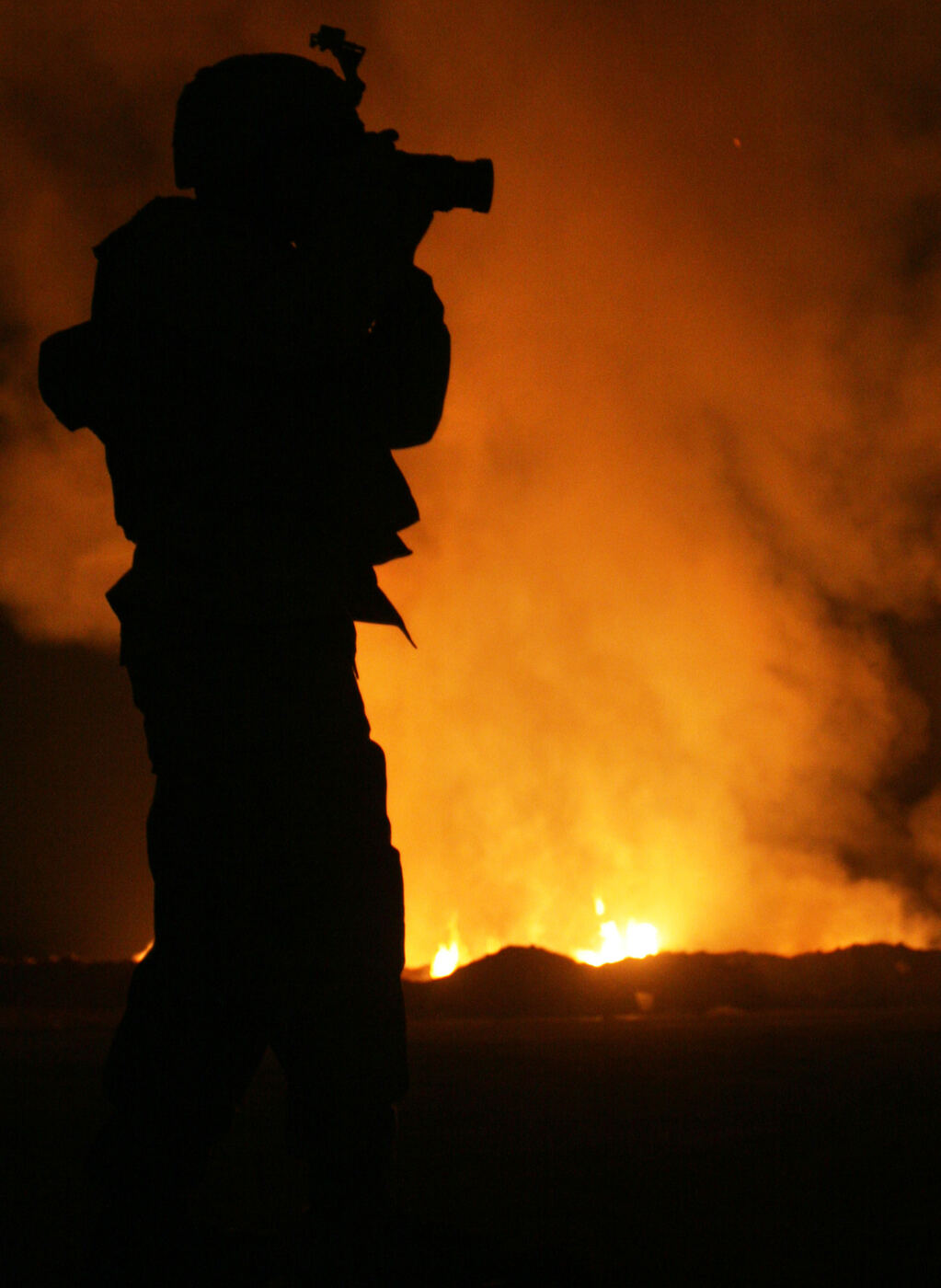
At bases throughout the Southwest Asia theater, trash was not hauled away or incinerated in controlled facilities. It was pushed into open pits, doused with jet fuel, and set alight. The VA's public health office lists the materials that went into these pits: chemicals, paint, medical and human waste, metal and aluminum cans, munitions and unexploded ordnance, petroleum and lubricant products, plastics, rubber, wood, and food waste. Because the fires burned at relatively low temperatures, combustion was often incomplete, sending particulate matter and a mix of toxic byproducts drifting over living quarters, dining halls, and work sites.
The most notorious example was at Joint Base Balad in Iraq. According to a VA history account, the Balad pit was the theater's largest, covering more than 25 acres and processing roughly 100 to 200 tons of solid waste each day at its peak. Everything from tires, batteries, and medical waste to uniforms and vehicle parts reportedly went into the flames. Burn pits also operated in Afghanistan, Kuwait, Saudi Arabia, Qatar, Djibouti, and other locations across Southwest Asia, South-Central Asia, and Africa, from the 1990-1991 Gulf War through the post-9/11 conflicts. The Defense Department has since closed most burn pits.
Documented Health Concerns
Many troops who lived and worked near burn pits reported acute symptoms at the time: eye irritation and burning, coughing and throat irritation, breathing difficulties, and skin rashes. The harder question has been long-term harm. A 2008 Defense Department assessment concluded that burn pit smoke posed no significant health or elevated cancer risks, a finding that frustrated many veterans, and VA later commissioned independent research on the issue. The VA notes that the health effects of exposure likely depend on the type of waste burned, how close a person was to the smoke, how long the exposure lasted, and even wind conditions.
Today the VA acknowledges that toxicants in burn pit smoke may affect the skin, eyes, respiratory and cardiovascular systems, gastrointestinal tract, and internal organs, and that veterans with closer or longer exposure may face greater risk of serious effects, including some cancers. Researchers continue to study these connections, and the science remains incomplete, but the policy debate has largely shifted from whether to compensate affected veterans to how.
The Airborne Hazards and Open Burn Pit Registry
In 2014, at the direction of Congress, the VA launched the Airborne Hazards and Open Burn Pit Registry to gather data on veterans and service members exposed to airborne hazards. The registry was significantly redesigned in August 2024. Under the updated approach, veterans and service members who deployed to eligible locations between August 2, 1990, and August 31, 2021, are included automatically based on Defense Department deployment records, with a simple opt-out process. Participation is voluntary, does not require a medical evaluation, and does not affect eligibility for VA health care or benefits. VA epidemiologists and approved researchers use the data to study health trends across this large cohort.
The PACT Act and Presumptive Conditions
The most consequential policy response came on August 10, 2022, when the PACT Act was signed into law. As we covered in our guide to what the PACT Act means for veterans exposed to toxics, the law established a long list of conditions that the VA presumes are connected to military service, removing the burden of proving that a specific illness was caused by a specific exposure.
According to the VA's PACT Act resource page, presumptive cancers for burn pit and related exposures include brain cancer, glioblastoma, gastrointestinal cancers of any type, head and neck cancers, kidney cancer, lymphoma of any type, melanoma, pancreatic cancer, reproductive cancers, and respiratory cancers of any type, a category that includes lung cancer. Presumptive illnesses include asthma diagnosed after service, chronic bronchitis, chronic obstructive pulmonary disease, emphysema, chronic rhinitis, chronic sinusitis, interstitial lung disease, and pulmonary fibrosis.
Eligibility generally covers veterans who served in Iraq, Kuwait, Saudi Arabia, and other Gulf region locations on or after August 2, 1990, or in Afghanistan, Djibouti, Egypt, Jordan, Lebanon, Syria, Uzbekistan, or Yemen on or after September 11, 2001, including the airspace above those areas. There is no deadline to file a claim, and every veteran enrolled in VA health care is now offered a toxic exposure screening. Within three years of the law's enactment, the VA reports that PACT Act programs had delivered more than $11 billion in benefits and brought more than a million new enrollees into VA health care. Veterans seeking help with claims or exposure questions can find starting points on our resources page.
This page is for informational purposes only and is not medical or legal advice. Consult a qualified professional about your health or benefits.
Discussion
No approved comments yet.